Humans are, by nature, covetous beings. The history of modern civilization is riddled with wars – fought mainly for territorial expansion. Germany invaded Poland in 1939, marking the beginning of a prolonged war that was played out in a theatre stretching from Europe to Asia. More recently, Russia annexed Crimea from Ukraine, a parcel of land whose custody it had ceded to the latter after the unceremonious breakup of the erstwhile Soviet Union.
The moon has been in plain sight since time immemorial, but for most, it remains a speck of white in the night sky. However, with space travel fast becoming a reality, the new Great Game could be played out in outer space. The lunar surface presents a fertile ground for future settlers, but more importantly, it could also hold the answer to the world’s energy problems.
Scientists believe that the moon is home to rare earth elements which find use in many modern technologies. These include elements with electromagnetic properties, which are typically found in the earth’s crust. Moreover, recent unmanned missions to the moon have found large reserves of frozen ice, presenting a potential solution to water scarcity in many parts of the globe. On August 20, India’s Chandrayaan-2 spacecraft entered the lunar orbit, one step closer to its scheduled landing on the moon’s South Pole on September 7.
While India is not the first country to send an unmanned spacecraft beyond the earth’s gravitational field, it will add to the growing list of countries that possess the knowhow to make a successful moonshot. United States, Russia (formerly the Soviet Union), Japan, India, and China have all previously sent missions to earth’s planet-sized satellite. But if countries were to set up colonies on the moon, will their lunar settlers stake claim to its natural resources, like what Columbus did for the Spanish crown?
At the height of the Cold War, the moon had become the newest frontier in a neocolonial battle for outer space. The United States and the Soviet Union wanted to outdo each other in a race to the moon. It was held that victory would establish the primacy of one of the two different economic models which the rivals had adopted after World War II – communism and capitalism. However, the space race was not shorn of commercial considerations. Researchers reckoned that the rocky surface of the moon held considerable reserves of valuable minerals, which could find application in many industries back home.
ADVERTISEMENT
On July 20, 1969, the Apollo 11 spacecraft landed on the moon with three American astronauts on board. The race was won, and the bragging rights, settled. But two years before Neil Armstrong stabbed the face of the moon with a flagpole and deposited the star spangled banner on terra incognita, 62 countries had ratified the 1967 Outer Space Treaty over fears that the space race would trigger World War III. The rivalry between the United States and the Soviet Union would outlast their lunar fetish.
However, the colonization of the moon was preempted by the 1967 treaty, albeit temporarily. Article II of the treaty stated that "Outer Space, including the moon and other celestial bodies, is not subject to national appropriation by claim of sovereignty, by means of use or occupation, or by any other means." These precautions ruled out national appropriation, and the establishment of military outposts on the moon. But the document did not account for animal spirits being unleashed on the moon.
Private property rights pertaining to lunar land for personal and corporate use was excluded from the 1967 treaty. Legal scholars were split over whether there was anything preventing the world’s wealthy from casting a fanciful eye at extraterrestrial real estate. Some argued that property rights were recognized only on tracts of land that were within the boundaries of a country’s dominion. Others opined that property rights and sovereignty were distinct and unrelated to geographical boundaries.
The 1967 Outer Space Treaty was deemed inadequate to regulate such conflicts. A new agreement, the Moon Treaty, was proposed in 1979, which barred private ownership of land on the moon. It further said that the extraction and management of the moon’s natural resources would have to happen under the supervision of a space watchdog. A share of the profits from such projects would go towards development activities in third world countries.
ADVERTISEMENT
The United States administration under President Jimmy Carter was in favour of the Moon Treaty, but fell short of ratifying it. The government paid heed to space activists in the U.S. who were skeptical of the manner in which the treaty was drafted. They held that the U.S. would have to forfeit its first-mover advantage in aerospace technology and share the spoils of mining missions on the moon with other countries which had made no significant investment in space research.
The lunar surface presents a fertile ground for future settlers, but more importantly, it could also hold the answer to the world’s energy problems. (Representative image)
ADVERTISEMENT
The Moon Treaty was signed by 13 countries, none of which have sent manned missions to the moon. Four countries are signatories – India, France, Romania, and Guatemala. As of today, 18 states are party to the Moon Treaty, seven of which ratified it, while the others acceded. Austria, Chile, Morocco, Netherlands, Peru, Philippines, and Uruguay count among the nations that have ratified the treaty. The major space powers including the U.S., Russia, China, and Japan are neither signatories nor parties to this covenant. Does this mean that private citizens from countries that have not agreed to this decades-old treaty are eligible to their corner of the moon?
Lots of people have expressed interest in owning lunar land, and quite a few actually do possess title deeds to plots of land on the moon. Lunar Embassy, an extraterrestrial real estate company claims that it has sold 500 million acres of lunar land as “novelties”. According to a price listing on the company’s website, an acre of land on the moon can be acquired for anything between USD 25 to USD 500. Prospective buyers can choose the geographical coordinates of their plots, except for the Apollo landing sites and the Sea of Tranquility, which are off-limits. On making the payment, buyers will receive their deeds to the property. However, the Promised Land has been beyond the reach of most buyers.
To make good the land title, Dennis Hope, the owner of Lunar Embassy, wrote to the United Nations (U.N.) notifying them of his decision to peddle lunar real estate. When he did not meet with a response, Hope took the multilateral body’s silence as its assent. People who have bought real estate from him believe that if Hope sells enough real estate, his claim to be a broker for extraterrestrial land might turn out to be a self-fulfilling prophecy, especially when space travel goes mainstream. But who might validate such land titles?
Individual nations, especially those that aren’t signatories to the 1979 Moon Treaty, might. There is nothing preventing other countries from framing their own laws apropos lunar real estate. As of now, there is no legally binding pact between the major space powers to prevent the commercialisation of space. With more countries planning manned moon missions, a free-for-all could yet unfold on the moon.
Chandrayaan-2 Wasn't First Space Delay; Russia’s Progress 69, Japan’s Kounotori 7 Also Faced Similar Fate
1/6
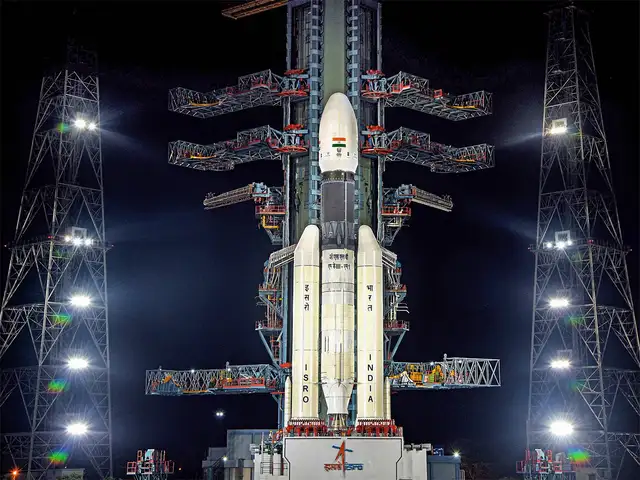
The Chandrayaan-2 launch is expected to take place today. Its postponement last week is reminiscent of other times when reaching the final frontier was delayed.
In Pic: A view of the Chandrayaan-2 on board GSLVMkIII-M1 at Satish Dhawan Space Centre in Nellore district.
The Chandrayaan-2 launch is expected to take place today. Its postponement last week is reminiscent of other times when reaching the final frontier was delayed.
In Pic: A view of the Chandraya..
Read More
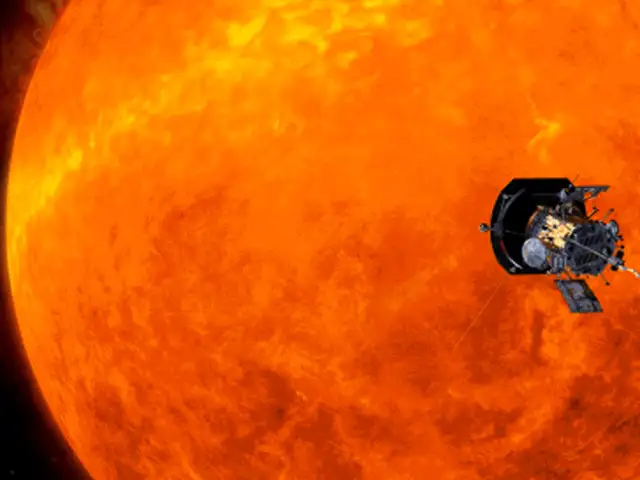
The ambitious launch of NASA’s $1.5 billion Parker Solar Probe mission to the sun was delayed by 24 hours in August 2018. The excitement was short-lived after scientists discovered a helium pressure anomaly and the launch had to be called off. Touted as the fastest spacecraft in history, it finally took off the next day on August 12. In its seven-year mission, the Parker Solar Probe will fly directly through the Sun’s outer atmosphere in a bid to unlock some of the solar system’s greatest secrets.
(Image: www.nasa.gov)
The ambitious launch of NASA’s $1.5 billion Parker Solar Probe mission to the sun was delayed by 24 hours in August 2018. The excitement was short-lived after scientists discovered a helium pressure ..
Read More
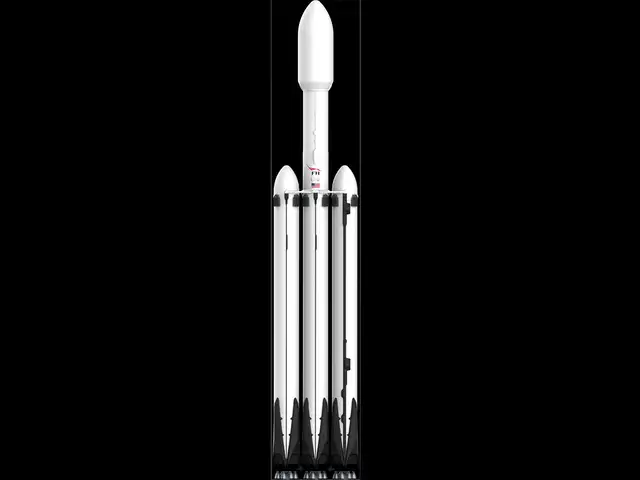
SpaceX’s Falcon Heavy rocket
Elon Musk’s SpaceX has had its share of delays. The first test was delayed by more than five years, from being scheduled in 2013 to finally being conducted in 2018 with a dummy payload.
In April this year, SpaceX had to postpone what would have been its first commercial launch with the Falcon Heavy rocket, citing strong wind in the upper atmosphere.
The launch was rescheduled two days later. Last month, the third flight of the Falcon Heavy was delayed by two days as the team needed a little extra time to wrap up final integration and prep work. The megarocket successfully lofted two dozen satellites into orbit on June 25.
(Image: www.spacex.com)
SpaceX’s Falcon Heavy rocketElon Musk’s SpaceX has had its share of delays. The first test was delayed by more than five years, from being scheduled in 2013 to finally being conducted in 2018 with a ..
Read More
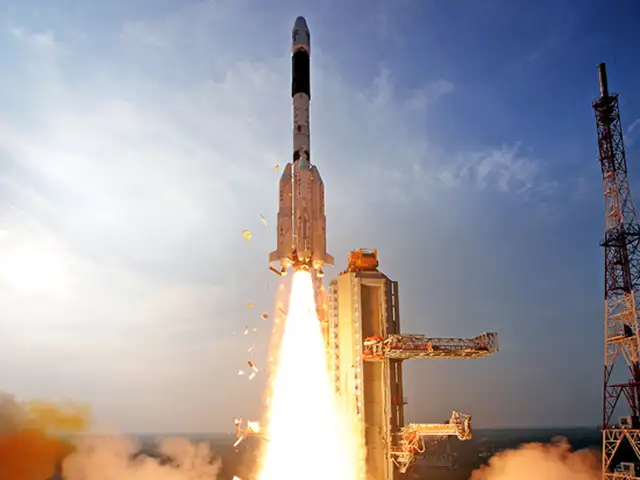
ISRO’s GSLV-D5
In August 2013, the national space agency had called off the launch of a Geosynchronous Satellite Launch Vehicle called Sriharikota, 74 minutes before the final launch, after detecting a fuel leak. The vehicle was taken off the site and was finally launched on January 5, 2014.
(Image: www.isro.gov.in)
ISRO’s GSLV-D5In August 2013, the national space agency had called off the launch of a Geosynchronous Satellite Launch Vehicle called Sriharikota, 74 minutes before the final launch, after detecting ..
Read More
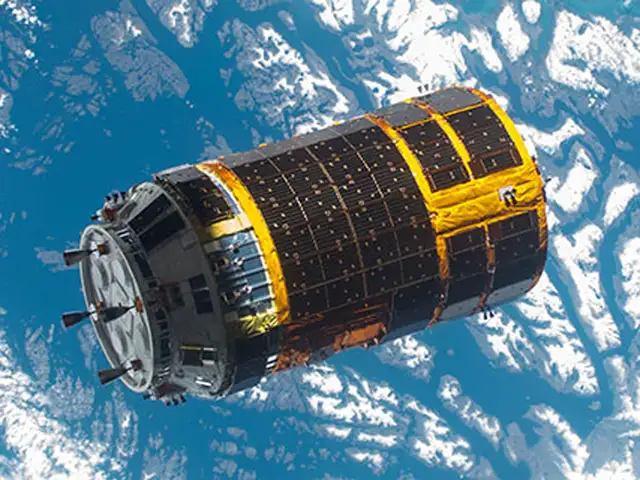
Japan’s Kounotori 7
On September 10, 2018, the unpiloted Kounotori 7 was supposed to take off for the International Space Station with 6,000 kg of crew supplies. But a typhoon forecast forced the Japan Aerospace Exploration Agency (JAXA) to postpone the launch of this cargo ship, and reschedule the lift-off to September 22.
(Image: global.jaxa.jp)
Japan’s Kounotori 7On September 10, 2018, the unpiloted Kounotori 7 was supposed to take off for the International Space Station with 6,000 kg of crew supplies. But a typhoon forecast forced the Japa..
Read More
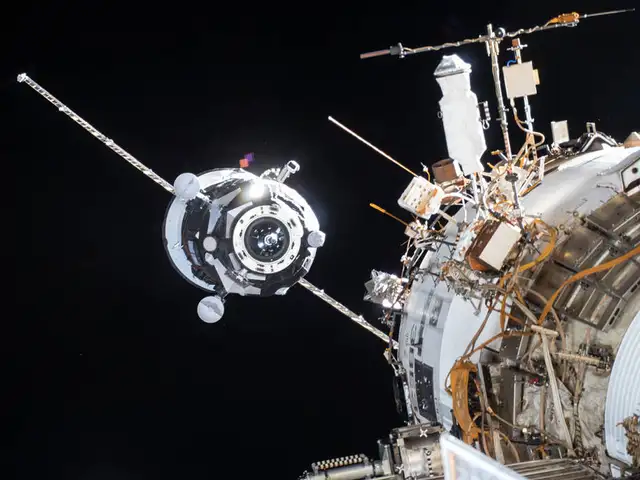
Russia’s Progress 69
The launch of a Russian cargo ship bound for the International Space Station was aborted in the final few seconds on February 11, 2018. The supply ship was seconds away from launching into space from Kazakhstan when an engine error halted the lift-off.
After its successful launch on February 13, the cargo craft delivered three metric tonnes of supplies, fuel, and oxygen to the ISS.
(Image: www.nasa.gov)
* Text: Aarti Bhanushali
Russia’s Progress 69The launch of a Russian cargo ship bound for the International Space Station was aborted in the final few seconds on February 11, 2018. The supply ship was seconds away from launc..