Nobel Prize in Physics awarded to Roger Penrose, Reinhard Genzel and Andrea Ghez for black hole research
Penrose was awarded the Nobel for discovery on black hole formation.
By ET Online | Updated:

Agencies
The award has in the past honoured discoveries about the tiniest of particles and the vast mysteries of outer space.
The 2020 Nobel Prize in Physics has been awarded jointly to Roger Penrose, Reinhard Genzel and Andrea Gheza. A panel at the Karolinska Institute in Stockholm announced the recipients on Tuesday.
The award has, in the past, honoured discoveries about the tiniest of particles and the vast mysteries of outer space.
While one half of the Nobel was awarded to Penrose for his discovery on black holes, the other half was jointly awarded to Genzel and Ghez 'for the discovery of a supermassive compact object at the centre of the galaxy'.
Only 3 women have been awarded the Nobel Prize in Physics including Marie Curie in 1903, Maria Goeppert-Mayer (1963), and Donna Strickland (2018), to date. Ghez is the fourth woman to win the Nobel in Physics.
The 2019 Nobel in Physics went to Canadian-born cosmologist James Peebles for theoretical work about the early moments after the Big Bang, and Swiss astronomers Michel Mayor and Didier Queloz for discovering a planet outside our solar system.
Apart from the legendary Albert Einstein, today, the Nobel Prize Committee also remembered the second woman ever to receive the prize in Physics in 1963, Maria Goeppert-Mayer for her work ion the nuclear shell structure of the atoms. Sharing an interesting fact about the iconic woman, the Committee revealed that she did most of the research work without being paid but it fetched her the Nobel Prize in Physics when she was 57 years old.
The prestigious award comes with a gold medal and prize money of 10 million Swedish kronor (more than $1.1 million), courtesy of a bequest left 124 years ago by the prize's creator, Swedish inventor Alfred Nobel. The amount was increased recently.
The award has, in the past, honoured discoveries about the tiniest of particles and the vast mysteries of outer space.
BREAKING NEWS: The Royal Swedish Academy of Sciences has decided to award the 2020 #NobelPrize in Physics with one… https://t.co/SC0CzMdllJ
— The Nobel Prize (@NobelPrize) 1601978633000While one half of the Nobel was awarded to Penrose for his discovery on black holes, the other half was jointly awarded to Genzel and Ghez 'for the discovery of a supermassive compact object at the centre of the galaxy'.
Only 3 women have been awarded the Nobel Prize in Physics including Marie Curie in 1903, Maria Goeppert-Mayer (1963), and Donna Strickland (2018), to date. Ghez is the fourth woman to win the Nobel in Physics.
The 2019 Nobel in Physics went to Canadian-born cosmologist James Peebles for theoretical work about the early moments after the Big Bang, and Swiss astronomers Michel Mayor and Didier Queloz for discovering a planet outside our solar system.
Apart from the legendary Albert Einstein, today, the Nobel Prize Committee also remembered the second woman ever to receive the prize in Physics in 1963, Maria Goeppert-Mayer for her work ion the nuclear shell structure of the atoms. Sharing an interesting fact about the iconic woman, the Committee revealed that she did most of the research work without being paid but it fetched her the Nobel Prize in Physics when she was 57 years old.
ADVERTISEMENT
The second woman to receive the Nobel Prize in Physics was Maria Goeppert-Mayer for her work on the nuclear shell s… https://t.co/IOF2sxwTyk
— The Nobel Prize (@NobelPrize) 1601958781000The prestigious award comes with a gold medal and prize money of 10 million Swedish kronor (more than $1.1 million), courtesy of a bequest left 124 years ago by the prize's creator, Swedish inventor Alfred Nobel. The amount was increased recently.
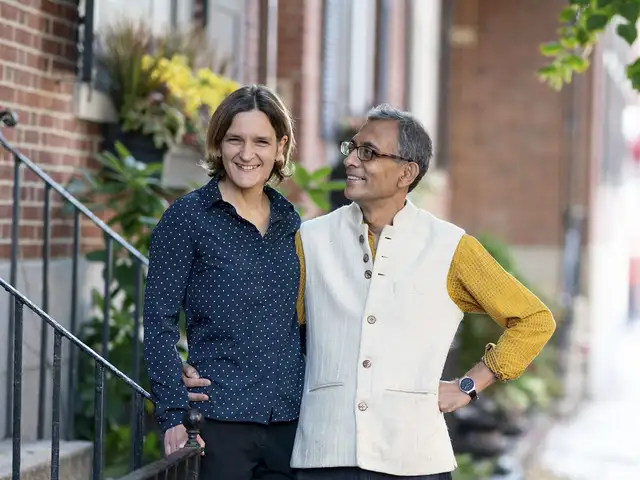
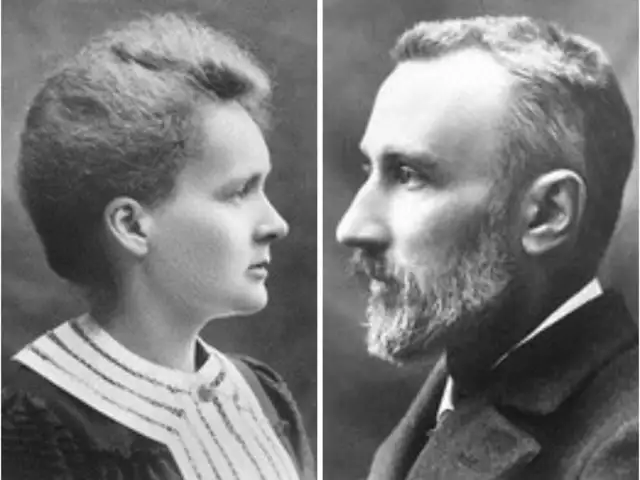
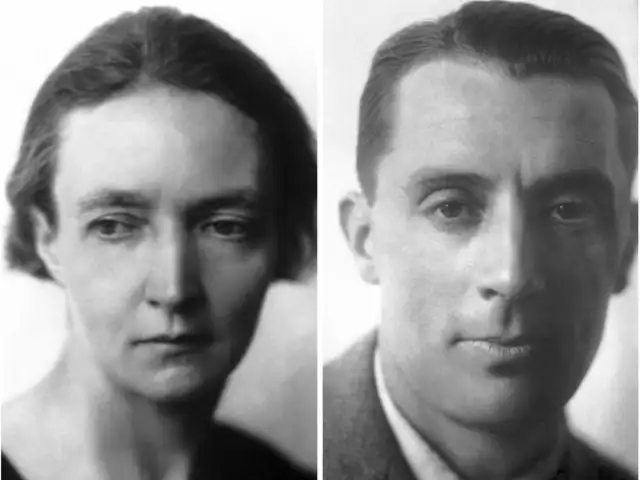
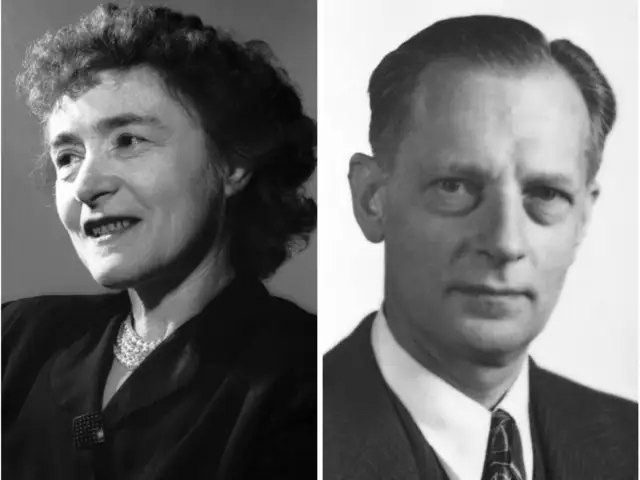
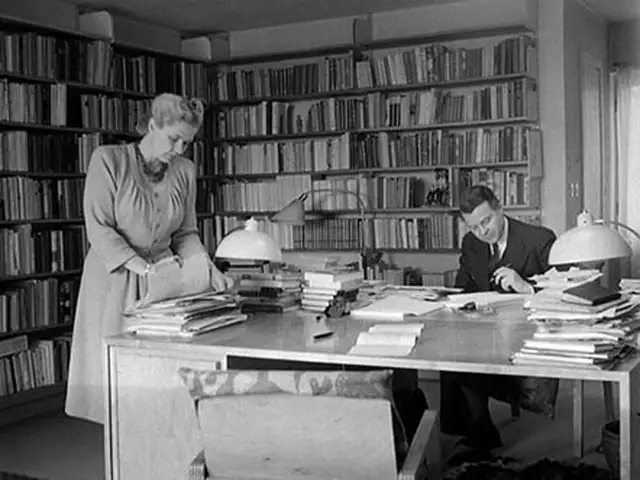
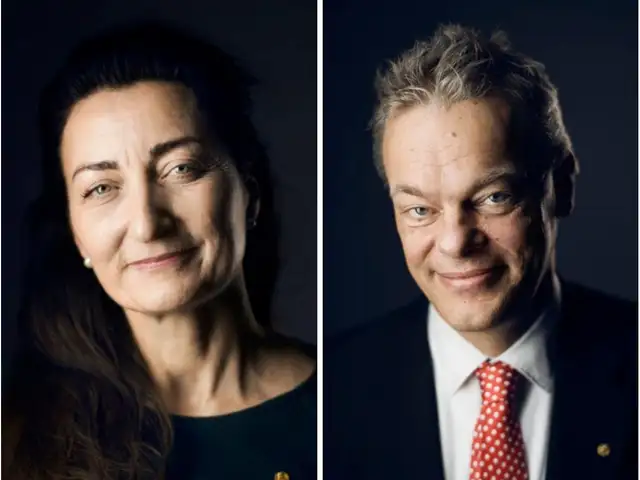
Marriages are made in heaven, but some partnerships are formed in the laboratory. Last week, Abhijit Banerjee and Esther Duflo became the sixth married couple to get the Nobel Prize. Here are the others:
(Image: AFP)

Download
The Economic Times Business News App for the Latest News in Business, Sensex, Stock Market Updates & More.
The Economic Times Business News App for the Latest News in Business, Sensex, Stock Market Updates & More.
ADVERTISEMENT


