Ayurvedic products, local wellness practices big hit during Covid times

The holistic wellness trend is here to stay.

Agencies
Ayurvedic wellness centres and beauty brands branched into virtual consultations, online yoga classes, and live chat with experts to retain international customers and further expand their reach.
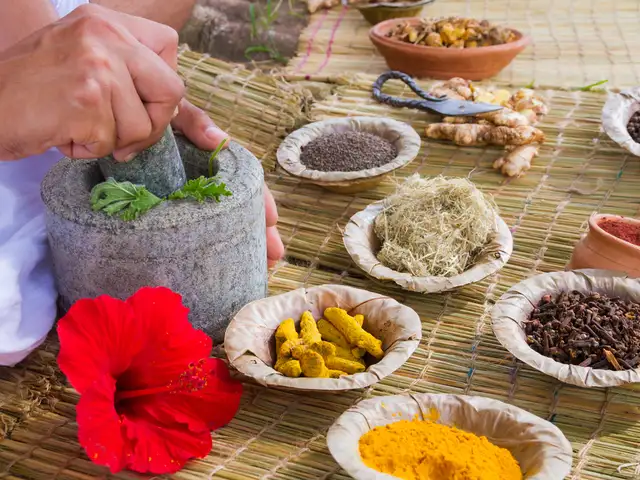
The low-touch nature of Indian wellness practices like yoga and meditation, along with a rising focus to boost immunity in the wake of the pandemic, saw the demand for Ayurvedic products and Indian wellness practices increase domestically and internationally, say executives at four leading companies that specialize in Indian wellness treatments and Ayurvedic products.

“There was a significant shift to alternative medicine systems such as Ayurveda, and Unani and consumers included herbal supplements in their lifestyle,” said Suman Varma, Chief Marketing Officer, Hamdard Laboratories. “According to researchers, the segment is expected to grow even after the pandemic subsides, as the holistic wellness trend is here to stay,” she added.

The global ayurvedic market was valued at $4.5 billion in 2017, and with this shift, it is projected to reach $14.9 billion by 2026 at a CAGR of 16.14%, according to Varma. However, Hamdard Laboratories, which exports a few of its products to neighbouring countries, saw the nationwide lockdown and the ensuing supply chain restrictions halt exports.


Further, the suspension of international flights forced Indian wellness centers to re-strategize in order to reach international customers in countries such as the US, Singapore, Russia, and China. Ayurvedic wellness centers and beauty brands branched into virtual consultations, online yoga classes, and live chat with doctors to retain international customers and further expand their reach.

Jindal Naturecure Institute in Bengaluru and luxury spa Ananda in Uttarakhand, both of which specialize in Indian treatments, saw customers dwindling after international flights were suspended in March.

Ananda Spa, whose customer base is typically 50% international at any given point, started offering online consultations and sessions on Ayurveda, yoga, and physiotherapy.
ADVERTISEMENT

“Ayurveda has a lot of intervention for immunity; so that seems to be attracting people a lot because that is an area of concern now,” said Aashica Khanna, Vice President Operations, IHHR Hospitality.

An individual consultations session at Ananda costs Rs. 4,500 and holistic wellbeing online programs start from Rs. 14,000. It also offers yoga sessions two times a day, which sees an attendance of up to 100 practitioners from across the globe. According to Khanna, these sessions are in demand from customers in Singapore, the UK, the US, Dubai, Russia, Sri Lanka, and Germany.

Similarly, Jindal Naturecure Institute, which specialises in naturopathy, saw heightened interest for its webinars from international patients. The need to know preventative home and herbal remedies from patients who have diabetes, high blood pressure, and spondylitis, saw an uptick, according to Dr. Babina NM, Chief Medical Officer at Jindal Naturecure Institute.

“Many international and domestic patients were not able to go to regular allopathic hospitals,” said Dr. Babina. Experts at the institute interacted with patients remotely and recommended home and herbal remedies and also conducted online yoga and pranayama sessions, she added.
ADVERTISEMENT

Beauty brand Kama Ayurveda said consumers across the globe have been receptive to its online beauty consultations for hair, skin, and body with in-house Ayurvedic experts. It also introduced a Spotify playlist, 'Calm with Kama' to revive demand.

Most of these brands are bouncing back in domestic markets. As for their international customers, they are adopting a wait and see approach due to the ongoing restrictions on international travel.
ADVERTISEMENT

“The acceptance of herbal and natural formulations is one trend that will see an uptick even once the pandemic subsides,” said Varma of Hamdard.
Ayurvedic Therapies Can Help With COPD: Have Gourds & Pulses, Drink Warm Water, Replace Cleaning Sponges Often
1/7

Chronic Obstructive Pulmonary Disease (COPD) is a chronic inflammatory lung disease that causes obstructed airflow from the lungs. The main cause for COPD is long-term tobacco smoking. Other causes include exposure to polluted air, chemical fumes, vapor and dusts in the external environment.


According to the World Health Organization, 65 million people are diagnosed with moderate to severe COPD every year, and is the third leading cause of death by 2020, globally. COPD patients are at a higher risk of developing heart disease, lung cancer and a variety of other conditions such as high blood pressure and increased risk of cold, flu and pneumonia.


On World COPD Day, Dr Jyoti Kumbar, Medical Superintendent, Medanta AyurVAID, Medanta - The Medicity in Gurgaon, shares the tips to manage the condition with Ayurveda.

Chronic Obstructive Pulmonary Disease (COPD) is a chronic inflammatory lung disease that causes obstructed airflow from the lungs. The main cause for COPD is long-term tobacco smoking. Other causes i..
Read More
While COPD is commonly treated through medications such as bronchodilators (available through inhalers) and antibiotics, depending on the severity of the condition, Ayurveda can also play a significant role in management of the condition. In Ayurveda, COPD is understood as a disorder of 'PranavahaSrotas'.

According to Ayurveda, effective COPD treatment requires one to do Nidanaparivarjana that includes modification of lifestyle and diet, and Shamana, a pacification treatment, and Shodhana, which is a biopurifactory method technique.
While COPD is commonly treated through medications such as bronchodilators (available through inhalers) and antibiotics, depending on the severity of the condition, Ayurveda can also play a significa..
Read More
To minimise the risk of COPD, one should manage the risk/causative factors by quitting smoking, avoiding close contact with people suffering from respiratory infections, and avoiding exposure to excessive heat, cold and high altitudes and environmental irritants.
To minimise the risk of COPD, one should manage the risk/causative factors by quitting smoking, avoiding close contact with people suffering from respiratory infections, and avoiding exposure to exce..
Read More
Bio-purification (shodhana) can be performed regularly to capture and biologically degrade pollutants. This therapy helps in drying up excess mucus secretion in the respiratory system which can cause obstruction. Additionaly, Nasya therapy can prevent the membrane lining the nasal cavity from coming in contact with irritants or pollutants.
Bio-purification (shodhana) can be performed regularly to capture and biologically degrade pollutants. This therapy helps in drying up excess mucus secretion in the respiratory system which can cause..
Read More
Exercising regularly and maintaining normal body weight can help in preventing COPD. Ayurveda recommends inculcating healthy habits like waking up early and consuming a glass of warm water on an empty stomach to prevent complications associated to COPD.
Exercising regularly and maintaining normal body weight can help in preventing COPD. Ayurveda recommends inculcating healthy habits like waking up early and consuming a glass of warm water on an empt..
Read More
Ayurveda advocates consumption of a healthy diet which is low in saturated fat and rich in fruits and vegetables. Whole grain foods is recommended. It is beneficial to consume vegetables which are pungent, salty, hot and light such as gourd, bottle gourd, spinach, methi, garlic, ginger, bittergourd, spongegourd, drumstick, and pulses like greengram and horsegram. Tomato, cauliflower, potatoes, preparations of rice flour, sweets, curd, whole milk, black gram, coconut oil, fermented and sour foods, cold drinks and refrigerated foods must be avoided.
Ayurveda advocates consumption of a healthy diet which is low in saturated fat and rich in fruits and vegetables. Whole grain foods is recommended. It is beneficial to consume vegetables which are pu..
Read More
A well-ventilated, hygienic environment can help in prevention of COPD. At home, one should avoid usage of sprays or roll on deodorants. Ensure you are not at indoors when cleaners or sprays are being used. Avoid shrugging off of rugs, vacuuming, sweeping and dusting. Do away with cleaning sponges or replace them often.
A well-ventilated, hygienic environment can help in prevention of COPD. At home, one should avoid usage of sprays or roll on deodorants. Ensure you are not at indoors when cleaners or sprays are bein..
Read More

Download
The Economic Times Business News App
for the Latest News in Business, Sensex, Stock Market Updates & More.

READ MORE
ADVERTISEMENT

READ MORE:

LOGIN & CLAIM

50 TIMESPOINTS

More from our Partners

Loading next story
Business News › Magazines › Panache › Ayurvedic products, local wellness practices big hit during Covid times
Text Size:AAA
Success
This article has been saved

*

+