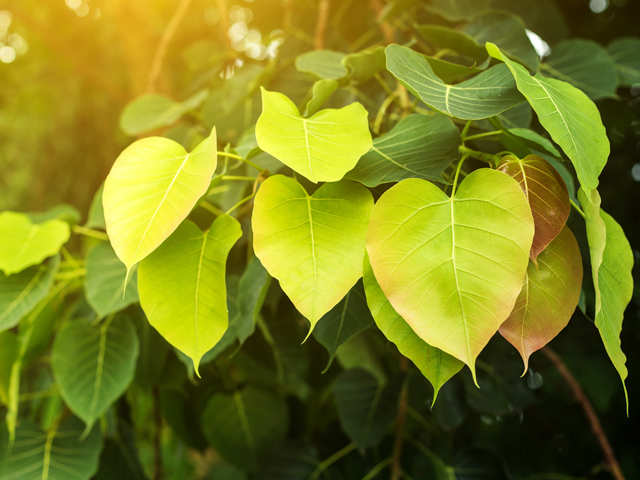
It is surprising how many Indians haven’t tasted a plain betel leaf plucked fresh from its vine. They are so deep-rooted in our culture, used in ritual and ceremonies, mentioned in ancient texts and, of course, one of the essential ingredients, along with areca nuts, in paan.
This has led to elaborate treatment of the leaf. Sharada Dwivedi and Shalini Devi Holkar write of Lucknow connoisseurs burying leaves to wilt them to a melting soft texture. KT Achaya detailed the belief that different parts of the leaf corresponded to different deities: Lakshmi in front, Shiva at the edges, and so on, with Yama in the stalk, the inauspicious part to be trimmed off. Garcia da Orta recorded how many Indians grew one thumbnail long precisely to help in this trimming.
Yet the leaves were rarely eaten alone. We know the taste — the prickle of heat that reminds us that Piper betel is related to black pepper, Piper nigrum, followed by that distinctive herb-y bitterness. But this quickly gets lost in the other flavours of paan: explosive spices, syrupy sweetness and areca’s astringency. Even in paan flavoured ice-creams and milkshakes which avoid astringency there is usually so much gulkhand that the betel leaves get lost in all that sugary rose flavour.
There are rare Indian recipes that use paan leaves. Some communities in Tamil Nadu make Vetrilai Poondu Sadam, rice cooked with garlic and betel leaves. Morvarid Fernandez’ charming cookbook Seasoned for Family and Friends has a rasam recipe with ghee and sliced betel leaves added at the end.
But the real use of betel leaves in meals comes from Vietnam where the leaves are used to wrap spicy morsels of meat. It’s a wonderful combination, with the aromatic fresh leaves complementing the spicysweet meat. It can become tempting to start using betel leaves to package all kinds of foods.
ADVERTISEMENT
The one problem that might prevent this is price. Because betel leaves are so valued for paan they are sold individually, reaching two rupees or even more per leaf. We are so used to buying full bunches of edible greens for a few rupees that using betel leaves like them seems extravagant.
It doesn’t help that it is seen as a difficult crop. In Infinite Variety, Madhavi Menon’s fascinating new history of love and desire in India, she writes that “no pesticides are used to farm betel; their yield is therefore rather fragile, and increasingly expensive.” She also notes a traditional taboo against women cultivating betel vines, for the same irrational fear of menstrual contamination that has poisoned the Sabarimalai issue. The vines are also water-hungry, and this combined with decreasing demand from consumers switching to the cheaper — and far more harmful — hook of paan masala may be causing a decrease in the betel leaf supply. But this might be an opportunity. As the paan connection weakens, and if more people try growing the attractive vines at home, it might be time to discover the other culinary uses of betel leaves.
Did You Know That Peepal Is An Excellent Remedy For Skin Ailments? Here Are Other Benefits Of The Plant
1/6
According to the science of Ayurveda, every part of the Peepal tree - the leaf, bark, shoot, seeds and fruit has several medicinal benefits.
Peepal tree leaves contain glucose, asteriod and mennos, phenolic, while its bark is rich in vitamin K, tanins and phaetosteroline.
Also known as the sacred fig tree, Peepal is a storehouse of medicinal value and is used to treat many ailments and diseases, ranging from asthma and skin diseases, to kidney and various blood-related problems.
According to the science of Ayurveda, every part of the Peepal tree - the leaf, bark, shoot, seeds and fruit has several medicinal benefits.
Peepal tree leaves contain glucose, asteriod and mennos, ..
Read More
A great remedy for tooth decay is a mixture of Peepal and Banyan tree barks.
Take barks of both the trees in equal quantity and mix them well. Boil the mixture in hot water and use it for rinsing the mouth.
A great remedy for tooth decay is a mixture of Peepal and Banyan tree barks.
Take barks of both the trees in equal quantity and mix them well. Boil the mixture in hot water and use it for rinsing th..
Read More
Applying the milk of Peepal leaves on the eyes helps relieve them of pain.
Applying the milk of Peepal leaves on the eyes helps relieve them of pain.
The soft leaves of Peepal help cure itching and other skin diseases.
For eczema itching: Take 50 gm of the Peepal bark ash and add lime and ghee to form a paste. Apply this paste on affected areas.
Cracked Heels: Apply Peepal leaf extracts or the milk of the leaf on cracked hands and heels for best results.
The soft leaves of Peepal help cure itching and other skin diseases.
For eczema itching: Take 50 gm of the Peepal bark ash and add lime and ghee to form a paste. Apply this paste on affected areas.
..
Read More
The bark of the Peepal plant and its ripe fruits are extremely helpful for asthma.
Make a powder of the bark and fruits separately and then mix them in equal quantities. Consume this mixture thrice a day for relief.
The bark of the Peepal plant and its ripe fruits are extremely helpful for asthma.
Make a powder of the bark and fruits separately and then mix them in equal quantities. Consume this mixture thrice ..
Read More
Peepal leaves are extremely beneficial when it comes to stomach ailments.
For stomach pain: Make a paste of 2.5 leaves and mix with 50 grams jaggery. Make small tablets of the mixture and consume them 3-4 times a day.
For constipation: Including 5-10 fruits of the Peepal plant in your daily diet will cure the problem permanently.
Peepal leaves are extremely beneficial when it comes to stomach ailments.
For stomach pain: Make a paste of 2.5 leaves and mix with 50 grams jaggery. Make small tablets of the mixture and consume th..