James Allison, Tasuku Honjo win Nobel Prize in Medicine for cancer research
The duo showed how different strategies for inhibiting brakes on the immune system that can be used in cancer treatment.
By DIVYA RAJAGOPAL, ET Bureau | Updated:

Agencies
The 2018 Nobel Prize in physiology and medicine was awarded to American and Japanese immunologist James P Allison and Tasuku Honzo for their discovery of "cancer therapy by inhibition of negative immune regulation". This year’s Nobel prize constitutes a landmark in our fight against cancer, wrote the Nobel Foundation in the micro blogging site Twitter while announcing this year's laureates.
The foundation said “Immune checkpoint therapy” has revolutionized cancer treatment and has fundamentally changed the way we view how cancer can be managed.
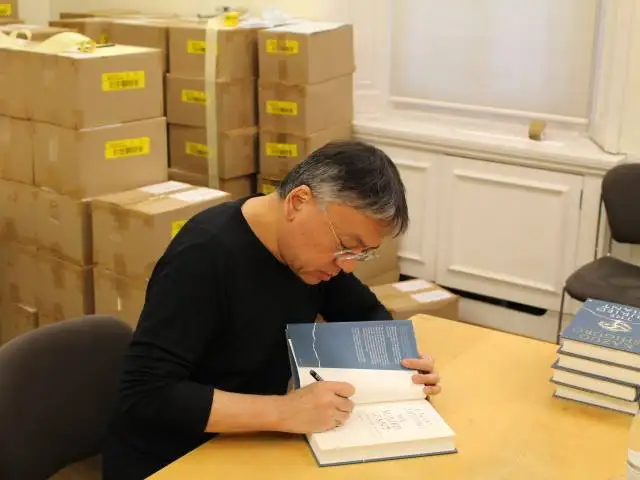
Ishiguro tied the knot with social worker Lorna MacDougall in 1986. He met her at the West London Cyrenians homelessness charity in Notting Hill, where Ishiguro was working as a residential resettlement worker.
The couple has a daughter Naomi.
(Image: Facebook/KazuoIshiguro)
American scientist James Allison who Chairs the Department of Immunology at the MD Anderson Cancer Center work on the role of T Cells, a type of while blood cell in fighting cancerous tumor has become a bedrock of the new treatment regime known as Immunotherapy in fighting cancer. Ditto with Tasuka Honzo, the Japanese scientist who discovered the role of the protein PD1 in causing cancer, which led to the drug researchers role in looking at therapies that targeted the PD1 receptors.
Several drug companies have latched on to these new therapies, making immunotherapy based drugs as the future in cancer treatment. According to Endpoints, a news website dedicated to biopharma, there are 2004 immunotherapy drugs under development. And the estimated market size of Immunotherapy therapy drugs analysts believe is expected to touch $204billion by 2021.

Japanese author Kazuo Ishiguro won the Nobel Prize for literature in 2017. The man behind seven novels, a short-story collection and screenplays, Ishiguro was born in bomb-hit Nagasaki in 1954, and moved to England at the age of 5.
Medicine is the first of the Nobel Prizes awarded each year. The prizes for achievements in science, literature and peace were created in accordance with the will of dynamite inventor and businessman Alfred Nobel and have been awarded since 1901.
The literature prize will not be handed out this year after the awarding body was hit by a sexual misconduct scandal.
Both laureates studied proteins that prevent the body and its main immune cells, known as T-cells, from attacking tumour cells effectively.
Allison, professor at the University of Texas MD Anderson Cancer Center, studied a protein that functions as a brake on the immune system and realised the potential for unleashing immune cells to attack tumours if the brake could be released.
Honjo, professor at Kyoto University since 1984, separately discovered a second protein on immune cells and revealed that it too operated as a brake, but with a different mechanism.
"The seminal discoveries by the two Laureates constitute a landmark in our fight against cancer," the institute said.
(With additional inputs from agencies)
BREAKING NEWS The 2018 #NobelPrize in Physiology or Medicine has been awarded jointly to James P. Allison and Tasuk… https://t.co/IspGWVNxpH
— The Nobel Prize (@NobelPrize) 1538386290000The foundation said “Immune checkpoint therapy” has revolutionized cancer treatment and has fundamentally changed the way we view how cancer can be managed.
The couple has a daughter Naomi.
(Image: Facebook/KazuoIshiguro)

American scientist James Allison who Chairs the Department of Immunology at the MD Anderson Cancer Center work on the role of T Cells, a type of while blood cell in fighting cancerous tumor has become a bedrock of the new treatment regime known as Immunotherapy in fighting cancer. Ditto with Tasuka Honzo, the Japanese scientist who discovered the role of the protein PD1 in causing cancer, which led to the drug researchers role in looking at therapies that targeted the PD1 receptors.
Several drug companies have latched on to these new therapies, making immunotherapy based drugs as the future in cancer treatment. According to Endpoints, a news website dedicated to biopharma, there are 2004 immunotherapy drugs under development. And the estimated market size of Immunotherapy therapy drugs analysts believe is expected to touch $204billion by 2021.
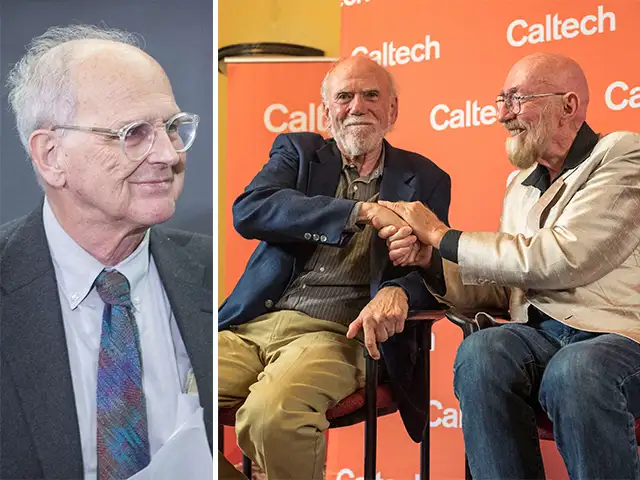
Medicine is the first of the Nobel Prizes awarded each year. The prizes for achievements in science, literature and peace were created in accordance with the will of dynamite inventor and businessman Alfred Nobel and have been awarded since 1901.
ADVERTISEMENT
The literature prize will not be handed out this year after the awarding body was hit by a sexual misconduct scandal.
Both laureates studied proteins that prevent the body and its main immune cells, known as T-cells, from attacking tumour cells effectively.
Allison, professor at the University of Texas MD Anderson Cancer Center, studied a protein that functions as a brake on the immune system and realised the potential for unleashing immune cells to attack tumours if the brake could be released.
Honjo, professor at Kyoto University since 1984, separately discovered a second protein on immune cells and revealed that it too operated as a brake, but with a different mechanism.
ADVERTISEMENT
"The seminal discoveries by the two Laureates constitute a landmark in our fight against cancer," the institute said.
(With additional inputs from agencies)
Download
The Economic Times Business News App for the Latest News in Business, Sensex, Stock Market Updates & More.
The Economic Times Business News App for the Latest News in Business, Sensex, Stock Market Updates & More.
ADVERTISEMENT


