Is the Japanese drink beer or wine? Does it even matter?
'Sake' in Japanese could refer to any alcoholic drink, so you have to specifically say 'nihonshu' to get the rice brew.
By ET Bureau | Updated:
ET Bureau
Sake is now gulped down outside Japan, with breweries popping up in China, North America, South America, Taiwan, Hong Kong and Australia.
By Manu Remakant
Sake’s lot is strange. As the world finally warms up to the centuries-old Japanese drink, sake’s home country, Japan, is trying to shake it off and move to glitzy beverages from the West.
“Sake” in Japanese could refer to any alcoholic drink, so you have to specifically say “nihonshu” to get the rice brew, which many there believe is the drink of the Shinto gods.
But is sake beer or wine? Sake doesn’t fall into easy categories but if you go by the way it is brewed, it has closer affinities to beer. In wine, fruits are packed with sugar for the yeast to ferment them, but rice — which is fermented to make sake — cannot lure the sweet-toothed yeast cells. Sake follows the beer-brewing way where grains are processed to make sugar from starch. While the process of beer-making involves two steps — converting starch into sugar and sugar into alcohol — in sake the two changes happen simultaneously.
If the youth of Japan want to forsake sake, it is because they find it too traditional.
ADVERTISEMENT
Sake is no modern drink. Its first hints are present in broken shards unearthed from the banks of the Yellow River that point to a prehistoric time, then its telltale presence can be found in the sacred texts of 3rd century BC that talk about drinking and the ritual dancing that followed it. Wet rice cultivation had already arrived in the country. The imperial court and temples held large tracts of land and the excess rice they cultivated could have gone straight to crude breweries.
This World Beer Day Learn How To Tell Your Lager From An Ale Like A Pro
1/6
Beer can be called the drink for all seasons, and reasons. Whether you're chilling at a sports bar with friends or out for a brunch, the many varieties of beer make it possible to pair the drink with any food.
From lagers to India Pale Ale (IPAs), beer lists continue to grow on menus.
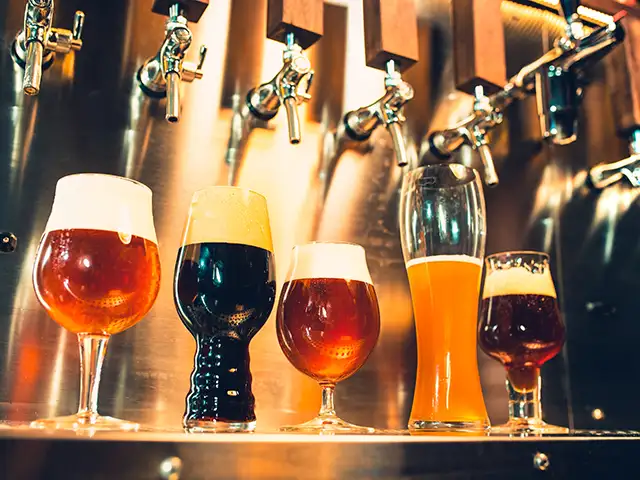
Beer can be broadly classified as an ale or a lager; then depending on their flavours and styles they can be India Pale Ales (IPA), pilsners, porters, stouts, and wheat and Belgian beers, among others.
While the major difference between various beers is the yeast and the temperature they are fermented at, here's a list to help you show-off your beer knowledge the next time you head out.
Beer can be called the drink for all seasons, and reasons. Whether you're chilling at a sports bar with friends or out for a brunch, the many varieties of beer make it possible to pair the drink with..
Read More
The beer for beginners, lagers are brewed at low temperatures, using the bottom-fermenting strains of yeast. This yeast has a lower tolerance to alcohol, making many lagers light and crisp (though that doesn’t hold true for all of them and don’t be surprised to spot a dark, rich lager).
Talking about the growing trend of lager consumption in India, Mahesh Kanchan, Vice President- Marketing, Carlsberg India, said, “Lagers are synonymous with a refined and distinctly satisfying taste.
"Known for their deep, full-flavoured malty notes, lagers have seen great appreciation from the Indian consumer base."
The beer for beginners, lagers are brewed at low temperatures, using the bottom-fermenting strains of yeast. This yeast has a lower tolerance to alcohol, making many lagers light and crisp (though th..
Read More
Brewed with top fermenting yeast at warmer temperatures, ales are usually full-bodied with a hoppy finish. Top-fermenting yeast (Saccharomyces cerevisiae) has greater tolerance to alcohol, and hence produces stronger (higher alcohol content) beers.
Ales tend to be darker, have a cloudier appearance, and a stronger, more robust flavour.
Brewed with top fermenting yeast at warmer temperatures, ales are usually full-bodied with a hoppy finish. Top-fermenting yeast (Saccharomyces cerevisiae) has greater tolerance to alcohol, and hence ..
Read More
Perfect for a hot summer day, pilsners are light and refreshing. This beer originated in the town of Plzen in the Czech Republic. Pale lagers were flavoured with a stronger hop called the Saaz hop, resulting in the hoppy Pilsner. Most of them tend to have around 5-6% ABV.
Perfect for a hot summer day, pilsners are light and refreshing. This beer originated in the town of Plzen in the Czech Republic. Pale lagers were flavoured with a stronger hop called the Saaz hop, r..
Read More
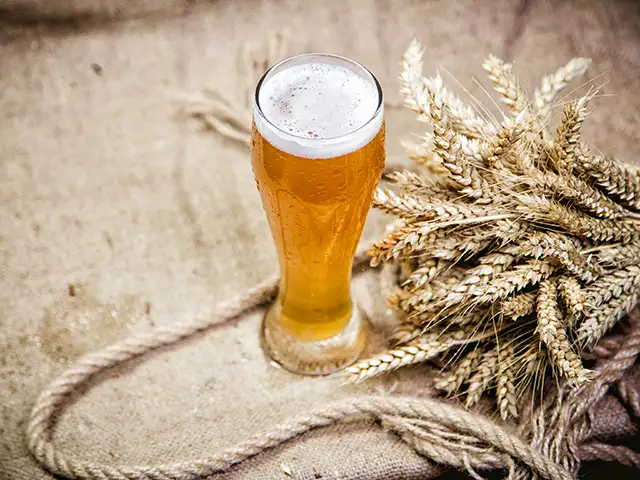
Wheat beer, as the name suggests, is made up of at least 50 per cent wheat. The wheat content is much higher than in other beers that primarily contain barley or rye.
While most wheat beers are pale and cloudy, they are also light and refreshing.
Some varieties are Hefeweizen (a Bavarian beer with banana, bubblegum, and clove notes), Dunkelweizen (a darker hefeweizen with a more roasted malt), Weizenbock (a stronger hefeweizen with more fruit and malt flavours), Witbier (a Belgian style wheat beer), Berliner Weisse (a northern Bavarian light and sour beer), and American Wheat (the American version of a German wheat beer).
Wheat beer, as the name suggests, is made up of at least 50 per cent wheat. The wheat content is much higher than in other beers that primarily contain barley or rye.
While most wheat beers are pale..
Read More
You can love India Pale Ales (IPAs), or hate them, but this is one category you definitely can't ignore. IPAs come in a range of styles; some may be bitter and have high alcohol content, while the others will taste citrus or fruity. Some of the common IPA styles include British IPA, West Coast IPA, Oat IPA, Belgian IPA, and Sour IPA.
You can love India Pale Ales (IPAs), or hate them, but this is one category you definitely can't ignore. IPAs come in a range of styles; some may be bitter and have high alcohol content, while the ..
By 12th century AD, the imperial monopoly of making sake was dissolved and common people began to try their hands at it at home. Soon sake became a way of life in Japan.
Sake is rice, water and koji, the yeast mould that feasts on rice. The better the ingredients the better the drink. It all starts with rice.
ADVERTISEMENT
The otherwise inedible rice, saka mai (sake rice), is not what people cook at home for food. But this short-grained rice has a large enough kernel with starch content concentrated in the centre. Since sake uses only starch, the grains should also be brawny enough to go through some intense polishing, to remove the bran. The more it is polished, the clearer the sake will be. There are more than 80 types of sake rice that are bottled in Japan. Now twist your tongue around these names: yamadanishiki, miyamanishiki, gohyakumangoku and omachi. These are some of the most popular varieties.
ADVERTISEMENT
Water is another ingredient that decides the quality of sake. Brewers look for sources — lakes, rivers and wells — that can make a difference to the taste. The koji mould, formed by kneading yeast and rice by hand or machine, breaks the starch in the grains to sugar and finally to alcohol. Multiple fermentation eases out the essence of rice. The resulting liquid may have more than 20% alcohol, which will then be diluted to 15% by adding water. Lees are removed, although there are people who like a bit of chewy stuff with the drink and some productions cater to their taste.
International Beer Day: More than just your favourite drink! Some hidden qualities of beer you need to know about
1/5
Light, bubbly and refreshing, there's nothing a mug of beer can't solve! Whether you plan to spend a lazy Sunday in front of the TV or its brunch day with friends, it's truly the drink for all reasons.
Light, bubbly and refreshing, there's nothing a mug of beer can't solve! Whether you plan to spend a lazy Sunday in front of the TV or its brunch day with friends, it's truly the drink for all reason..
Read More
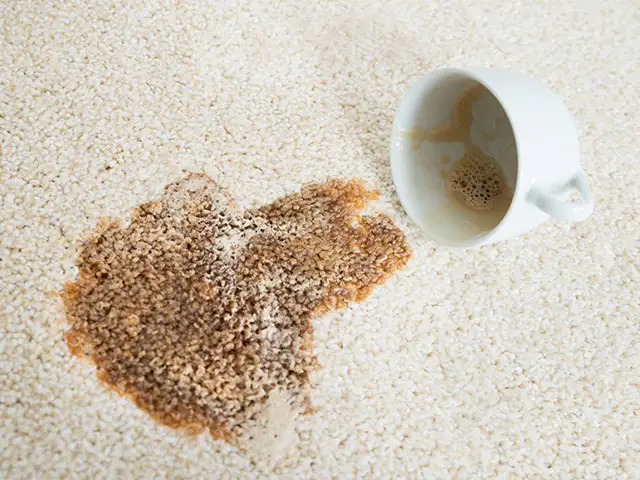
Spilled your morning latte on your precious carpet? Fret not, beer can come to the rescue. Yes, you read that right, beer can be used to remove rug stains. All you need to do is pour some beer over the stain and blot with a clean towel.
Spilled your morning latte on your precious carpet? Fret not, beer can come to the rescue. Yes, you read that right, beer can be used to remove rug stains. All you need to do is pour some beer over t..
Read More
Have some leftover beer from the previous night? Don't throw it. Flat beer makes for great wood polish. Pour some on a soft cloth, rub your coffee table and within no time the shine will be back.
Have some leftover beer from the previous night? Don't throw it. Flat beer makes for great wood polish. Pour some on a soft cloth, rub your coffee table and within no time the shine will be back.
It's always a good time for beer, even when you're in the shower. Except this time it can be used to give you envy-inducing shiny hair. The proteins in beer help to add shine and volume to dull hair. It is a great natural hair conditioner - thanks to the vitamins and natural sugars present in it. All you have to do is, pour it over your hair (some people prefer to use flat beer), let it sit for a few minutes and then rinse with cold water.
It's always a good time for beer, even when you're in the shower. Except this time it can be used to give you envy-inducing shiny hair. The proteins in beer help to add shine and volume to dull hair...
Read More
If pests are one of your major concerns while throwing a garden party, all you need to do is pour some stale beer in a bucket and keep it in the corner of your backyard. Turns out, this will attract small flies and mosquitoes towards it and keep your garden pest free.
If pests are one of your major concerns while throwing a garden party, all you need to do is pour some stale beer in a bucket and keep it in the corner of your backyard. Turns out, this will attract ..
The drink benefits from a storage of nine to twelve months before it is ready to be bottled as sake.
In certain types of sake, a little alcohol is added to extract the flavours and aromas of the brew. However, toji, the sake brewer. will tell you how to keep such meddling to the minimum to make quality stuff. Toji, responsible for the final taste of the drink, is highly respected in the brewing industry.
Sakes range from the ordinary to the premium. The difference depends on the quality of ingredients, the degree to which the rice has been polished (the more the costlier) and the quantity of additives (the more the cheaper) in the final drink. Traditionally, sake is drunk from a small ceramic or a wooden cup, but these days premium brands focus on glassware, which they think can make people appreciate the look of the cloudy white drink.
How do you drink it? On formal occasions, wait for your friend to catch your glass empty and let her fill it up. You can then return the courtesy by refilling her glass the moment it gets empty (if you are the host, pour the drink till it overflows, which shows you are generous).
Like wine, sake can be sweet or dry. It can be taken at room temperature or frozen. While hot sakes warm you up in winters, icy sake is good for summers. Take a whiff of it, and it will remind you of fruits, nuts and caramel. A good sake will taste mild and delicately balanced — a bit sweet, a tad bitter and acidic. Premium sakes are complex in their flavour and notes.
It is a misconception that sake goes well only with Japanese cuisine. It is wonderful with cheese and steak.
Sake is now gulped down outside Japan, with breweries popping up in China, North America, South America, Taiwan, Hong Kong and Australia.
And they are learning to say “kanpai!” Well, that is the Japanese way of saying cheers!