At the end of a long day’s shooting in Mumbai for the hit Netflix show Ugly Delicious the host, the US chef David Chang and his friend, comedian Aziz Ansari, landed up at a McDonald’s in Nariman Point.
It wasn’t because after eating Indian food all day for the “Don’t Call It Curry” episode, which recently released online, they were eager for a fast food break. But one idea for the show was to look at how McDonald’s has Indianised its menu and what this says about local tastes.
This can be a fun way to get a snapshot of local tastes — Japan, for instance, has shrimp burgers and Italy slathers buns with Nutella — but there was one problem. The team didn’t actually have permission to shoot at a McDonald’s in India so all they could do was film Chang and Ansari entering and taking away their orders to eat on Marine Drive. (This episode didn’t make the final edit.)
When they entered McDonald’s, the young manager on duty instantly recognised Chang from the first season of Ugly Delicious. Far from being apprehensive about having the high-profile chef in his outlet, he was thrilled. While he couldn’t let them shoot inside, he happily led them through the menu — recommending piri piri fries — and eagerly asked Chang if he had plans to bring his Momofuku chain of restaurants to India. (Personal disclosure: I feature briefly in the episode, showing Chang and Ansari around a vegetable market in Mumbai and a thali restaurant. All this was in an informal and unpaid capacity and the final show was as much a revelation to me as anyone else.)
Expectations run high with international shows like Ugly Delicious. Chang starts by asking why a food culture as ancient and varied as India’s is not better known globally, and many people were clearly interested in the answer.
ADVERTISEMENT
When news broke that he was coming to India, social media had many suggestions for what he should cover — and once the final episode released, it erupted again with approval or criticism of the show’s choices.
This is to be expected. People are passionate about food and like to see their choices validated. But it shouldn’t matter much beyond friendly arguments. Chang himself acknowledges in the show that “if you’re Indian you don’t need anyone else’s approval”. What the world feels about Indian food makes no difference to how and what we eat in India. One Netflix episode will hardly make much difference.
And yet the reaction of that young Mc-Donald’s manager in Mumbai shows the value of such shows. If they can enthuse a new audience about food issues, get them to ask questions, argue and look for new experiences, then that is of real value. A global platform like Netflix also reaches beyond just the English-speaking world, to countries that we rarely consider when we think about the potential of Indian food.
Ugly Delicious is primarily aimed at the American market, but Chang’s question could equally be put to most European countries, or much of Asia beyond the Indian subcontinent, or South America and Africa. It is really only countries in the former British empire that have some awareness of Indian food, first from Indians who went or were taken there in colonial times, and more recent migration due to their English-speaking link.
ADVERTISEMENT
Food culture in these countries, like the UK and Australia, now demonstrates familiarity with Indian food by disdaining the idea of “curry powder”, and this features in Ugly Delicious as well. By contrast in France “le curry” is still called for in a few classic dishes, like mouclade, mussels in a curry-flavoured sauce.
According to Larousse Gastronomique, the French cooking encyclopedia, they even fixed the composition of curry powder, something no Brit or Indian ever tried: “In 1884, at the Universal Paris Exhibition the composition of curry powder was set by decree: 34 gms tamarind; 44 gms onions; 20 gms coriander; 5 gms chilli pepper; 3 gms turmeric; 2 gms cumin; 3 gms fenugreek; 2 gms pepper; 2 gms mustard.”
ADVERTISEMENT
Shows like Ugly Delicious help explode the myth of a universal curry powder, but they can also set up a second myth — that Indians never use curry powders, but grind spices fresh for every dish. Recipes in such places start with a long list of spices and, ironically, this creates a prejudice that Indian food is very complicated and also spicy, because people just scan the names of the spices and not the actual amounts that end up going in the dish.
In reality, of course, Indians use masala powders all the time, and these reduce the cost and, above all, the effort that goes into regular cooking. Another point rarely made about curry powders is that as much as taste, they are about the texture of the dish. Coriander powder, for example, which is a large part of most spice mixes, is a very effective thickening agent. The bulk of East Indian bottle masala, a well-known spice mix in Mumbai, is simply toasted, ground wheat, which thickens watery curries to the ideal texture for eating with rice.
Points like these can be made once an interaction with Indian food has got going, and for all the inevitable limitations of what can be crammed in a single episode, shows like Ugly Delicious manage that. And as that young Mc-Donald’s manager who was so delighted to meet Chang in Mumbai showed, they also build a wider appetite for food interest of all kinds.
Like To Instagram Your Food? Here's What Marco Pierre White, Garima Arora And Other Celeb Chefs Think
1/7
Documenting on Instagram what’s on your plate seems to be the order of the day. But what do these chefs think when patrons whip out their phones and photograph the food?
Documenting on Instagram what’s on your plate seems to be the order of the day. But what do these chefs think when patrons whip out their phones and photograph the food?
Michelin star chef Marco Pierre White
“Everyone goes to restaurants for different reasons — some go for the ambiance, some for the name on the door, some to click pictures of the food. I go to restaurants to be fed. As it is, chefs spend so much time making dishes look pretty, that by the time the food reaches the table, it’s tepid. Enjoy the food, not your phone.”
Michelin star chef Marco Pierre White
“Everyone goes to restaurants for different reasons — some go for the ambiance, some for the name on the door, some to click pictures of the food. I go to rest..
Read More
Michelin Star Chef Garima Arora
“It is a two-way street and you have to meet halfway. The guests have to respect your food and we have to understand that the guests have to enjoy the experience in their own way.”
Michelin Star Chef Garima Arora
“It is a two-way street and you have to meet halfway. The guests have to respect your food and we have to understand that the guests have to enjoy the experience in ..
Read More
Manu Chandra, Chef Partner, Olive Group
“I see no harm in people Instagramming their food before eating. It’s far less harmful than being glued to your phone through out the meal. Also it’s free marketing for restaurants.
"People who use their phone during dinner, well that is rude. No message will end the world if you don’t check it whilst eating. I don’t use social media much and don’t see how it’s had any adverse effect on my life. I’m just fine, thank you.”
Manu Chandra, Chef Partner, Olive Group
“I see no harm in people Instagramming their food before eating. It’s far less harmful than being glued to your phone through out the meal. Also it’s free ma..
Read More
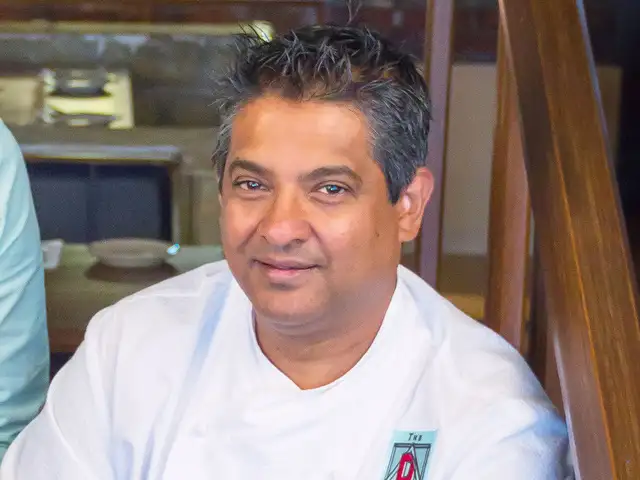
Chef And Restaurateur Floyd Cardoz
“Everyone’s dining experience is their own. If someone wants to Instagram their food, I do not have a problem with it. I love taking pictures of my food, I love recording what I have eaten — it helps me remember any credible dish I have had. I think people should do it, as long as they don’t use the flash and disturb other guests. You’re paying for it, you can do what you want. Taking pictures of what we have eaten have become a big part of how we live. I want my guests to have a good time.”
Chef And Restaurateur Floyd Cardoz
“Everyone’s dining experience is their own. If someone wants to Instagram their food, I do not have a problem with it. I love taking pictures of my food, I love re..
Read More
Indian Celebrity Chef And Restaurateur Ritu Dalmia
“I am not much of a social media person, but I have to admit I like Instagram. You see some amazing food pictures and videos on it. I think I am no one to judge whether it is rude or reasonable, that is for the other people on the table to decide. As a chef and host of the restaurant, I have no problem with it. They want to capture the beauty of their plate, I consider it as a compliment.”
Indian Celebrity Chef And Restaurateur Ritu Dalmia
“I am not much of a social media person, but I have to admit I like Instagram. You see some amazing food pictures and videos on it. I think I am n..
Read More
Michelin Star Chef Srijith Gopinathan
“This is obviously the trend of this generation and I believe it’s one of the best ways to connect, showcase and communicate. This is an idea that one should embrace looking at the numerous advantages around it rather than some of the annoying factors. Like everything, social media has its pros and cons. However, I feel the pros outweigh the cons. Using your phone on the table is reasonable as long as it’s used only to take a picture. Beyond this, it is just rude.”.
Michelin Star Chef Srijith Gopinathan
“This is obviously the trend of this generation and I believe it’s one of the best ways to connect, showcase and communicate. This is an idea that one should e..