Homing in on home of human beings
Scientists have traced the common roots of the banyan tree of humanity.
By ET Bureau |

Getty Images
Following the example of Assam, other Indian states are considering a register of citizenship that will determine who is an ‘insider’ and who is an ‘outsider’. Across the globe, countries are facing waves of mass migration caused by prolonged civil strife, poverty and other acute hardships. Scientists have determined that these migratory movements are a case of proto-history repeating itself.
That the entire human race has sprung from a common root, located in what is today’s Africa, has long been established by geneticists who have followed the spoor of the DNA of the so-called ‘Mitochondrial Eve’, the mother of all mankind.
Now, a group of scientists have pinpointed her precise location: the region that spans Botswana, Namibia and Zimbabwe. Though now an arid zone, the area was covered with lush wetlands that 200,000 years ago gave rise to the earliest ancestors of Homo sapiens. Between 120,000 and 110,000 years ago, two major migrations took place, one to the northeast, and the other to the southwest, leaving behind a residual population of indigenes.
These findings give an entirely new mension as to what should be called ‘ghare’ and what ‘baire’ for the entirety of the human species, and before the invention of frontiers and passport control, provide the ‘inside’ story of humanity.
That the entire human race has sprung from a common root, located in what is today’s Africa, has long been established by geneticists who have followed the spoor of the DNA of the so-called ‘Mitochondrial Eve’, the mother of all mankind.
Now, a group of scientists have pinpointed her precise location: the region that spans Botswana, Namibia and Zimbabwe. Though now an arid zone, the area was covered with lush wetlands that 200,000 years ago gave rise to the earliest ancestors of Homo sapiens. Between 120,000 and 110,000 years ago, two major migrations took place, one to the northeast, and the other to the southwest, leaving behind a residual population of indigenes.
These findings give an entirely new mension as to what should be called ‘ghare’ and what ‘baire’ for the entirety of the human species, and before the invention of frontiers and passport control, provide the ‘inside’ story of humanity.
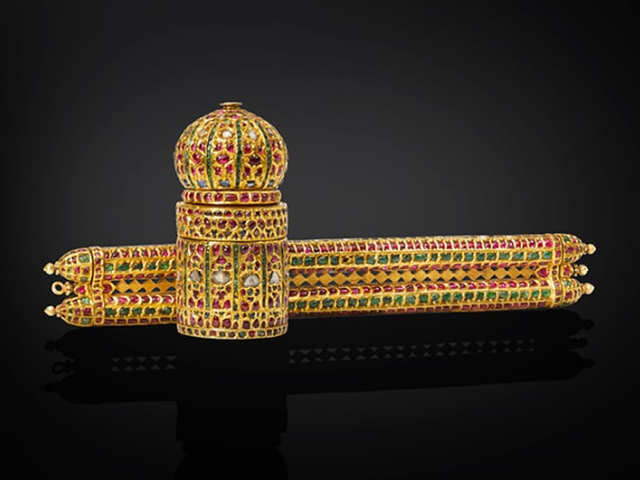
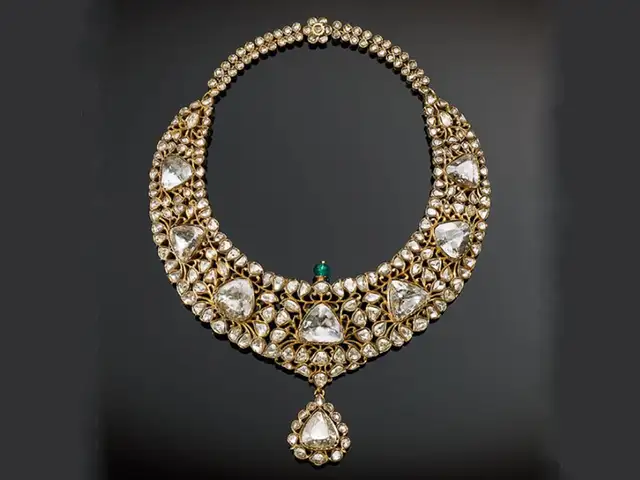
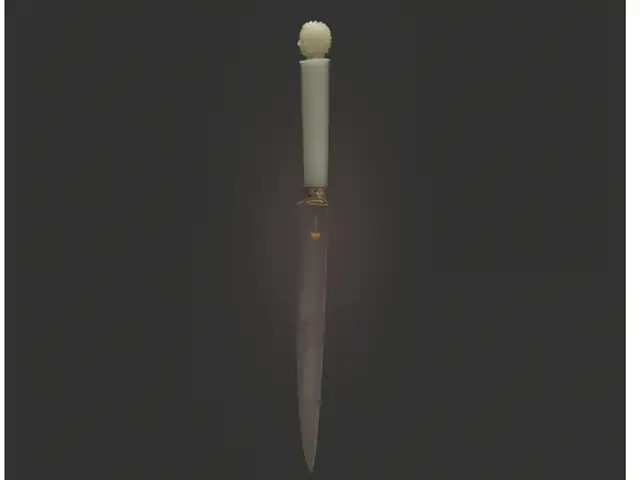
A dagger of an emperor, an ornate pen case and a 17th century necklace of the Nizam. These are among the 400 pieces of ancient Indian treasures and Mughal jewels set to go under the hammer in New York on June 19.
It is a known fact that during the reign of the Mughal dynasty, jewelled pen case and inkwell sets were presented to persons of utmost distinction. This emerald, ruby and diamond-set pen case and inkwell has the engraving of a sacred swan or hamsa under the inkwell. It is dated back to the late 16th century and is said to have originated in the Deccan region.




Download
The Economic Times Business News App for the Latest News in Business, Sensex, Stock Market Updates & More.
The Economic Times Business News App for the Latest News in Business, Sensex, Stock Market Updates & More.
ADVERTISEMENT


