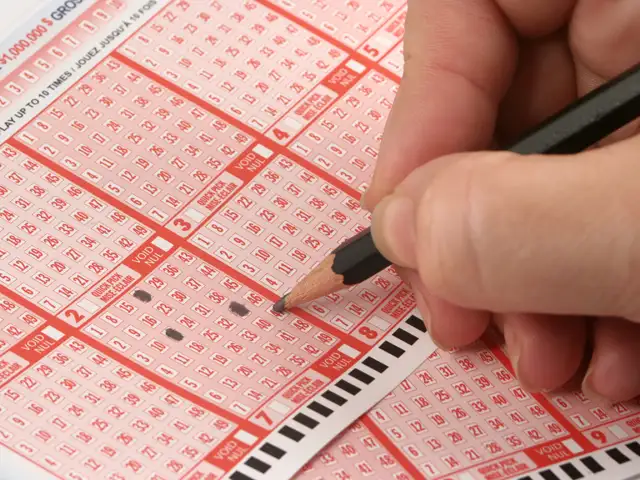
The moral history of gambling is littered with cases of addiction, resulting in personal and familial ruin.
Gambling, in India, goes back a long way. In its 2018 report on the subject, the Law Commission of India (LCI) recommended that sports-related betting be legalized, citing ancient civic texts like the Manusmriti to demonstrate its prevalence in medieval India. In contemporary times, betting has been resigned to being a clandestine pastime, the practitioners of which operate outside the ambit of the law. The online gaming market, however, has witnessed exponential growth over the past few years, with revenue touching Rs. 4,380 crore in FY18, according to data collated by KPMG.
This includes money generated from fantasy sports, which unlike sports betting, is deemed a “game of skill”, and hence a legal business activity in India. But betting on sporting events, though outlawed by officials, is thriving. The Federation of Indian Chambers of Commerce & Industry (FICCI) estimates that money to the tune of Rs. 3 lakh crore changes hands every year, mainly through bookies, international websites, or technology-enabled channels such as encrypted chat rooms.
FICCI reckons that the government is inadvertently forfeiting windfall gains to the tune of Rs 19,000 crore in tax revenue every year by rendering sports betting illegal. Moreover, the lack of regulation has caused gambling to become a socio-economic problem - as demonstrated by recurring match-fixing scandals – that threatens to undermine the credibility of professional sport. FICCI and the AIGF (All India Gaming Federation), in a joint session on July 29 proposed drawing up a regulatory framework to remedy the negative perception surrounding online sports betting.
“Positive conduct by athletes, administrators, officials, supporters and other stakeholders, on and off the sporting arena is extremely important. This enhances the reputation and standing of the sporting contest and of sports overall,” said David Foster, Head of Regulatory Affairs at GVC, the multinational sports betting and gaming group. GVC runs brands like Bwin, Ladbrokes and Casino Club. While betting generates revenue for the exchequer, he argues that regulation of the sector also serves to minimize fraud on the part of bookmakers.
Shashi Tharoor, who introduced a Private Member’s Bill titled the Sports (Online Gaming and Prevention of Fraud) Bill in Parliament on December 28, 2018, is of the opinion that the legitimizing sports betting could root out the thorny issues that have given it a bad name. “The long-term prognosis for sports and betting is bleak if corruption is not dealt with. While self-regulatory practices need to be followed by the industry, there is an urgent need to have a statutory framework with government oversight to ensure service providers are following license conditions to track suspicious betting patterns and to have some control over the money flow to curb the generation of black money,” he said.
Since betting operate in the shadows, the money generated from it ends up in the underground economy.
ADVERTISEMENT
While individual states have the prerogative to draft laws pertaining to gambling, the absence of a Central regulation has been detrimental to all stakeholders, reckons Roland Landers, CEO of the All India Gaming Federation. Landers highlighted this point by giving the examples of Goa and Sikkim, where the gaming industry has created around 7,000 direct jobs, and 3,000 indirect jobs in ancillary sectors like telecommunication, marketing, and financial services.
Moreover, Tharoor’s proposed legislation mandates the creation of uniform technical and operational standards to monitor online betting platforms. These will be subject to routine security checks by the AIGF and independent audit firms. The moral history of gambling is littered with cases of addiction, resulting in personal and familial ruin. Proponents of online betting insist that this concern will be addressed through responsible gaming policies like regular audits, age verification, and enforced spending limits, thereby curbing addiction.
Since they operate in the shadows, the money generated from sports betting ends up in the underground economy. “It has been proven that beyond doubt that the money derived from the prevalent illegal sports betting system fund cross border terrorism,” Landers said. The Bill seeks to maintain a centralized ledger of all transactions made on online betting platforms – a move that would free up government manpower, given that law enforcement agencies spend approximately 30 per cent of their time on cases pertaining to gambling.
Baichung Bhutia, nicknamed the Sikkimese Sniper for his exploits on the football field, also espoused the view that betting ought to be legalized, given the success of the industry in his home state. “Regularising the industry will lead to revenue generation for the state, which should be further used in development of the sports industry,” he said.
ADVERTISEMENT
Will Gambling Become Legal In India? A Look At Governments That Taxed Their Way To Richer Horizons
1/6
With the Law Commission of India recommending that gambling and sports betting be legalised, we examine other governments that taxed their way to richer horizons.
With the Law Commission of India recommending that gambling and sports betting be legalised, we examine other governments that taxed their way to richer horizons.
While most forms of sports betting are banned in mainland China, people can gamble their income on two state-run official lotteries, the China Sports Lottery and the China Welfare Lottery.
Last year, both lotteries generated a combined total of 426.6 billion yuan in revenue, making it the second largest lottery in the world. The China Sports Lottery allows people to stake money only on selected sporting events like international football matches or the FIFA World Cup.
Betting on horses is banned but that could change soon with the government trying to transform Hainan island into a horse racing and sport lottery hub.
While most forms of sports betting are banned in mainland China, people can gamble their income on two state-run official lotteries, the China Sports Lottery and the China Welfare Lottery. Last year,..
Read More
Casino gambling wasn’t legalised in Japan until December 2016, but the Japanese government had plenty of other legalised options to rake in gaming revenue such as pachinko parlours or government controlled sports betting.
By controlling betting on horse races, motorbike racing, bicycle racing, powerboat racing and football, they created a fivetrillion-yen market that could be taxed.
Another national Japanese pastime, Pachinko generates roughly 21.6 trillion yen in revenue each year by allowing customers to try their luck at pinball-like machines.
Prizes garnered are then exchanged for cash at nearby shops, a form of legalised gambling.
Casino gambling wasn’t legalised in Japan until December 2016, but the Japanese government had plenty of other legalised options to rake in gaming revenue such as pachinko parlours or government cont..
Read More
Unlike other countries, Mexico legalised sports betting relatively late. In 2004, the Mexican government removed the ban and approved the operation of certain number-based games.
Today, gamblers can enjoy betting on horseracing, dog racing, bullfighting, cockfighting, bingo, lotteries and scratch cards.
Video-style gaming machines have also been introduced but football and baseball still remain the greatest sources of gaming revenue for the country.
Unlike other countries, Mexico legalised sports betting relatively late. In 2004, the Mexican government removed the ban and approved the operation of certain number-based games. Today, gamblers can ..
Read More
Each year millions of tourists flock to the gambling capital of the world and the government has been quick to capitalise on it by levying a 39 per cent tax on casino gross gaming revenue.
Out of the 39, 35 per cent is government tax and the remainder is accrued in levies for community causes.
In the last six months alone, the Macau government has collected approximately $6.65 billion from direct taxes on gaming i.e., roughly 83.6 percent of their total revenue.
While the government is also trying to increase their non-gaming revenue, it falls far short of what the casinos rake in.
Each year millions of tourists flock to the gambling capital of the world and the government has been quick to capitalise on it by levying a 39 per cent tax on casino gross gaming revenue. Out of the..
Read More
According to Danish regulator Spillemyndigheden, online gaming accounts for more than half of the annual gaming revenue generated.
In 2017, the country garnered $1.53 billion in gambling revenue from lotteries, sports betting (both online and off-line) and online casinos.
The online gaming market accounted for 51.5 per cent of total gambling revenue, an increase from 47.4 per cent in the previous year.
The regulator also measured gross gaming revenue per capita across countries and found that Denmark ranks third for betting and casino games.
(Text: Shannon Tellis)
According to Danish regulator Spillemyndigheden, online gaming accounts for more than half of the annual gaming revenue generated. In 2017, the country garnered $1.53 billion in gambling revenue from..