Most fear taking up these issues strongly with employers, given the spate of job losses and pay cuts all around.
MUMBAI|KOLKATA: By 11am on a Sunday, says Maruti Suzuki chairman RC Bhargava, he has already fielded a spate of work-related calls.
Earlier, he had the luxury of switching off from work after a day in the office, but not anymore. “Now I’m constantly tackling calls, interviews, etc.,” says the 85-year-old who’s now been forbidden to go to office by his family.
At a top strategy consulting firm, a partner says he logs in for calls at 8am, and that continues till 10pm and sometimes beyond, as people schedule meetings irrespective of time zones and holidays. Another senior BFSI executive working out of a guest house in Bengaluru routinely ends up missing lunch during his non-stop workdays.
Work from home has its advantages as it gives employees the option of not having to step out of home amid the Covid-19 pandemic. But on the other hand, say India Inc executives, it has almost obliterated the boundaries between office and personal life.
A global study released in March by NordVPN, a provider of personal virtual private network service, showed that across countries, homebound executives were logging in more hours on the job than before. In Europe it was as much as two hours extra each day; in the US, it was three hours.
While India was not among the countries covered in the survey — WFH here began in end-March — the situation here is similar, say executives and psychologists alike.
ADVERTISEMENT
“At least 40-50% of the cases I’m getting each week are from people complaining about how they aren’t being able to handle WFH,” says clinical psychologist Seema Hingorani. Employees, some of whom are working till the wee hours of the morning, aren’t getting me-time or family time; there are complaints of headaches and body aches, which again is leading to anxiety and depression because, given the current job situation, they feel they have no choice, she says.
“Most are working much more despite salary deductions,” adds Hingorani.
“The usual workday is now stretched as teams start working sooner and end the day much later than usual,” says Neelabh Sanyal, the chief operating officer of online investment platform Kuvera.
Food timings of employees have gone for a toss, and there is a spike in junk food eating and caffeine overload while working.
ADVERTISEMENT
ET spoke to employees across sectors and the most common grievances included much longer work hours, lack of privacy, intrusion into weekends and holidays because of meetings/video-conferences leading to discontent in families and food timings going for a toss. However, most fear taking this up strongly with employers, given the spate of job losses and pay cuts all around.
Other side-effects include excessive weight gain through junk food eating and caffeine overload while working. Hingorani cites the example of an IT-sector employee who unwittingly gained 7 kgs while bingeing on frankies during work; that in turn was a trigger for depression.
ADVERTISEMENT
Another lawyer, who worked from Monday to Sunday from the beginning of the lockdown, sometimes up to 2-3am, had to finally tell her firm that she would not take on any work over the weekends.
In the current unprecedented scenario, employees don't have a choice, and most don't mind too, says Mahindra & Mahindra chief HR officer Rajeshwar Tripathi. “However, this can't go on permanently. Corporates need to draw a line. They can't intrude into employee privacy and personal time.”
Maneesh Menda, the HR head at RBS India, puts the onus on employees as well. “It is important that employees are self-disciplined and create boundaries for working hours,” he says.
Dealing with blurring work-life boundaries: - Take time out for daily exercise. Spend time with family - Opt for a healthy diet, rich in anti-oxidants and Omega-3 fatty acids. Cut down on tea, coffee, processed sugar, flour etc - Try to stick to a daily routine - Tell your organisation what you are going through - Boundary management with colleagues/bosses is important. Say you are willing to do extra work but not at the cost of your health
Tired Of Never-Ending Working From Home Shift? 4 Tips To Maintain A Work-Life Balance
1/6
Working from home has become the new normal as companies try to minimise disruptions and keep operations running as close to normal as possible. But with most of us working from home, the lines between "work" and "home" could become quickly blurred.
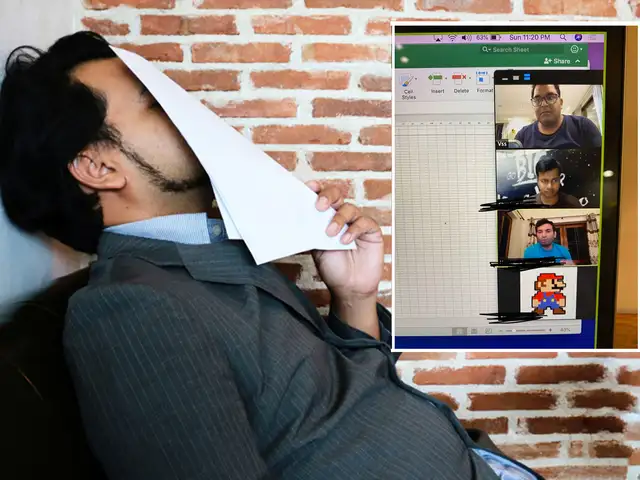
A few weeks ago, Paytm founder Vijay Shekhar Sharma took to Twitter to announce that he had been so wrapped up in Zoom meetings (inset from Sharma's Twitter account) that he forgot it was Sunday. And that seems to be the case with most entrepreneurs who are dealing with investor pressure and the stress of a looming economic slowdown.
Working from home has become the new normal as companies try to minimise disruptions and keep operations running as close to normal as possible. But with most of us working from home, the lines betwe..
Read More
In a recent media interview, Zerodha CEO Nithin Kamath (L) confessed, “I start work around 8.30 am and work till I sleep. I am definitely overworking, so are a few of my colleagues.”
“I had assumed that there would be more family time than before (but) the opposite has happened. Maybe I am spending lesser time than before because the boundary between work and personal time has disappeared. That said, daily I work out with my wife and play music with my son, and enjoy a drink with my brother and father once in a few days.”
If you find yourself in a similar situation as Kamath or Paytm's Vijay Shekhar Sharma (R), here are a few practical ways you can quickly establish boundaries.
In a recent media interview, Zerodha CEO Nithin Kamath (L) confessed, “I start work around 8.30 am and work till I sleep. I am definitely overworking, so are a few of my colleagues.”“I had assumed t..
Read More
Working from home can be invasive to your personal life. Without scheduled work hours, work can creep into your home life and just as personal errands can creep into work hours. To avoid this, start and end your workday at the same time every day. Don’t mix household chores into work hours and vice-versa.
Working from home can be invasive to your personal life. Without scheduled work hours, work can creep into your home life and just as personal errands can creep into work hours. To avoid this, start ..
Read More
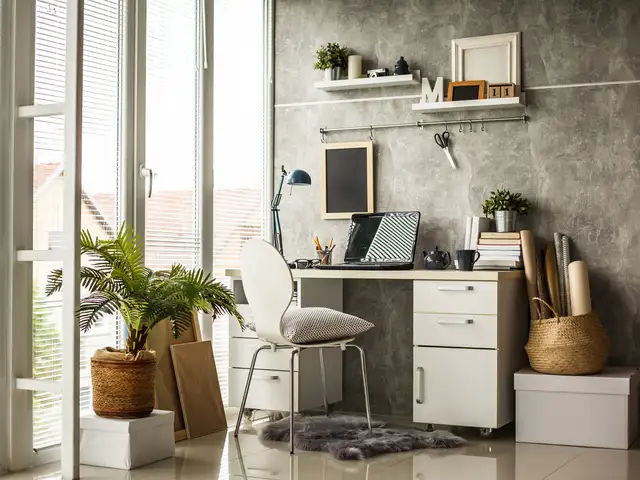
Studies have shown that having a designated workspace helps put your brain into work mode and enhances productivity. If you can’t set aside a designated workspace (due to a space crunch), try to create barriers in other ways. For example, use your laptop for work calls/meetings and use your phone to check social media or chat with friends. Having different devices for different purposes will help your brain switch from work to play mode.
Studies have shown that having a designated workspace helps put your brain into work mode and enhances productivity. If you can’t set aside a designated workspace (due to a space crunch), try to crea..
Read More
A shutdown ritual is a set routine of actions that you perform at the end of each workday to finalize your day and signify that your workday is done. Cal Newport, the author of Deep Work, initiated it as a New Years’ resolution to get the most of his relaxation time.
“It has worked better than I imagined. I’ve basically eliminated stressful work-related thoughts from my evenings and weekends. This has really improved my ability to relax and focus on other things,” he wrote on his website.
Some activities you can include in your shutdown ritual are preparing a to-do list for the next day, going for a walk, signing up for an evening fitness class among others. The goal isn’t what you do but that you do something to replace and simulate your commute, which is a built-in shutdown ritual.
A shutdown ritual is a set routine of actions that you perform at the end of each workday to finalize your day and signify that your workday is done. Cal Newport, the author of Deep Work, initiated i..
Read More
One way to ensure that you’re not blurring the lines between work and home is to create a no-work zone for at least an hour before you go to bed and after you wake up. This will keep your mind ample time to properly recharge.
Research shows that what you do before you go to sleep has an impact on the quality of sleep, and your engagement, your ability to focus, the next day. Passive leisure activities, like watching TV or reading a book, were associated with better sleep than doing something like answering work emails.
One way to ensure that you’re not blurring the lines between work and home is to create a no-work zone for at least an hour before you go to bed and after you wake up. This will keep your mind ample ..
Business News › Magazines › Panache › Excessive weight gain, longer work hours, intrusion into weekends & holidays: Remote working comes with side-effectsText Size:AAA