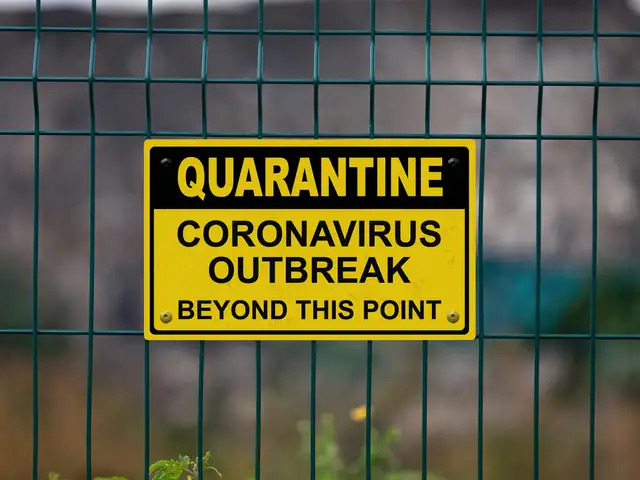
Endgame Covid-19: The cure for coronavirus may not be that far
WHO has given a 6-point strategy on lifting the restrictions and speeding up testing for several countries.

Convalescent Plasma Therapy Takes Off In India
The treatment involves blood transfusion from a patient who has recovered from Covid-19. Hospitals in New Delhi and Mumbai have used this therapy to treat severely ill patients, which has aided their recovery. Maharashtra has approached the ICMR to officially start clinical trials. If shown to be effective, the therapy can be a breather for severely ill patients until a vaccine hits the market.
Research By The Council For Scientific And Industrial Research (CSIR)
CSIR is researching on activated vaccine development such as RNA vaccines and recombinant DNA vaccines, said Lav Agrawal, joint secretary in the health ministry. CSIR is also working towards synthesising the drug Favipiravir that is currently under trial in Japan.
The coronavirus outbreak has brought the world to a halt. With over 471,794 positive cases and 21,297 deaths, COVID-19 outbreak has caused global panic. Italy, Iran, US happen to be the worst hit countries in addition to China, which is the epicentre of the outbreak.
As the phrase goes, the ‘streets are talking’ and rumour mills are running overtime. Several sceptics and tin foil hat bearers have been speculating and there are plenty of coronavirus conspiracy theories doing the rounds on the Internet.
Here are some of the most spine-chilling, eerie and scary conspiracy theories surrounding COVID-19.
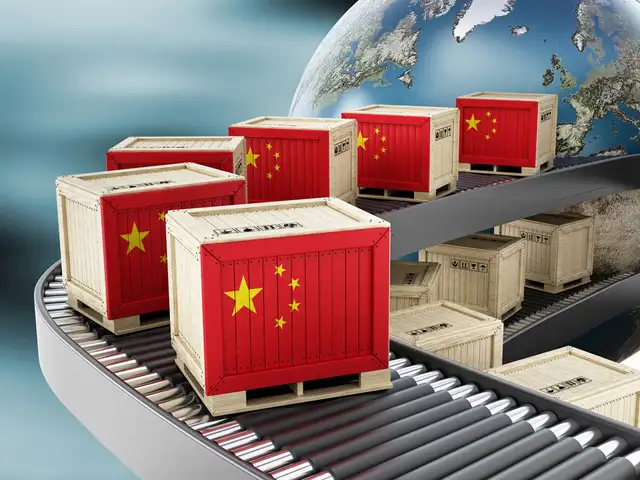
Ever since the news about the coronavirus was picked up by global media, speculations about the communist government of China trying to ‘cover-up’ the outbreak and hide the official figures were rife.
The fact that the Chinese Government tried to suppress the attempts of the whistleblowers (the insiders as well as eight doctors), who tried to warn the public of the pandemic, is rather alarming and didn’t help their cause.
While the rumours of the Chinese cover-up are unsubstantiated, once can only think about the popular proverb, ‘there’s no smoke, without fire’.
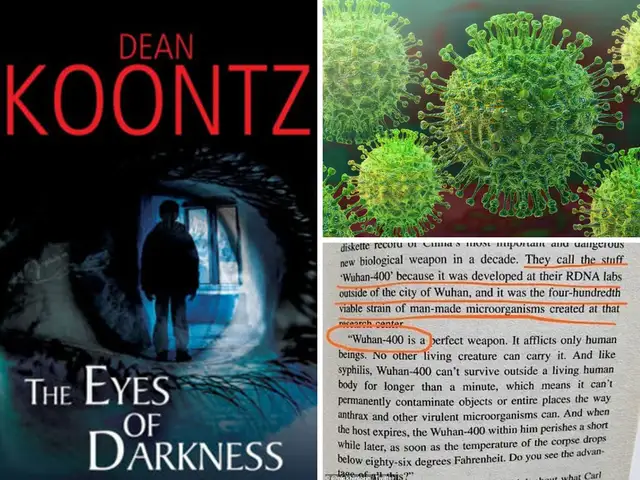
This theory, in all probability, is the scariest one and will send chills down your spine. Soon after the news of the outbreak broke, several users started pointing out that a passage from the 1981 book ‘The Eyes of Darkness’ by Dean Koontz eerily predicts the Coronavirus outbreak.
The photograph of the passage from the book went viral in no time and netizens couldn’t help but freak out because the resemblance was uncanny and the evidence was hard to dismiss.
To give you some background, the plot is based around a mother who attempts to find out what happened to her son after he mysteriously disappeared on a camping trip. It turns out that the boy is held in China – more specifically in Wuhan - the site of a deadly virus outbreak.
In the passage, a character named Dombey narrates an account of a virus called ‘Wuhan-400’ which was developed at the RDNA lab outside the city of Wuhan, and ‘ it was the four-hundredth viable strain of man-made microorganisms created at that research centre’.
The passage then gives intricate details about how the virus affects the human body. The chilling accuracy with which this 1981 book predicts the outbreak and the resemblance between ‘Wuhan-400’ and Coronavirus is eerie to say the least.
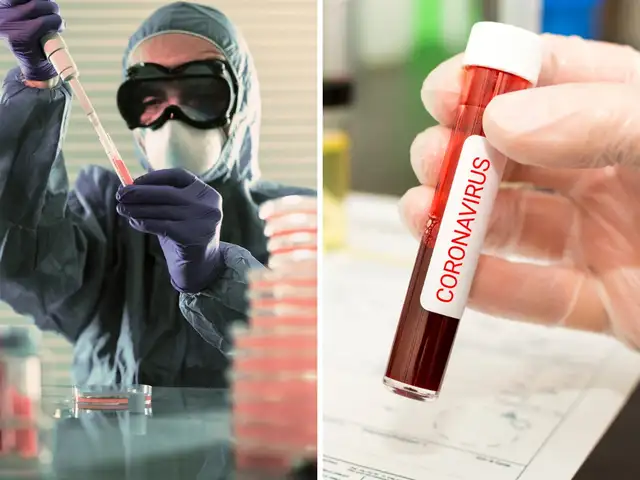
The Internet was brimming with conspiracies about the coronavirus, and, perhaps, one of the most prominent ones was that the virus could be a bioweapon. According to an ET Prime report, a group of Chinese scientists in Canada were accused of spying and were stripped of their access to Canada’s National Microbiology Lab (NML) which is known to work on some of the most deadly pathogens.
The alleged ‘policy breach’, highlighted the bioweapon program of other countries including China. Dr Francis Boyle, the creator of Bio Weapons Act, also claims that ‘the coronavirus is an offensive biological warfare weapon with DNA-genetic engineering’.
Again, the claims about coronavirus being a biological weapon are unsubstantiated.
Also Read: Is your beard putting you at risk of coronavirus?
Scientists haven’t been able to determine the origin of COVID-19 but speculations are rife that the virus originated in the seafood market. This was substantiated by reports from Chinese health authorities and the World Health Organization which said that “most” cases had links to the seafood market, which was closed on 1 January.
Sceptics on the online forums, however, have been sharing suspicions that the virus could have originated from Wuhan, Institute of Virology, which houses China’s only level- four biosafety laboratory (the highest-level classification of labs that study the deadliest viruses).
The first prominent personality to come out publicly and support the theory was the US senator Tom Cotton who appeared on Fox News to allege that the virus could indeed have originated from the lab.
Several netizens have also been alleging that this was an attempt to control the Chinese population. However, the claims are unsubstantiated.
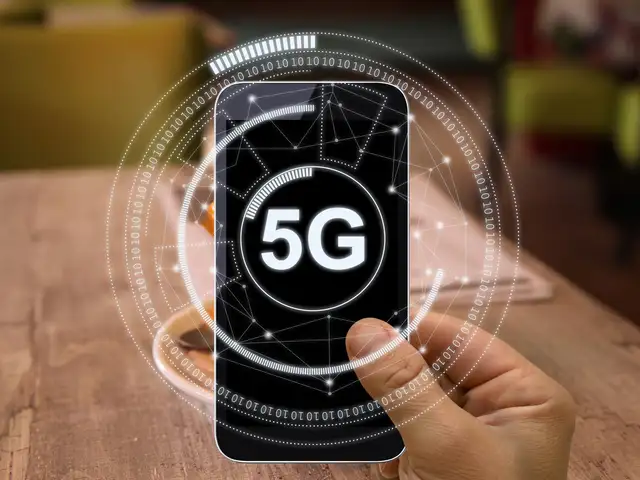
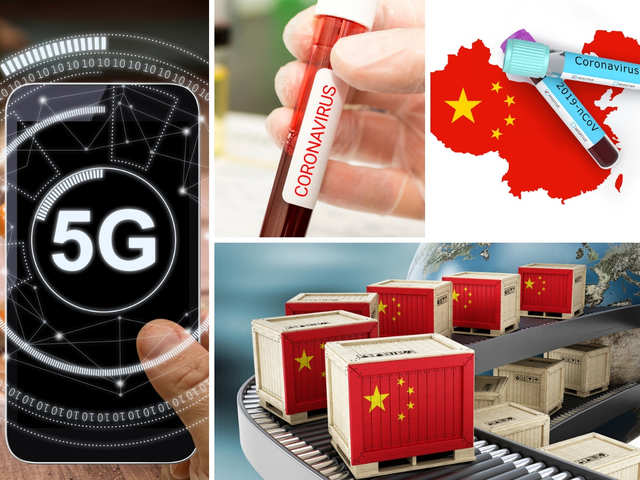
Rumours gained steam when Keri Hilson, popular American singer, with 4.2 million followers on Twitter, sent out tweets last week about the alleged connection between 5G and COVID-19, writing, "People have been trying to warn us about 5G for YEARS. Petitions, organizations, studies... what we're going through is the affects [sic] of radiation. 5G launched in CHINA. Nov 1, 2019. People dropped dead."
Several conspiracy theorists also alleged that the viral videos of people ‘dropping on the ground and fainting’ in China, were a result of 5G radio waves messing with the oxygen levels in blood of the general public.
Soon, a UK based fact checking website, FullFact, debunked the claims and argued that there is ‘no evidence that 5G is harmful to people’s health’.
Sceptics are almost everywhere. When the news about coronavirus spread, several skeptics on social media started accusing the global media of creating unnecessary panic around the novel coronavirus.
Netizens all over the world started comparing the outbreak to severe acute respiratory syndrome (SARS) outbreak which happened in 2003. Scientists argued that more contagious the virus, lesser is the mortality rate, which simply means that viruses which are highly contagious are less deadly.
The mortality rate for coronavirus as per a CIDRAP report is 2.3% while for SARS, it was a whopping 9.6%.
Is the media unnecessarily hyping up the pandemic? Or is the ‘2% mortality rate’ argument baseless?
‘The Simpsons’ is popular for various reasons. It is, of course, the longest running primetime scripted series and has won several accolades too. But, the animated show is also known for predicting several major events around the world before they happened.
From allegedly predicting the 9/11 attacks to Donald Trump announcing his presidency, the show is almost like an embodiment of Nostradamus. However, soon after the coronavirus outbreak, allegations of the show predicting the pandemic surfaced.
A February 20 Facebook post appeared and showed stills from a 1993 episode of the show in which both Homer Simpson and Principal Skinner are sick; another image shows a broadcaster reading off a piece of paper while the words "corona virus" and a cat appears on a screen behind him.
However, it turns out that the images were altered. Three images were from an episode called ‘Osaka flu’ where a factory worker coughs into a package for Homer and he falls sick. The text behind the broadcaster in the fourth image however, does not say ‘corona virus’ but ‘apocalypse meow’.
Gilead’s Remdesivir Shows Promise In New Trial
The experimental drug from US drug maker Gilead showed “significant” improvement in critically ill patients of Covid-19, while also shortening their recovery times, according to trial results published by University of Chicago.
South Korea Joins The Vaccine Race
The International Vaccine Institute, a non-profit organisation based in South Korea, the Korean National Institute of Health and US vaccine maker Inovio have received a grant of $6.9 million for trials of the company’s vaccines. This will be done in two phases in South Korea. This vaccine was one of three shortlisted by WHO, which had crossed the pre-clinical phase. Seoul has also said that vaccines to combat the pandemic will be given fast track approvals.
GSK, Sanofi Tie Up For A ‘Mega’ JV
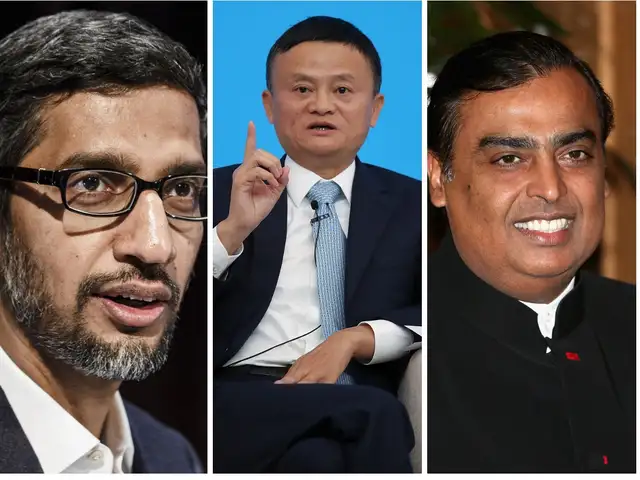
Chinese billionaire Jack Ma (C) showed his benevolent side as he pitched in to help the world fight the novel coronavirus. The founder of e-commerce major, Alibaba, Ma became the most talked about business figure after he said that he would marshall all available resources at his disposal to take on Covid-19. From donating emergency supplies (1.8M masks, 210K test kits, 36K protective suits, plus ventilators & thermometers) to Afghanistan, Bangladesh, Cambodia, Nepal, Pakistan & Sri Lanka in Asia to donating 20,000 test kits, 100,000 masks and 1,000 medical use protective suits in each of the 54 African countries, the 55-year-old proved that he was a good Samaritan whose charity was not mapped by geographical boundaries.
And even as the business magnate didn’t have India in his list of beneficiaries, there was much talk in the country about his act of generosity. And what followed were natural questions: who among India’s rich was doing a Jack Ma?
And it’s not just one individual, but a bunch of lion-hearted boardroom tycoons who have taken the pledge to help fight the virus that has thrown life off-track, in India and across the world.
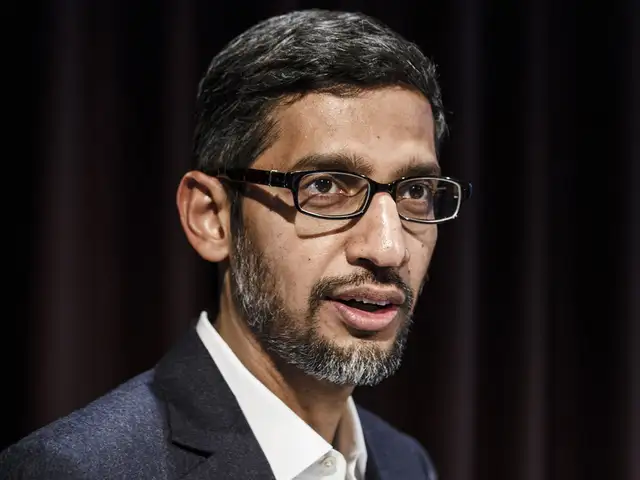
Google chief Sundar Pichai has donated Rs 5 crore to Give India, matching Google's earlier donation to the non-profit organisation for the coronavirus pandemic.
"Thank you @sundarpichai for matching @Googleorg's Rs 5 crore grant to provide desperately needed cash assistance for vulnerable daily wage worker families...," Give India said in a tweet.
Previously, Google had announced an over USD 800 million commitment towards efforts to tackle Covid-19 pandemic that claimed thousands of lives globally. This includes a USD 200 million investment fund for NGOs and banks to help small businesses access capital.
Besides, Google has also teamed up with Apple to work on a contact tracing approach designed with strong controls and protections for user privacy.
(With Inputs from PTI)
Hyundai Motor India on Monday said it has donated Rs 7 crore to the PM CARES Fund to fight the Covid-19 crisis.
"Our contribution to the PM CARES Fund stands testament to solidarity we hold with the people of India, amidst this crisis," Hyundai Motor India MD and CEO SS Kim said in a statement.
In challenging times such as these, the company will continue giving back to help India defeat this adversity, he added.
The South Korean automaker had earlier pledged Rs 5 crore to Tamil Nadu Chief Minister Relief Fund.
It has also donated imported diagnostic kits worth Rs 4 crore which can cater to testing requirements of over 25,000 individuals.
(With inputs from PTI)
Elecon Group CMD, Prayasvin B Patel has donated Rs 11 lakh to the CM Fund to fight the COVID-19 pandemic, relief and rehabilitation work.
Also, Elecon Group has partnered with the District Collector's Office to distribute food and grocery kits among the vulnerable people.
Over 1,000 grocery kits have been distributed under the able guidance of Prayasvin B Patel and Mrs. Taruna P Patel. The grocery bag includes 10kg wheat flour, 5kg rice, 1 kg, dal, 1 kg sugar and 1 kg salt. Lunch and Dinner were also provided to the needy people at Vasad, Chikhodra and Bevda Villages.
(With inputs from ANI)
Chinese smartphone manufacturer Vivo, on Friday, announced that it has donated close to 9 lakh masks to government health bodies, police agencies and New Delhi Municipal Council (NDMC).
"Vivo India has donated close to 900,000 masks to government health bodies, police agencies and @tweetndmc. We will continue to do whatever we can, in our capacity, to help the country overcome the COVID19 pandemic. This is for all HeroesWhoCare Folded handsFolded hands Coronarelief," Nipun Marya, Director, Brand Strategy, Vivo India said in a tweet.
Earlier, the company donated one lakh medical masks and 5,000 N-95 masks to the Maharashtra government.
(With Inputs from PTI)
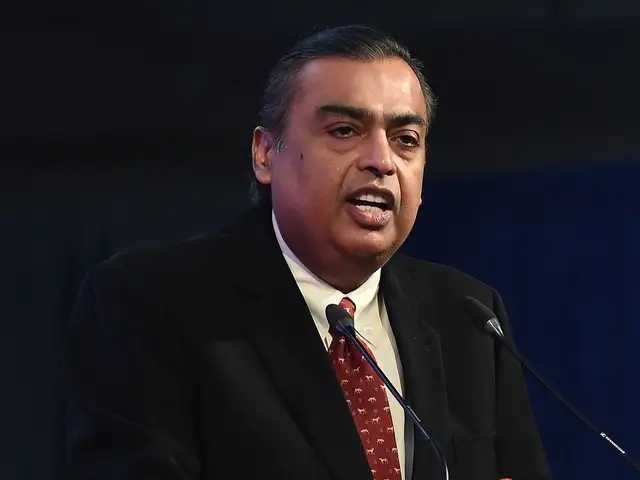
On Sunday evening Mukesh Ambani (in pic) stepped out to the balcony of his Altamount Road residence ‘Antilia’ and showed his gratitude to the country’s caregivers as he clapped his hands and rang the bell.
Hours later on Monday, Reliance Industries Limited announced that it is enhancing production capacities to manufacture 100,000 face-masks daily and a large number of protective equipment like suits and garments, for the country's health workers who are engaged in fighting the novel coronavirus. The oil and retail major also said that it has provided an initial support of Rs 5 crore to the Maharashtra Chief Minister’s Relief Fund.
RIL's Sir H N Reliance Foundation Hospital in collaboration with the Brihanmumbai Municipal Corporation, has also set up a dedicated 100-bed centre at Seven Hills Hospital in Mumbai for patients who test positive for Covid-19. The Foundation has also decided to provide free meals to people across various cities in partnership with NGOs.
Reliance Foundation, the philanthropic arm of India's largest firm Reliance Industries, on April 20, pledged free meals, building country's first Covid-19 hospital and is supplying PPEs and masks as part of its effort to help the nation fight the Covid-19 pandemic.
Reliance Foundation's 'Mission Anna Seva' that aims to provide over 3 crore meals to marginalised communities and frontline workers facing hardships during the lockdown, is the largest free meal programme by any corporate foundation globally, its chairperson Nita Ambani said.
(With inputs from PTI)
Home grown Dabur group, on Tuesday, pledged Rs 21 crore to support the relief efforts and help the immediate needs of people affected from the Covid-19 pandemic.
The group will also provide assistance to people engaged in frontline efforts to fight the virus and support to members of vulnerable sections of the society and migrant workers, who are the hardest hit by this pandemic.
"We have earmarked a fund of Rs 21 crore towards relief efforts... Out of this pledged amount, a sum of Rs 11 crore is being contributed to PM CARES Fund by Dabur India and other entities in the Group," said Dabur India Ltd Chairman Amit Burman said.
(With inputs from PTI)
Indian software major Infosys, too, joined the Covid-19 fight with a Rs 100 crore donation. The Infosys Foundation has contributed half of this amount to the PM CARES Fund to expand hospital capacity for treatment and enable hospital stays for poor Covid-19 patients. The Foundation recently said it would help set up a hospital in Bengaluru exclusively to treat people infected by the virus.
Sudha Murty, who is the chairperson of the Infosys Foundation, said that “these are unprecedented times that require every section of the society to rise up to the challenge.” Infosys CEO Salil Parekh, while terming the Covid -19 pandemic as ‘one of the toughest challenges that the world has been faced with’, reiterated that it is imperative for businesses to join hands with the governments, civil society and healthcare institutions to support the communities.
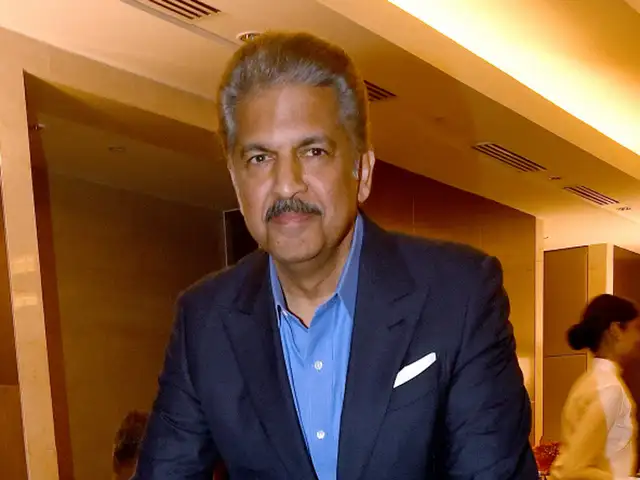
On Sunday, as the country observed ‘Janata Curfew’ as a mark of appreciation for the selfless help provided by the caregivers, Anand Mahindra (in pic) shared some heartening news with his 7.5 mn followers on Twitter. The Mahindra Group chairman offered to convert Mahindra Holiday resorts as temporary care facilities. He also tweeted that the group will ‘immediately begin work on how our manufacturing facilities can make ventilators’.And that’s not all. He also pledged that the Mahindra Foundation will create a fund to assist SMEs and SMBs, ‘the hardest hit in our value chain’. The business tycoon himself pledged to contribute 100% of his salary to the fund, and keep adding to it over the course of the next few months.
The Economic Times Business News App for the Latest News in Business, Sensex, Stock Market Updates & More.
Related Articles
- Farah Khan Ali & family test negative for coronavirus, to stay in quarantine till month-end
- Stub the cigarette: Smokers may be at higher risk of severe coronavirus infections
- Stress can impact immunity: Experts say good mental health key to fight coronavirus
- 99-year-old WWII veteran beats coronavirus, leaves Brazil hospital with his arms in the air
- Purab Kohli and his family contracted Covid-19, says tried home remedies to manage coronavirus impact