Do you constantly take pictures wherever you go? Now, science shows that clicking photos can impair memory of events
People think that taking a photo will help them remember something better, but it's actually quite the contrary.
By PTI |
ThinkStock Photos
People think that taking a photo will help them remember something better, but it's actually quite the contrary.
LOS ANGELES: Taking photographs for Instagram or Snapchat to document and remember a memorable experience may be counterproductive, say scientists who found that the act of clicking pictures impairs people's memories of the event.
"People think that taking a photo will help them remember something better, but it's actually quite the contrary," said Julia Soares, doctoral student at University of California, Santa Cruz.
In a set of experiments, researchers invited people to a virtual museum tour where they looked at paintings on computer screens, knowing they would be tested on what they saw.
Researchers compared how well participants remembered the paintings following three scenarios: when they just looked at the images; when they looked and took pictures using a camera phone; and when they took pictures using Snapchat.
The picture-takers consistently scored worse - by as much as 20 per cent - on multiple choice tests about what they had seen.
ADVERTISEMENT
Soares thought that the result could be chalked up to the phenomenon known as "cognitive off-loading" - that is, not remembering as well because you know the camera is there to remember for you.
Even people who took pictures using Snapchat - in which images last only 10 seconds - remembered less. People who were asked to take a picture and then delete the image, also did worse.
"Whenever they used a camera, they were less likely to remember as well as when they just observed," Soares said.
By stepping out of the moment to take a picture, people become less focused on what's in front of them, a phenomenon Soares termed "attentional disengagement."
ADVERTISEMENT
Taking photos might also create a false sense that we know the subject better than we actually do - what she calls a "metacognitive illusion" - making us less likely to use the mental strategies that help us remember.
Ironically, most of the photo-takers were sure that taking pictures improved their recall, Soares said. Her results have made her think twice about when, and how often, she takes pictures.
ADVERTISEMENT
"I'm not saying people shouldn't ever take photographs, but they might want to be mindful about deciding when they do it," she said.
While we see many new launches at trade shows like CES and IFA, it’s the crowdfunding platforms and tech breakthroughs that actually keep innovation alive through the year.
Here's a round up some of the unique products we’re betting on.
(Text: Karan Bajaj)
While we see many new launches at trade shows like CES and IFA, it’s the crowdfunding platforms and tech breakthroughs that actually keep innovation alive through the year.
Here's a round up some of..
Read More
NEX is Vivo’s latest all-screen smartphone design.
They’ve announced two in the range already: NEX A and NEX S. NEX A has a Snapdragon 710 processor with 6GB RAM and 128GB storage while the NEX S has a Snapdragon 845, 8GB RAM and 128/256GB storage.
The other big difference is the fingerprint scanner: NEX A has a conventional one on the rear while NEX S has one under the display.
Both have a 6.59-inch super amoled displays with a screen to body ratio of 91.2% and 4,000mAh battery.
Since the front is dominated by the screen, Vivo has placed the 8MP front camera in a unique (motorised) pop-up mechanism.
On the back is a 12MP + 5MP dual camera setup with 4-axis optical image stabilisation.
(Image: www.vivo.com)
NEX is Vivo’s latest all-screen smartphone design.
They’ve announced two in the range already: NEX A and NEX S. NEX A has a Snapdragon 710 processor with 6GB RAM and 128GB storage while the NEX S ha..
Read More
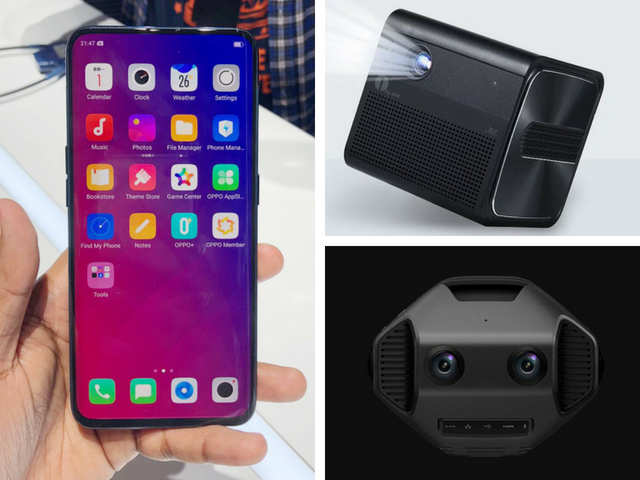
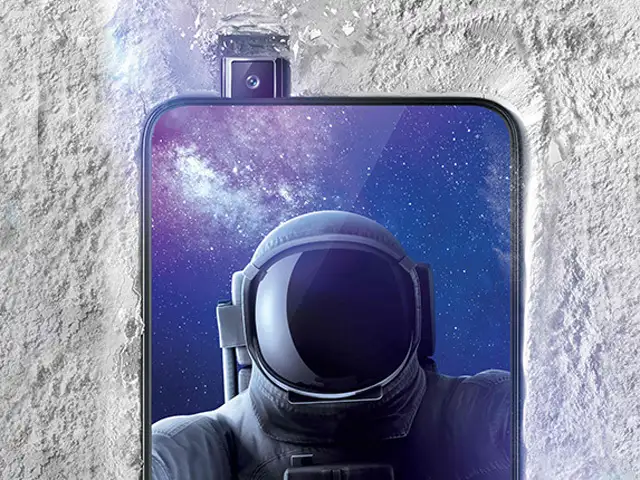
This amazing design from Oppo has an allscreen design — it has a 6.4-inch curved OLED screen with a screen-to-body ratio of 92.2%. Look around the phone and you won’t see a camera module or any sensors anywhere.
So where are the cameras? Everything is hidden in a motorised pop-up system that comes up when you’re unlocking the phone (face unlock) or when you launch the camera app.
Up front is a 25MP camera with iPhone X-style 3D facial scanning systems (dot projector, flood illuminator etc) while the rear has a dual 16 + 20MP camera setup.
Specifications include a Snapdragon 845 processor, 8GB RAM, 256GB storage and a 3,770mAh battery.
(Image: www.oppo.com)
This amazing design from Oppo has an allscreen design — it has a 6.4-inch curved OLED screen with a screen-to-body ratio of 92.2%. Look around the phone and you won’t see a camera module or any senso..
Read More
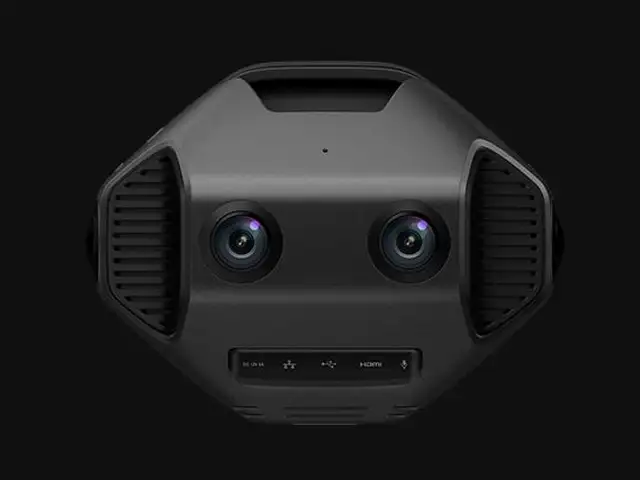
This is the world’s first, professional-grade, 360-degree, 3D, 8K, VR camera. It records true 3D video and captures still photos at 12k resolution. It’s also capable of automatically stitching images together for a 360 degree photo.
In terms of features, you get six-axis image stabilisation, HDR image/video capture, RAW format support, dual SD card slots for storage, HDMI output, Ethernet and WiFi.
The built-in artificial intelligence (AI) chip does object detection to ensure that your subject is always in focus. It also supports 3D VR live streaming on Facebook and YouTube.
The 4,800mAh battery inside gives you up to 60 minutes of continuous shooting. A companion app lets you preview and control the camera.
(Image: www.en.detu.com)
This is the world’s first, professional-grade, 360-degree, 3D, 8K, VR camera. It records true 3D video and captures still photos at 12k resolution. It’s also capable of automatically stitching images..
Read More
TicPods Free are a new generation of wireless earbuds. To start, TicPods feature automatic in-ear detection — music pauses when you remove them and it resumes when you put them back. Next, it has intuitive touch controls for various actions.
With the TicPods, you don’t need to take out your smartphone — you can hear who’s calling and accept/reject the call, control music playback as well as activate your voice assistant. There is active noise cancellation plus noise isolation too. They’re IPX5 water resistant and come blue, orange or white.
Like most wireless earbuds, it comes with a charging carry case and total battery life is about 18 hours. These are also the only wireless earbuds that give you the option to buy a single earbud if you lose one of them.
(Image: www.indiegogo.com)
TicPods Free are a new generation of wireless earbuds. To start, TicPods feature automatic in-ear detection — music pauses when you remove them and it resumes when you put them back. Next, it has int..
Read More
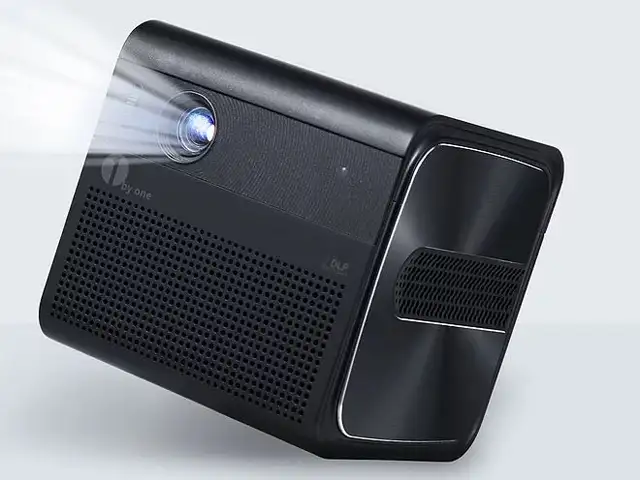
GoSho is an ultra-compact (just 3.5-inches square), cube-shaped DLP projector capable of a showing a 200-inch wide-screen display. It offers a brightness of 180 ANSI lumens, an 8,000:1 contrast ratio and can display up to 2k resolution.
For wired connectivity, it has HDMI input and a USB port. It also has built-in WiFi for streaming and support for Apple Airplay.
The 11,000mAh battery inside can deliver up to 4 hours of continuous play. What’s more, you can even pair it with Google Assistant or Alexa and control it via voice.
(Image: www.gosho-1byone.com)
GoSho is an ultra-compact (just 3.5-inches square), cube-shaped DLP projector capable of a showing a 200-inch wide-screen display. It offers a brightness of 180 ANSI lumens, an 8,000:1 contrast ratio..
Business News › Magazines › Panache › Do you constantly take pictures wherever you go? Now, science shows that clicking photos can impair memory of eventsText Size:AAA