Nicknamed the ‘Black Card,’ it became associated with the opulent decadence of fin de siècle America, even finding mention in a Lil Wayne song.
Debt can be dangerous, warns William Shakespeare in his play ‘The Merchant of Venice’. The perils of succumbing to the wiles of easy capital are manifold. Loans can go sour. The cost of repayment can exceed the amount borrowed. But four centuries since his passing, the Bard’s exhortations seem to have fallen on deaf ears. Credit cards, the modern manifestation of the guarantor’s bill, are more popular than ever. And metal, a key ingredient in the minting of low-denomination coins, now holds pride of place in people’s wallets.
In 1999, American Express debuted the Centurion card, an invite-only credit instrument that was made of metal. Card holders were required to spend over six-figure sums each year. Nicknamed the ‘Black Card,’ it became associated with the opulent decadence of fin de siècle America, even finding mention in a Lil Wayne song. The exclusivity it afforded meant the card was restricted to the wallets of a select few. Meanwhile, dark clouds were gathering on the economic horizon, threatening to corrode the fortunes of the moneyed class.
The dot com bubble burst in 2000. A mortgage crisis in the U.S. spurred a global recession in 2008. Loan defaults caused a liquidity crunch, forcing the government to bail out banks that were deemed too large to fail. In Shakespeare-speak, neither borrower nor lender was spared. Two decades on, metal is making a comeback, with more financial institutions issuing such instruments to tap into people’s enduring obsession with social capital. The Black Card was hailed as a revolutionary product designed for the age of consumerism. But the use of metallic cards as tokens of credit can be traced back to the previous century.
The banking industry did not venture into issuing portable cards as credit instruments till 1958
In the late 1800s, department stores in the U.S. kept a record of lines of credit issued to patrons by using a ledger. Non-payment would entail a visit from the debt collector. But crime was rampant in the American badlands, and physical currency was an encumbrance. The first credit cards were issued by general stores to track user’s spending against the credit available to them. Metal charge plates, the precursor to the modern credit card, took the form of dog tags or metallic tokens. They were often sheathed in leather, with the user’s spending tabulated on a paper imprinted with special ink.
However, there were limitations to charge plates as they were restricted to local businesses. When people traveled to other parts of the country, the convenience associated with these cards were lost, as they were not accepted as legal tender for purchases made elsewhere. On the contrary, issuing charge plates proved to be a masterstroke for small stores, enhancing customer loyalty. Companies operating in the transportation sector soon joined the bandwagon. With the expansion of roadways, gas stations started offering cards of their own to capitalize on commuters’ need to refuel on long journeys.
ADVERTISEMENT
Texaco, a subsidiary of oil major Chevron, started producing independent credit cards, albeit with tweaks to the charge plates used by general stores. They were the size of playing cards, and were made of paper. The then nascent passenger airline industry also played a pioneering role in the evolution of the credit card. American Airlines piloted its Air Travel Card in 1936. Unlike conventional credit instruments, it was a charge card that required users to pay the balance amount in full at the end of each billing cycle. A subsequent version of the Air Travel Card, released in 1969, became the first to feature a magnetic strip. The technology was developed by IBM in the 1960s.
A subsequent version of the Air Travel Card, released in 1969, became the first to feature a magnetic strip.
Wall Street was late to the credit card game. The banking industry did not venture into issuing portable cards as credit instruments till 1958. Bank of America instituted the BankAmericard, the first pan-America credit card that included in its ambit, participating banks from across the country. A standalone card service that was spun off from this venture in the 1970s eventually became Visa. Similarly, Mastercard came into existence in 1966 as the Interbank Charge Association. Credit cards, the size of calling cards, soon went mainstream. The typical credit card had plastic body that was girdled by a magnetic strip. More importantly, they were interoperable, working as legal tender in most countries.
American Express was the first to adopt metal-body luxury cards, but the trend was popularized by Chase, which offered similar cards, but with more lenient spending rules. The Chase Sapphire Reserve, which was announced in 2016, was so much in demand that they ran out of metal to make it at one point. Other lenders like Citi and Wells Fargo started adopting metal cards to lure users. Another factor that enhanced its desirability was the self-expressive benefit: how the product influences the perception of its user. Scott Galloway, professor of marketing at NYU Stern, drew an analogy with the Apple Watch to explain this phenomenon.
ADVERTISEMENT
Apple Gets Serious About Services, Unveils TV+, Card, Arcade At Special Event
1/5
By Karan Bajaj
Apple has typically held special events for hardware. Which is why a dedicated event for services was a surprise. Of the many services that were announced, only Apple Arcade and TV+ are expected to go global at launch. Karan Bajaj decodes some of the news from the event.
Image: Reuters
By Karan BajajApple has typically held special events for hardware. Which is why a dedicated event for services was a surprise. Of the many services that were announced, only Apple Arcade and TV+ are..
Read More
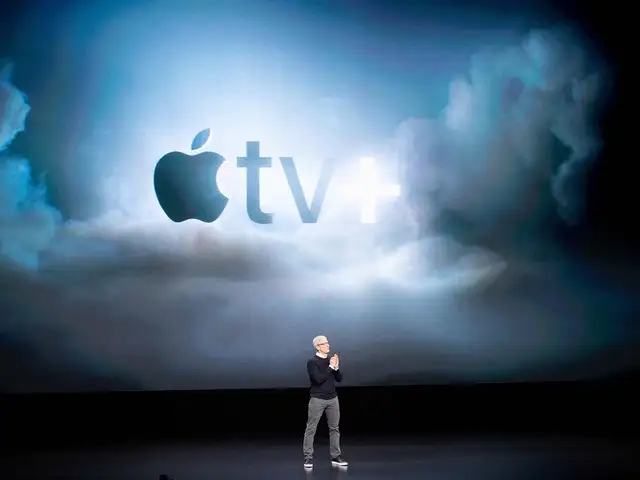
TV+ is the name for Apple’s upcoming video streaming service (think of it like a Netflix competitor) and this is what most rumours were talking about before the official announcement. This subscription will work with the new Apple TV app which will not only be available for Apple devices (iOS, Apple TV, Mac) but also for other platforms like Roku, Amazon Fire TV and smart TV platforms from Samsung, LG and Sony.
The video streaming service will feature a number of exclusive shows and various celebrities came on stage at the announcement event including Oprah Winfrey, Steven Spielberg, J. J Abraham, M. Night Shyamalan and Jason Momoa. Just like Apple Arcade, the TV+ service can be shared using Family Sharing with up to 6 other people in the family. Once again, no further details of the subscription fees were announced by Apple but the service will launch in 100+ countries (including India) from fall 2019.
In the US, Apple is giving users the option to subscribe to TV channels like HBO and Showtime and watch them from within the Apple TV app. Users pay only for the channels they want to watch. These channels and Apple TV App will be available from May 2019 but it seems unlikely that India will get this feature in the first wave. If at all, Apple may decide on content partnerships with existing players in India like Eros Now, Zee5, Hungama and others.
Image: AFP
TV+ is the name for Apple’s upcoming video streaming service (think of it like a Netflix competitor) and this is what most rumours were talking about before the official announcement. This subscripti..
Read More
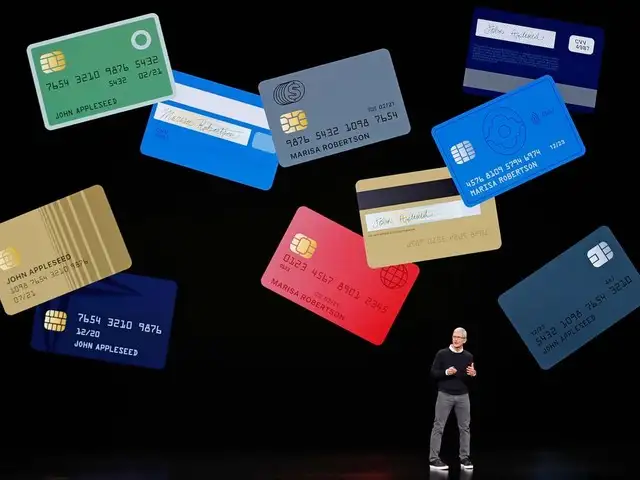
This was the first service that Apple announced. Apple card is a digital credit card for your iPhone that works via Apple Pay, backed by Mastercard and Goldman Sachs. You can apply for and receive a digital card within minutes — it appears in your Wallet app. You can also apply for a fancy physical Titanium card to use in stores that don’t support Apple Pay. All your expenses show up in the app with details of location, time and amount in a clean and easy to understand format. The card also gives you a cashback of 2% on every purchase (3% on purchases from the App Store or Apple Stores). However, Apple Card will only be available in the US.
Image: AFP
This was the first service that Apple announced. Apple card is a digital credit card for your iPhone that works via Apple Pay, backed by Mastercard and Goldman Sachs. You can apply for and receive a ..
Read More
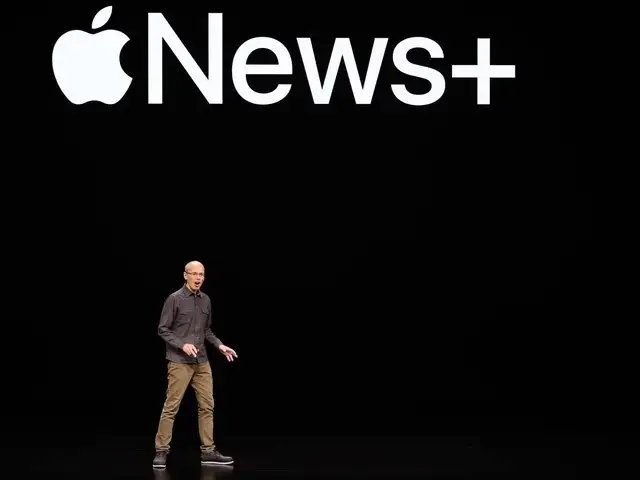
Apple already offers a News app which is not available for Indian users. News+ is an upgrade to this service and has several handy features including offline downloads and access to over 300 newspapers and magazines. While the News app is available for free, the News+ service is paid — you pay US$ 9.99/month for these additional features with Family Sharing enabled.
A single subscription can be shared with up to 6 family members at no extra cost. You still retain all the feature of the News app. The app learns from your reading habits and shows you relevant content of your interest the more you use it — Apple was quick to point out that this intelligence is all on your local device. They don’t know what you read and also won’t allow advertisers to track you. All news is curated by human editors and you can also set the app to autodownload the latest issue of your favorite magazine as it gets added to the catalogue. However there is no announcement for an India launch and we don’t think Apple has any plans for it either.
Image: AFP
Apple already offers a News app which is not available for Indian users. News+ is an upgrade to this service and has several handy features including offline downloads and access to over 300 newspape..
Read More
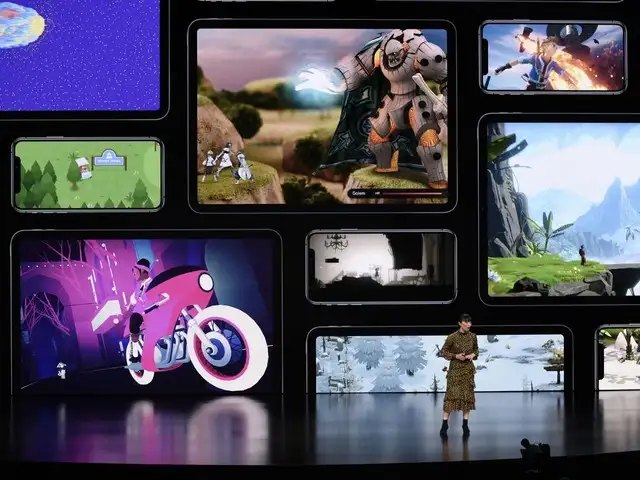
Arcade is the name of Apple’s gaming subscription service. First and foremost, Arcade is attempting to unify gaming across all iOS devices (iPads, iPhones), Apple TV as well as Macs. While the rest of the world looks toward cloud gaming (like Google Stadia), Apple is taking a different approach. You pay a subscription fee per month/year to get access to curated games that are already available on the App Store plus Apple exclusive game titles (over 100 titles confirmed for now). You can download these games from the App Store to any device and enjoy game continuity (start playing on one device and resume on another). There will be no ads, no in-app purchases and no catch.
Apple also lets you share the subscription with up to 6 family members. Further details regarding the subscription amount was not announced but Apple did say that it would launch in 150+ countries this fall. This means we can expect Arcade to be ready when the new iPhone launches in September/October 2019.
Image: AFP
Arcade is the name of Apple’s gaming subscription service. First and foremost, Arcade is attempting to unify gaming across all iOS devices (iPads, iPhones), Apple TV as well as Macs. While the rest o..
“This is not a timepiece. I haven't wound it in five years. It's my vain attempt to say to people, ‘If you mate with me, your children are more likely to survive than if you mate with someone wearing a Swatch watch,’” he said in a TED Talk. The same holds true with metal credit cards. They do not hold a distinct advantage over their plastic counterparts, but serve to complement the holder’s perception of affluence. With modern finance becoming more intertwined with technology, companies like Amazon and Apple are diversifying into payments companies.
ADVERTISEMENT
The Apple Card, the Cupertino-based tech company’s latest foray into finance, includes both digital and physical components. The credit card, which was showcased in May, will feature a titanium body and have the bearer’s name laser-etched on its monolithic frame. However, a gradual transition from plastic cards could democratize the metallic credit card and diminish its self-expressive benefit. Environmental activists caution against the use of plastic cards as they are not recyclable and end up in landfills.
American Express, which pioneered the metal credit card, has demonstrated that exclusivity can bear rich dividends. The business plan was simple: make people feel good about themselves on account of their high purchasing power. Other payments companies that have focused on discounts and low fees, have also tasted success, but to a lesser degree. A penny saved will draw in a transient base of loyal customers. However, thrifty users are likely to flock to other options if presented with cheaper deals. Metal credit cards, which are the realm of the well-heeled, have succeeded in retaining customers with a simple premise: make them feel exceptional, and they’ll be loyal forever.