Covid-19, like past epidemics and wars, will inspire writers & feed their imagination, says novelist Jabbour Douaihy
The novelist feels coronavirus pandemic will begin to inspire literature.
By AFP |
AFP
Speaking via the video conferencing app Zoom, the novelist said he was avoiding writing about this period for the time being.
NICOSIA: Lebanese novelist Jabbour Douaihy says the coronavirus pandemic, like past epidemics and wars, will feed the imagination of novelists.
"Great authors wrote about previous pandemics and used them as symbols," he said.
Douaihy, who has twice been shortlisted for the prestigious International Prize for Arabic Fiction (IPAF), spoke to AFP as part of our "World Redrawn" series.
He said the novel coronavirus "will become part of the general literary scene and the imagination of humanity, just like wars, the plague... and other pandemics in history".
While the virus will change human behaviour, he does not expect it to completely overturn our way of life.
The 71-year-old, with a doctorate in comparative literature from the Sorbonne, is waiting out Lebanon's coronavirus lockdown in the town of Ehden, in the hills above the northern city of Tripoli.
ADVERTISEMENT
Douaihy compared the coronavirus to his experience of Lebanon's 1975-1990 civil war.
"I don't think the Lebanese war was written about until it was over and done with, meaning it could be used in literature," he said.
Speaking via the video conferencing app Zoom, he said he was avoiding writing about this period for the time being.
"Writing novels takes time -- we can't write about events that are still taking place," he said.
ADVERTISEMENT
But in time, he added, the coronavirus pandemic will begin to inspire literature.
He cited French-Romanian playwright Eugene Ionesco's play "Rhinoceros", which uses the story of a fictional pandemic to criticise political regimes.
ADVERTISEMENT
The author compared the closure of national borders over the coronavirus to people retreating to their homes. Albert Camus used his 1947 novel "The Plague", set in the Algerian city of Oran, to summarise his philosophy on futility, Douaihy added.
The coronavirus pandemic "will leave scars and marks on the mind, on the way we think and particularly on the imagination," he said.
Douaihy, whose novel June Rain was shortlisted in 2008 for the inaugural IPAF, often known as the Arab Booker Prize, made the list again four years later with The Vagrant.
He said he had not been "bothered" by Lebanon's strict coronavirus lockdown measures, despite finding it hard at first to adjust and to focus on reading and writing.
Douaihy said he did not expect fundamental changes in the worlds of politics, society and economics as the pandemic recedes.
"It's always said that things will be different after the current crisis, but I'm not sure that human behaviour will change drastically," he said.
"I tend towards the view that humanity will overcome this pandemic and carry on destroying the environment -- although I expect to see some kind of ecological movement emerge," he said.
"Concern for the environment will grow," he added. "It will become clear that we need to return to correct, organic agriculture."
Douaihy expects a shift to self-sufficiency and a return to national economies.
Reliance on distance learning and remote education could also grow, affecting global communication and globalisation.
But "the trend of excessive consumption is here to stay (and) individualism may become stronger," he said.
The author compared the closure of national borders over the coronavirus to people retreating to their homes.
"We go back to our homes as if they are a refuge from the virus. States have done the same, trying to shut themselves in," he said.
"This foresees a retreat from principles the world had tried to promote, such as freedom of movement."
But while the coronavirus had put the brakes on transnational movement, it was "too early to draw conclusions from that."
And although the Arab world has not been hit as hard by the virus as Europe and the United States, the region still faces its own crises, he said.
Despite the pandemic, "we still face our normal conflicts, as if nothing had happened."
Predictive Text: 'Frankenstein', '1984' And Other Books That Foretold The Future
1/6
A look back at the different times when authors unleashed the Nostradamus in them and came up with something that was years ahead of its time.
A look back at the different times when authors unleashed the Nostradamus in them and came up with something that was years ahead of its time.
Vision: Virus outbreak
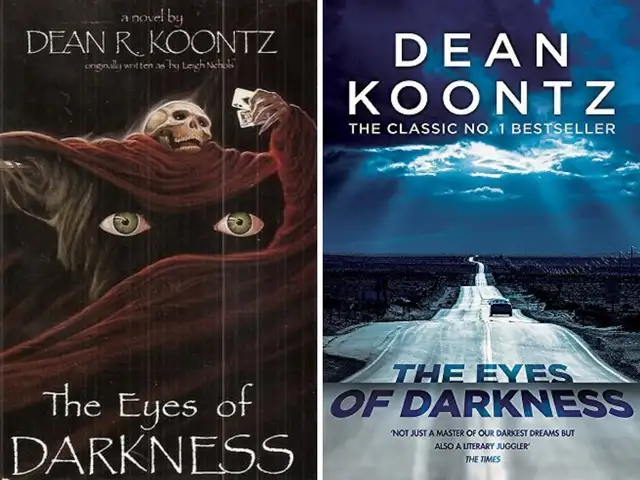
In 1981, Dean Koontz wrote a novel titled 'The Eyes of Darkness'. In the book, Koontz mentions a fictional biological weapon Wuhan-400, nearly 40 years before the coronavirus outbreak occurred.
'The Eyes of Darkness' is a story about a mother who discovers her son Danny is being kept in a military facility after being infected with a man-made microorganism called ‘Wuhan-400’. While Twitter went into a little bit of tizzy, that’s where the similarity ends. Unlike the book’s virus, which has a 100 per cent fatality rate, the real world covid-40 has a fatality rate that ranges between two per cent and 14 per cent, depending on several factors.
(Image: Amazon)
Vision: Virus outbreakIn 1981, Dean Koontz wrote a novel titled 'The Eyes of Darkness'. In the book, Koontz mentions a fictional biological weapon Wuhan-400, nearly 40 years before the coronavirus ou..
Read More
Vision: Electric submarines
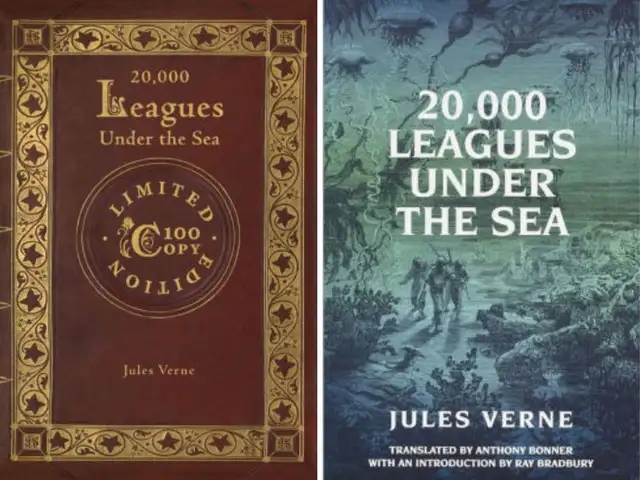
Jules Verne is considered one of the most forward thinking authors of the 19th century and has predicted numerous things in his most famous book, Twenty Thousand Leagues Under The Sea, which was published in 1870. Verne not only predicted electric submarines 90 years before they were invented, he also imagined them just as they turned out — long and cylindrical. Verne’s submarine called Nautilus also included a main cabin, navigational devices, a dining room, and barometer.
(Image: barnesandnoble.com)
Vision: Electric submarinesJules Verne is considered one of the most forward thinking authors of the 19th century and has predicted numerous things in his most famous book, Twenty Thousand Leagues Un..
Read More
Vision: Mass surveillance
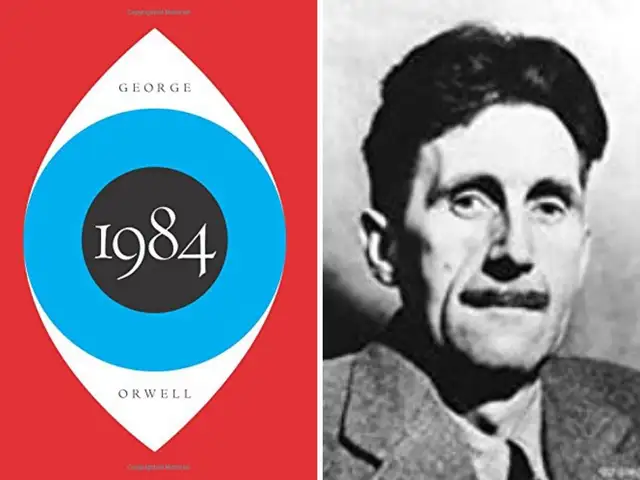
Orwell’s book focuses on topics we are all too familiar with today: Censorship, propaganda, surveillance, and oppressive governments. It was written nearly 70 years ago. In the book, Orwell predicted mass surveillance and police helicopters. Much of what the British author imagined has come true, including facial recognition, speech to text conversion, music made by artificial intelligence, and, of course, the concept of ‘Big Brother’ watching your every move.
(Image: Amazon)
Vision: Mass surveillanceOrwell’s book focuses on topics we are all too familiar with today: Censorship, propaganda, surveillance, and oppressive governments. It was written nearly 70 years ago. In t..
Read More
Vision: Mars has two moons
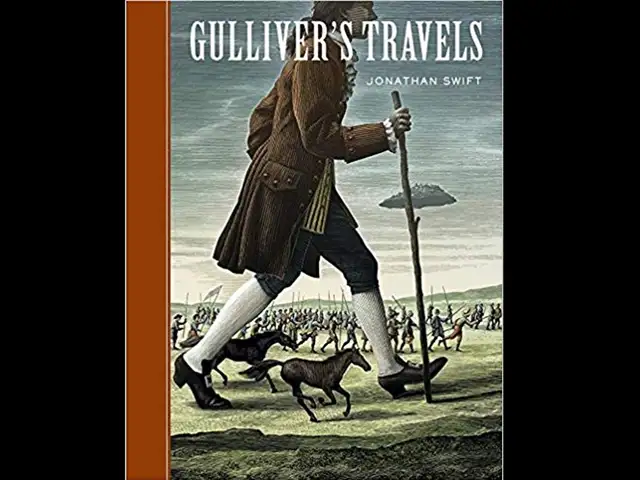
This all-time favourite book follows a man named Gulliver as he stops at different worlds, those occupied by giants, another by little humans, and one of the most interesting, the island of Laputa. Laputa, in the book, is a floating world filled with scientists. Swift writes about how Gulliver and Laputian astronomers noted that Mars has two moons in its orbit. Today we know this claim to be true, that Mars indeed does have two moons. But Swift wrote 'Gulliver’s Travels' in 1726, nearly 150 years before Phobos and Deimos — the two moons of Mars — were discovered in 1877.
Vision: Mars has two moonsThis all-time favourite book follows a man named Gulliver as he stops at different worlds, those occupied by giants, another by little humans, and one of the most interestin..
Read More
Vision: Organ Transplants
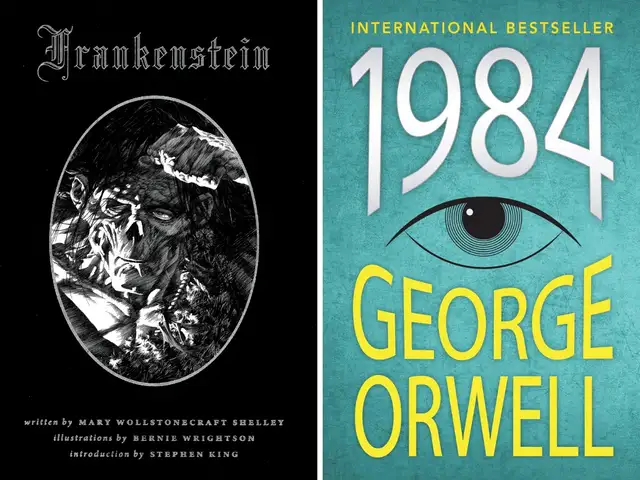
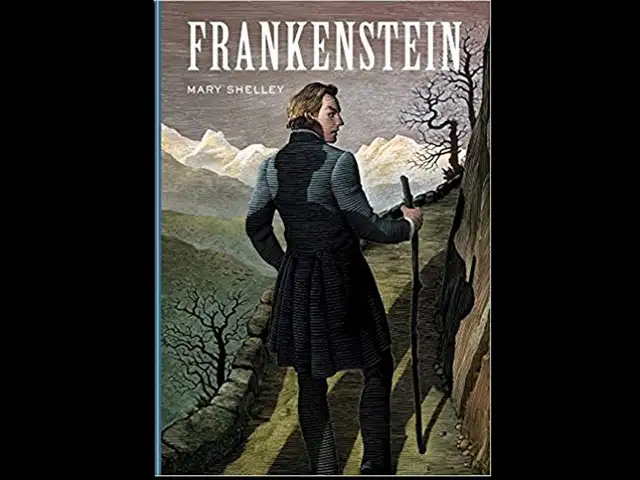
Written in 1818, Shelley’s novel is often considered one of the first science-fiction novels. At that time, science was just beginning to explore the concept of bringing dead tissue back to life using electricity. In Mary Shelley’s 'Frankenstein', the doctor is able to keep an organ alive outside of a body to be transplanted into a new body. To say this was ahead of its time is an understatement. It wasn’t until the mid-20th century (1954) that the first organ transplant became a reality.
Vision: Organ TransplantsWritten in 1818, Shelley’s novel is often considered one of the first science-fiction novels. At that time, science was just beginning to explore the concept of bringing dead..
Business News › Magazines › Panache › Covid-19, like past epidemics and wars, will inspire writers & feed their imagination, says novelist Jabbour DouaihyText Size:AAA