The WFH vice: Professionals face virtual fatigue due to long-working hours, endless meetings
Employees experience irritation levels, burning in eyes, blurry vision and other health problems.
By Brinda Sarkar, ET Bureau | Updated:

iStock
As a large percentage of India Inc continues to work from home, nearly seven in 10 employees spends 9 hours - and sometimes more - connected to a computer/laptop screen to attend meetings or meet deadlines, and three in 10 attend more than 20 virtual calls on a typical day one after the other, finds a new survey.
Research by Godrej Interio shows that four in 10 employees experience moderate to extreme irritation levels and burning in their eyes at the end of long virtual calls, and two in 10 respondents claim to experience blurry vision after extended video calls.
The data shows that six in 10 employees feel virtual meetings are effective, but an overwhelming 89% of them would be happy to continue them in audio mode if given a choice.
A total of 235 office-going employees participated in the research, of which 68% belonged to the age group of 26-40 year olds, a majority of them working for MNCs and Indian corporates.
Virtual fatigue has become a moniker for the health concerns arising out of unregulated participation in virtual meetings, and experts say it gives rise to a host of health problems not just relating to vision but to back pain issues as well.
“With the amount of screentime that employees have to deal with nowadays, health problems like irritation in eyes, blurry vision, ear fatigue, etc. persist, and the overall physical activity levels have gone down, too,” said Sameer Joshi, associate vice-president of marketing (B2B), Godrej Interio.
The onus is on organisations to devise strategies for regular breaks, managers need to encourage employees to take leave, and employees must follow proper posture, Joshi added.
Some organisations are doing their bit to help employees deal with virtual fatigue.
Microsoft has been analysing data to find out whether employees are taking enough breaks, and observed that many employees were spending time in the late evenings and even on weekends to be ready for Monday reviews. The company has now blocked Monday reviews, and rolled out 25-minute and 55-minute meetings for employees to get a short breather between calls, said Geeta Gurnani, country head - modern work, Microsoft India.
At Walmart Global Tech India, leaders have been talking about the importance of maintaining work-life balance and flexible schedules, even as they share their personal stories and journeys. “We have a leadership sponsored cohort of “wellness” champions who work closely with each leader to drive specific insights and figure out contextual solutions. As we find the right blend of virtual and in-office workspaces, organisations must ensure that employees also evolve with the times and are able to maintain a balance to avoid virtual fatigue,” said Sudeep Ralhan, VP - people at Walmart Global Tech India.
InMobi has introduced ‘No Meeting Fridays’ to help facilitate focus time for employees, as well as mindfulness programmes and body-mind integration workshops.
Research by Godrej Interio shows that four in 10 employees experience moderate to extreme irritation levels and burning in their eyes at the end of long virtual calls, and two in 10 respondents claim to experience blurry vision after extended video calls.
The data shows that six in 10 employees feel virtual meetings are effective, but an overwhelming 89% of them would be happy to continue them in audio mode if given a choice.
A total of 235 office-going employees participated in the research, of which 68% belonged to the age group of 26-40 year olds, a majority of them working for MNCs and Indian corporates.
Virtual fatigue has become a moniker for the health concerns arising out of unregulated participation in virtual meetings, and experts say it gives rise to a host of health problems not just relating to vision but to back pain issues as well.
“With the amount of screentime that employees have to deal with nowadays, health problems like irritation in eyes, blurry vision, ear fatigue, etc. persist, and the overall physical activity levels have gone down, too,” said Sameer Joshi, associate vice-president of marketing (B2B), Godrej Interio.
ADVERTISEMENT
Working from home has become the new normal as companies try to minimise disruptions and keep operations running as close to normal as possible. But with most of us working from home, the lines between "work" and "home" could become quickly blurred.
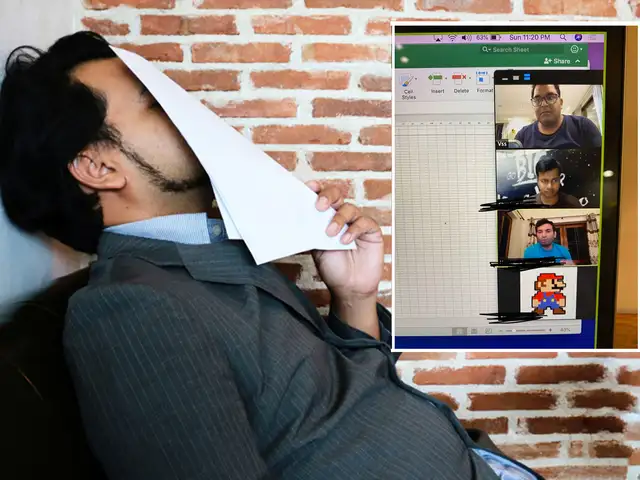
A few weeks ago, Paytm founder Vijay Shekhar Sharma took to Twitter to announce that he had been so wrapped up in Zoom meetings (inset from Sharma's Twitter account) that he forgot it was Sunday. And that seems to be the case with most entrepreneurs who are dealing with investor pressure and the stress of a looming economic slowdown.






The onus is on organisations to devise strategies for regular breaks, managers need to encourage employees to take leave, and employees must follow proper posture, Joshi added.
Some organisations are doing their bit to help employees deal with virtual fatigue.
Microsoft has been analysing data to find out whether employees are taking enough breaks, and observed that many employees were spending time in the late evenings and even on weekends to be ready for Monday reviews. The company has now blocked Monday reviews, and rolled out 25-minute and 55-minute meetings for employees to get a short breather between calls, said Geeta Gurnani, country head - modern work, Microsoft India.
At Walmart Global Tech India, leaders have been talking about the importance of maintaining work-life balance and flexible schedules, even as they share their personal stories and journeys. “We have a leadership sponsored cohort of “wellness” champions who work closely with each leader to drive specific insights and figure out contextual solutions. As we find the right blend of virtual and in-office workspaces, organisations must ensure that employees also evolve with the times and are able to maintain a balance to avoid virtual fatigue,” said Sudeep Ralhan, VP - people at Walmart Global Tech India.
ADVERTISEMENT
InMobi has introduced ‘No Meeting Fridays’ to help facilitate focus time for employees, as well as mindfulness programmes and body-mind integration workshops.
Download
The Economic Times Business News App for the Latest News in Business, Sensex, Stock Market Updates & More.
The Economic Times Business News App for the Latest News in Business, Sensex, Stock Market Updates & More.
Related Articles
 ASML lines up Elon Musk for virtual conference spotlight
ADVERTISEMENT


