Another reason to go electric: EVs produce less carbon dioxide than petrol vehicles
This would reduce global CO2 emissions by up to 1.5 gigatonnes per year.
By PTI |
iStock
The study, published in the journal Nature Sustainability, projects that in 2050, every second car on the streets could be electric, the researchers said.
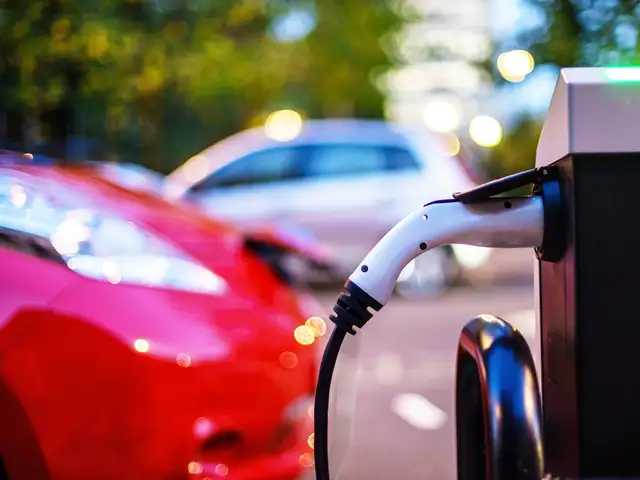
LONDON: Electric vehicles produce less carbon dioxide than petrol cars across the globe, even if electricity generation involves substantial amounts of fossil fuel, according to a study which projects that in 2050 every second car on the streets could be electric.
Researchers from Radboud University in the Netherlands found that under current conditions, driving an electric car is better for the climate than conventional petrol cars in 95 per cent of the world.
The only exceptions are places like Poland, where electricity generation is still mostly based on coal, the researchers said.
Average lifetime emissions from electric cars are up to 70 per cent lower than petrol cars in countries like Sweden and France -- which get most of their electricity from renewables and nuclear -- and around 30 per cent lower in the UK, they said. The study also looked at electric household heat pumps, and found they too produce lower emissions than fossil-fuel alternatives in 95 per cent of the world. The researchers said in a few years, even inefficient electric cars will be less emission-intensive than most new petrol cars in most countries, as electricity generation is expected to be less carbon-intensive than today.
The study, published in the journal Nature Sustainability, projects that in 2050, every second car on the streets could be electric, the researchers said.
ADVERTISEMENT
This would reduce global CO2 emissions by up to 1.5 gigatonnes per year, which is equivalent to the total current CO2 emissions of Russia, they said.
The study also looked at electric household heat pumps, and found they too produce lower emissions than fossil-fuel alternatives in 95 per cent of the world.
Heat pumps could reduce global CO2 emissions in 2050 by up to 0.8 gigatonnes per year, according to the researchers. The researchers said the idea that electric vehicles or electric heat pumps could increase emissions is essentially a myth. "We started this work a few years ago, and policy-makers in the UK and abroad have shown a lot of interest in the results," said lead study author Florian Knobloch from Radboud University.
ADVERTISEMENT
"The answer is clear: to reduce carbon emissions, we should choose electric cars and household heat pumps over fossil-fuel alternatives," Knobloch said.
The researchers said the idea that electric vehicles or electric heat pumps could increase emissions is essentially a myth. There has been a lot of discussion about this recently, with lots of disinformation going around, they said.
ADVERTISEMENT
"We have run the numbers for all around the world, looking at a whole range of cars and heating systems. Even in our worst-case scenario, there would be a reduction in emissions in almost all cases. This insight should be very useful for policy-makers," said Knobloch.
The study examined the current and future emissions of different types of vehicles and home heating options worldwide.
It divided the world into 59 regions to account for differences in power generation and technology.
In 53 of these regions -- including all of Europe, the US and China -- the findings show electric cars and heat pumps are already less emission-intensive than fossil-fuel alternatives.
These 53 regions represent 95 per cent of global transport and heating demand and, with energy production decarbonising worldwide, Knobloch said the "last few debatable cases will soon disappear".
The researchers carried out a life-cycle assessment in which they not only calculated greenhouse gas emissions generated when using cars and heating systems, but also in the production chain and waste processing.
"Taking into account emissions from manufacturing and ongoing energy use, it's clear that we should encourage the switch to electric cars and household heat pumps without any regrets," Knobloch added.
Going Green: Top Electric Cars In India For Environmentally-Conscious People
1/5
With pollution on the rise in many cities in India, these electric vehicles are a solution to the problem for people who care about the environment.
With pollution on the rise in many cities in India, these electric vehicles are a solution to the problem for people who care about the environment.
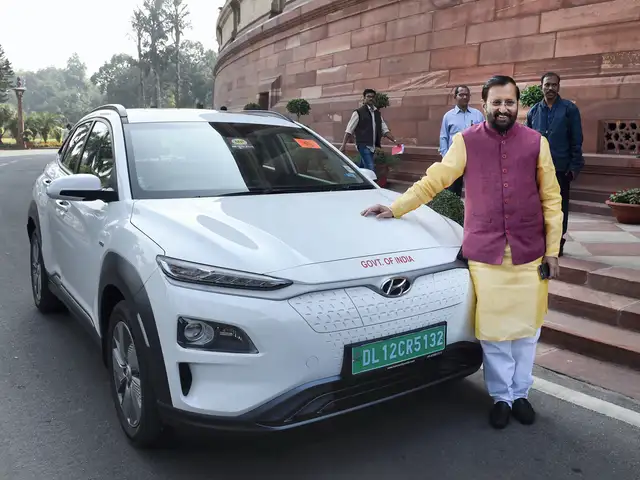
Environment Minister Prakash Javadekar arrived for the winter session of Parliament in an electric car recently. He told a news agency that the government was gradually switching to pollution-free cars. He urged people to also do likewise or use public transport.
These are the cars in India which are fully electric.
Environment Minister Prakash Javadekar arrived for the winter session of Parliament in an electric car recently. He told a news agency that the government was gradually switching to pollution-free ca..
Read More
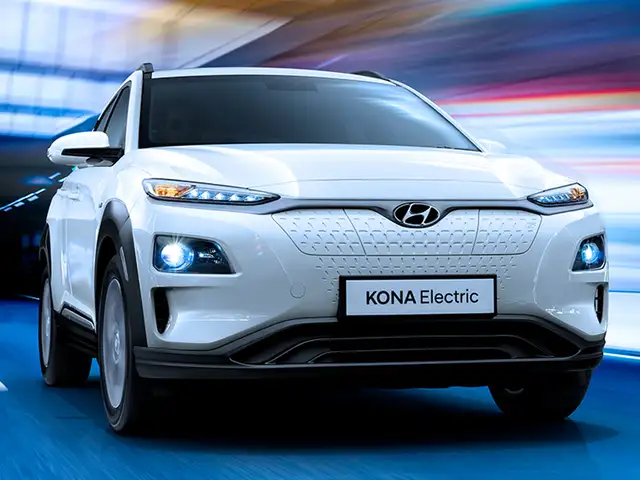
This was the car that Javadekar chose to make his entry for the Parliamentary session in. The car has a 134hp permanent-magnet synchronous electric motor. This is powered by a high-voltage 39.2 kWh advanced lithium-ion polymer battery. The car can do a maximum range of 452 km on a full charge. The battery can be fully charged in seven to eight hours using standard charging. Fast charging of the battery can go to 80 per cent in 54 minutes.
This was the car that Javadekar chose to make his entry for the Parliamentary session in. The car has a 134hp permanent-magnet synchronous electric motor. This is powered by a high-voltage 39.2 kWh a..
Read More
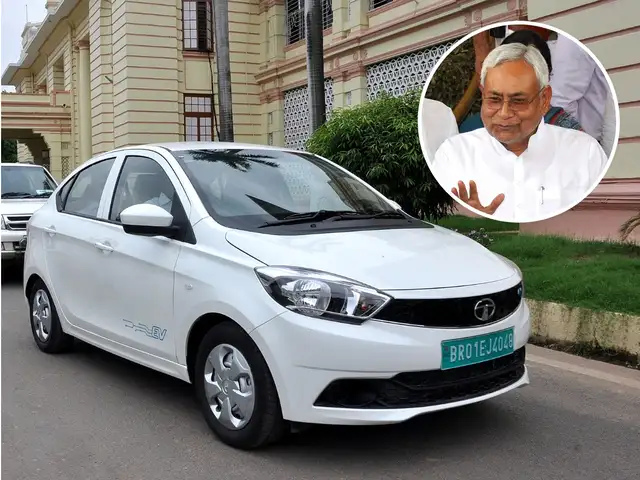
With a 21.5 kWh battery pack, the car can do 213 km on a single charge. The car has two charging ports for fast charging and slow AC charging. Bihar Chief Minister Nitish Kumar was seen using the car to arrive for the Monsoon session of the state assembly. He had praised the vehicle's design as well as its lack of sound. He called it comfortable back in July.
With a 21.5 kWh battery pack, the car can do 213 km on a single charge. The car has two charging ports for fast charging and slow AC charging. Bihar Chief Minister Nitish Kumar was seen using the car..
Read More
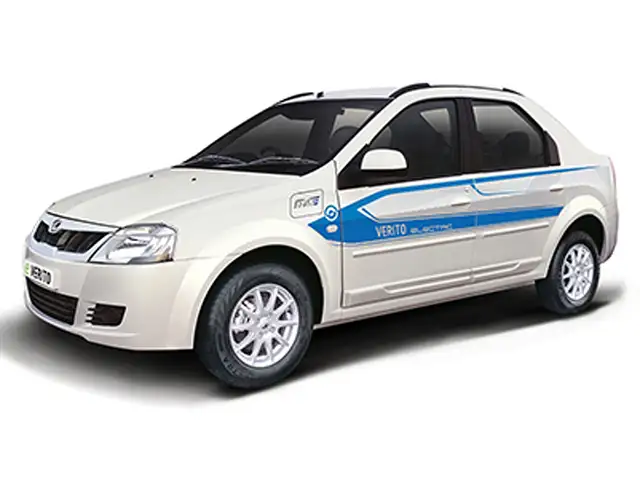
The car can do 140km on a single charge with its electric motor and a 72V lithium-ion battery pack. The battery can be fully charged in one hour and 45 minutes using a fast charger. With a regular charger, it takes about eight hours to charge. The e-Verito's top speed is 86 kmph. It is available in three variants.
The car can do 140km on a single charge with its electric motor and a 72V lithium-ion battery pack. The battery can be fully charged in one hour and 45 minutes using a fast charger. With a regular ch..