1984, once more: In face of disaster, Dolce & Gabbana tries to be inventive and hustles with luxe mini-films for new line
A series of mini-films shot from an opulent Milan mansion will broadcast online today.
By AFP |
AFP
Stefano Gabbana (L) and Domenico Dolce rediscovered the happiness of savouring their work during the pandemic.
MILAN: The coronavirus crisis has upended the norms of the fashion world, but Italian designers Domenico Dolce and Stefano Gabbana believe it has spurred them to be more inventive and resourceful.
With star-studded runway shows and in-person appointments now very difficult, the pair say they have been forced to hustle, recalling their early days in the mid-1980s.
Dolce, 62, and Gabbana, 58, spoke to AFP from an opulent Milan mansion where a series of mini-films for their upcoming haute couture collections were being shot.
These videos, based around the theme of family, will be broadcast online from Monday as an alternative to the customary catwalk show.
Stefano Gabbana: "Domenico and I are two positive people, we're not discouraged by the fact that we can't do certain things. But of course everything is more difficult.
"But I have to remind you that when the brand was launched in 1984, we only had three million lire (1,500 euros/$1,824). We made coats from fleece because we couldn't make them in cashmere, we made clothes in jersey because we didn't have the money to buy more precious fabrics. It's a situation that can be compared to today: we can't buy this, we can't do this.
ADVERTISEMENT
"It sharpens inventiveness. When Domenico and I are under pressure, we give our best. We love challenges."
Domenico Dolce: "This is part of 'Italian-ness'. We are truly 1,000 percent Italian. In times of disaster, you have to be inventive, creative, don't stop, don't cry over your fate, you have to react, with optimism, positivity."
File photo of September 2019: Italian fashion designers Stefano Gabbana (L) and Domenico Dolce at the presentation of their Women's Spring Summer 2020 fashion show presented in Milan. Stefano Gabbana: "Most of the work is done online. In some countries the shops are open, like in China. In others, they're not, especially in Europe and the United States.
ADVERTISEMENT
"We've seen 170 percent growth in four months in e-commerce, because everyone buys this way. There is a positive side to this situation, we are adapting to a new mode of buying, which was already highly developed in the United States and South America."
Stefano Gabbana: "We have all human resources in-house, the designers, the embroiderers, everything is done in Milan. We managed to do it slowly, we weren't sure we could do it."
ADVERTISEMENT
Domenico Dolce: "The haute couture shows are usually planned six months or even a year in advance... We asked ourselves: what's important at the moment? To do a classic fashion show seemed a bit useless, a bit sterile.
"In the beginning, Stefano was in favour of doing something, I was a bit against it. I didn't want to do anything, but he insisted. For us, this collection was therapeutic. Maybe this situation that blocked us on one side unblocked us on the other. We felt free to break the rules."
Stefano Gabbana: "We've offered rather classic clothes, like a little black dress, for more mature women... for the younger ones we broke everything that could be broken and we rebuilt it, in a completely new way."
Stefano Gabbana: "We had too much to do (before), the pace was frantic, now it has slowed down."
Domenico Dolce: "There was this anxiety about doing things, of running out of time. Now - and this makes us very happy - we have time to think. We are back like we were in the years 1985-86.... We've rediscovered the happiness of savouring our work."
Forever 21, Diesel, Gymboree: Iconic Fashion Labels That Filed For Bankruptcy
1/5
Over the past couple of years, some of the biggest names have declared bankruptcy. Take a look at iconic labels for whom business went bad.
Over the past couple of years, some of the biggest names have declared bankruptcy. Take a look at iconic labels for whom business went bad.
When: March 2019 The American unit of denim and accessory brand Diesel filed for bankruptcy in March this year, blaming it on mounting losses, sales plunge, expensive leases and cyber fraud. In a statement, a company representative said that the restructuring will help Diesel USA operate as a “iconic and profitable brand”. But unlike other retailers that filed for bankruptcy, Diesel USA will not be shuttering its stores.
Trivia: The name Diesel was chosen by the founder Renzo Rosso because it was a term that was pronounced exactly the same way around the world.
When: March 2019The American unit of denim and accessory brand Diesel filed for bankruptcy in March this year, blaming it on mounting losses, sales plunge, expensive leases and cyber fraud. In a stat..
Read More
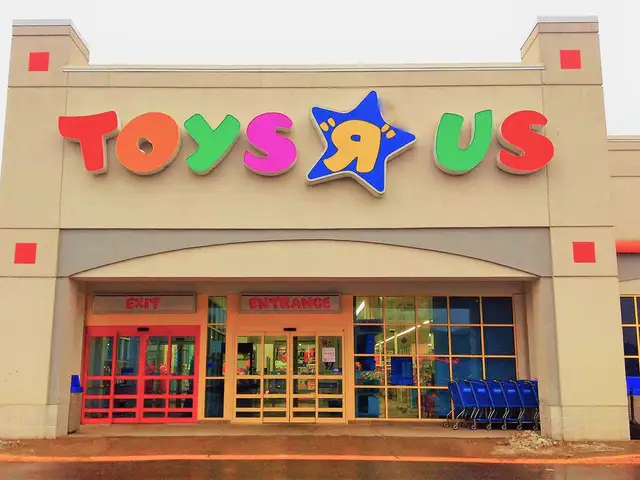
When: September 2017 The iconic American toy store closed almost all 800 of its stores in 2018. The brand was deep in debt — estimated more than $5 billion — and had filed for bankruptcy the year before. The company’s financial woes were aggravated after private equity firms Kohlberg Kravis Roberts and Bain Capital, as well as the real estate firm Vornado Realty Trust, took over the company for close to $6 billion in 2005.
Trivia: The R in the company’s name was intentionally inverted to make it look like it was written by a child.
When: September 2017The iconic American toy store closed almost all 800 of its stores in 2018. The brand was deep in debt — estimated more than $5 billion — and had filed for bankruptcy the year befo..
Read More
When: February 2019 Payless first filed for bankruptcy protection in April 2017 during which it eliminated $435 million in debt and shut down 700 stores. Chief restructuring of f icer Stephen Marotta said in a statement, “The challenges facing retailers today are well documented, and unfortunately Payless emerged from its prior reorganisation ill-equipped to survive in today’s retail environment.” The 2019 bankruptcy filing reportedly estimates a debt of $470 million as the shoe retailer planned to shut down close to 2,400 stores in the US and Canada.
Trivia: Reportedly, close to 18,000 people worked for the company in 2018.
When: February 2019Payless first filed for bankruptcy protection in April 2017 during which it eliminated $435 million in debt and shut down 700 stores. Chief restructuring of f icer Stephen Marotta ..
Read More
When: January 2019 Gymboree, a children’s clothing retailer, filed for bankruptcy for the second time in less than two years in January. In a statement, CEO Shaz Kahng said, “The company has worked diligently in recent months to explore options for Gymboree Group and its brands, and we are saddened and highly disappointed that we must move ahead with a wind-down of the Gymboree and Crazy 8 businesses.” The company shut close to 800 stores.
Trivia: The company began as Kindergym when founder Joan Barnes launched a play program in San Rafael.
When: January 2019Gymboree, a children’s clothing retailer, filed for bankruptcy for the second time in less than two years in January. In a statement, CEO Shaz Kahng said, “The company has worked di..
Business News › Magazines › Panache › 1984, once more: In face of disaster, Dolce & Gabbana tries to be inventive and hustles with luxe mini-films for new lineText Size:AAA