How 'try and buy' allows niche online retailers like Lenskart take on giants like Amazon
'Try and buy’ as a scheme is costly for niche retailers but helps them convince people to buy even products of high individual preferences online.
BANGALORE | NEW DELHI: For niche online retailers, allowing product trials at home is proving to be lucrative and more than a defence against electronic marketplaces such as Amazon.
By allowing buyers to try items before placing an order, companies such as online eyewear retailer Lenskart and jeweler BlueStone have been able to push through higher value purchases while significantly lowering product returns, a standard industry good practice but a drain on ecommerce firms.
'Try and buy’ as a scheme is costly for niche retailers but helps them convince people to buy even products of high individual preferences online, earning their loyalty. This gives them an advantage over ecommerce giants such as Flipkart and Amazon in the specific category they operate, because offering home trials would complicate the inventory-light business models of these electronic marketplaces.
Lenskart has been offering home trials in 42 cities the past five months, with delivery boys taking to customers' homes five selected frames to pick from. The initiative has translated to over 8% of the company's 150,000 monthly shipments.
"Home trials work for specialized categories where people want to be sure they make a right decision," said cofounder and chief executive Peyush Bansal. "We have seen that about 60-70% of the user send up placing an order. The conversion rates are higher and results in half of regular return rates of 7% for items ordered online."
 On average, 10-12% of products sold online are returned by buyers for various reasons, according to various industry estimates. Each return costs an additional Rs 70 for ecommerce firms, excluding shipping costs. Home trials cost Rs 70-100 per visit, incurred mainly on transportation for online retailers who own their own delivery networks in major cities, but they have their eyes trained on potential long-term benefits.
For billionaire Ratan Tatafunded BlueStone, returns have dropped to zero from buyers trying on replicas of their solitaires and necklaces at home ahead of placing an order. "Since it's a high-value category with the average price of an item sold on our site around Rs 20,000 per piece, a 'home try on' more than covers the cost of bringing the samples to a customer's doorstep," said CEO Gaurav Singh Kushwaha. This has also helped bump up transaction value, with home trial items having a higher than average value, he said. Bangalorebased online furniture retailer Urban Ladder last month began allowing customers to choose from swatches of colors and fabric to customize furniture such as sofas, charging Rs 299 for the service. Tiger Global-backed Caratlane sends jewelry consultants for home trials on request.
But online lingerie retailer Zivame ended its 'try at home' scheme after a threemonth pilot and now instead offers fit assessments in person and via its call centre, at no cost to the customer.
"Try and buy policies will work for specialized companies that deal in high-value and high-margin products to lock in the customer. The cost of exchange can be recovered from the high margins in these products," said Seema Gupta assistant professor of marketing at the Indian Institute of Management, Bangalore. "Inventory players have better quality control and hence try and buy is likely to be more successful in them than a marketplace." Flipkart, Amazon and Snapdeal, the country's largest online marketplaces, do not offer home trials.
By allowing buyers to try items before placing an order, companies such as online eyewear retailer Lenskart and jeweler BlueStone have been able to push through higher value purchases while significantly lowering product returns, a standard industry good practice but a drain on ecommerce firms.
'Try and buy’ as a scheme is costly for niche retailers but helps them convince people to buy even products of high individual preferences online, earning their loyalty. This gives them an advantage over ecommerce giants such as Flipkart and Amazon in the specific category they operate, because offering home trials would complicate the inventory-light business models of these electronic marketplaces.
Lenskart has been offering home trials in 42 cities the past five months, with delivery boys taking to customers' homes five selected frames to pick from. The initiative has translated to over 8% of the company's 150,000 monthly shipments.
"Home trials work for specialized categories where people want to be sure they make a right decision," said cofounder and chief executive Peyush Bansal. "We have seen that about 60-70% of the user send up placing an order. The conversion rates are higher and results in half of regular return rates of 7% for items ordered online."
On average, 10-12% of products sold online are returned by buyers for various reasons, according to various industry estimates. Each return costs an additional Rs 70 for ecommerce firms, excluding shipping costs. Home trials cost Rs 70-100 per visit, incurred mainly on transportation for online retailers who own their own delivery networks in major cities, but they have their eyes trained on potential long-term benefits.ADVERTISEMENT
For billionaire Ratan Tatafunded BlueStone, returns have dropped to zero from buyers trying on replicas of their solitaires and necklaces at home ahead of placing an order. "Since it's a high-value category with the average price of an item sold on our site around Rs 20,000 per piece, a 'home try on' more than covers the cost of bringing the samples to a customer's doorstep," said CEO Gaurav Singh Kushwaha. This has also helped bump up transaction value, with home trial items having a higher than average value, he said. Bangalorebased online furniture retailer Urban Ladder last month began allowing customers to choose from swatches of colors and fabric to customize furniture such as sofas, charging Rs 299 for the service. Tiger Global-backed Caratlane sends jewelry consultants for home trials on request.
But online lingerie retailer Zivame ended its 'try at home' scheme after a threemonth pilot and now instead offers fit assessments in person and via its call centre, at no cost to the customer.
"Try and buy policies will work for specialized companies that deal in high-value and high-margin products to lock in the customer. The cost of exchange can be recovered from the high margins in these products," said Seema Gupta assistant professor of marketing at the Indian Institute of Management, Bangalore. "Inventory players have better quality control and hence try and buy is likely to be more successful in them than a marketplace." Flipkart, Amazon and Snapdeal, the country's largest online marketplaces, do not offer home trials.
Globally, 'Try at home' schemes have long been deployed since ecommerce began to help bridge the 'experiential shopping' gap. For example New York-based online eyeglasses retailer Warby Parker, estimated to be valued at $1 billion, lets customers pick five eye-frames to be shipped over for a five-day home trial, all free of cost.
In India, industry experts predict a faster phase-out of retail stores in branded categories such as electronics and books, where the touch and feel is not that important.
"Over time, outlets will only be needed to test the look and feel," said Aamir Jariwala, member at industry body Ecommerce Coalition of India and founder of Karma Recycling, an online seller of refurbished electronic products. "For products where touch and feel is less important today such as smartphones, tablets and other electronics, the opportunity to phase out large offline locations quickly will be even greater."
Start a SIP with as low as ₹500 with ET Money App!
Download
The Economic Times News App for Quarterly Results, Latest News in ITR, Business, Share Market, Live Sensex News & More.
The Economic Times News App for Quarterly Results, Latest News in ITR, Business, Share Market, Live Sensex News & More.
Related Articles
 Maharashtra CM meets Amazon CEO, invites company to invest in data centres, healthcare
Text: Neha Pandey Deoras, ET Bureau
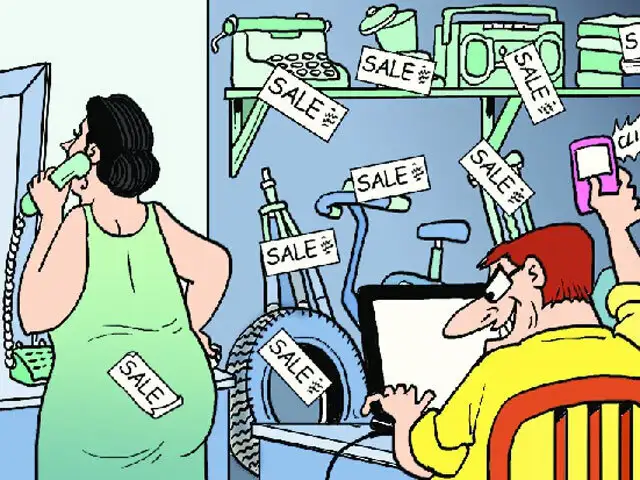
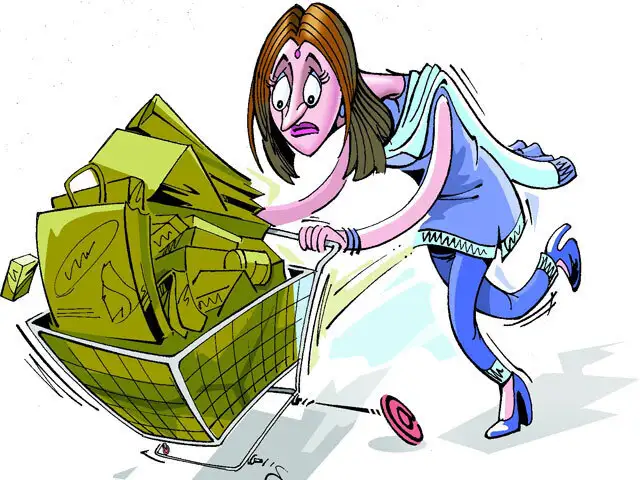
Mumbai executive Lincy Thomas has a strange way of beating Monday morning blues. She shops online for three hours, piling her ecart with goods she does not need, and paying with her credit card.
Thomas is not alone. A growing army of shopaholics are using the e-tailing route to fuel their obsession. According to the MasterCard Online Shopping Survey 2014, the percentage of respondents who have made at least one purchase in the last three months has increased from 70.9% in 2012 to 94% in 2014.
Here's how to curb online shopping addiction...
Mumbai executive Lincy Thomas has a strange way of beating Monday morning blues. She shops online for three hours, piling her ecart with goods she does not need, and paying with her credit card.
Thomas is not alone. A growing army of shopaholics are using the e-tailing route to fuel their obsession. According to the MasterCard Online Shopping Survey 2014, the percentage of respondents who have made at least one purchase in the last three months has increased from 70.9% in 2012 to 94% in 2014.
Here's how to curb online shopping addiction...




ADVERTISEMENT


