
Budget FY2026: Key Numbers
Budget Headlines
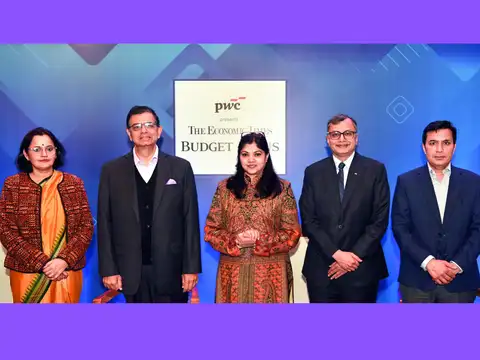


CXO Corner

Why Deepak Shenoy continues to bet on stronger India theme going forward
Global sentiments will have to improve before FIIs can come back to India: Sunil Koul

Market more balanced post Budget; opportunities to generate alpha below Nifty level: Rahul Singh
Budget measures to bring about a widespread cyclical recovery: Upasana Chachra


Loans

Increase in TDS threshold for rent of house property under section 194-I
Tax rules for house property simplified in Budget 2025

Govt announces SWAMIH Fund-2 to complete 1 lakh homes in stalled projects
Budget incentives, higher TDS exemption, tax relief to spur housing market growth
Sectors In Focus
Rise
 From Hyderabad to Hamburg: Home-grown HIL triples manufacturing muscle
 Budget 2025: Relief for a larger segment of Indian promoters under the insolvency code
 Union Budget 2025 receives mixed reactions from Ludhiana’s MSMEs
 Budget 2025 impact on MSME, exports, indirect taxes and Ease of Doing Business
 Now, ‘Heal in India’—Budget push can elevate India as a global healthcare destination: Ind...
 Export Promotion Mission in Budget 2025 a timely initiative, but more needed to boost Indi...
 Budget 2025: A welcome change; regulatory reforms will boost business and economic growth,...
 Firms up to Rs 500 crore are now medium; MSMEs get a new definition
 Union Budget 2025: FM announces export promotion mission to facilitate easier access to ex...
 Union Budget 2025: FM Sitharaman enhances credit guarantee cover for MSMEs, introduces cus...
Energy
 Aramco Trading sells 10 million bbls Khafji crude to Asian refiners, sources say
 Oil slides as Saudi Arabia boosts flows via key pipeline
 CCI seeks more info on Adani Energy's IntelliSmart deal
 Oil minister Hardeep Puri calls for deeper India-OPEC energy ties
 Coal India Limited announces ambitious Business Development portfolio for diversification ...
 Assam CM Himanta Biswa Sarma laid foundation stone for Adani Power’s 3,200 MW Assam Projec...
 India discusses US Sanctioning Russia and Iran Act implications on bilateral ties and ener...
 India calls for secure, affordable and reliable energy for development
 Diamond Power Infrastructure secures Rs 179.43 crore order from Adani Electricity Mumbai f...
 India has 62 MMT annual compressed biogas potential; animal waste could become the biggest...
Banking
 RBI net short forward position rises to $200 b
 HDFC Bank Group General Counsel Sudhir Kumar Jha retires after 22 years
 RBL Bank gets show cause notice with GST demand of over Rs 173 crore
 Personal loan growth rises to 16.9% in August: RBI
 Bank deposit rates fall as fresh lending rates rise in August
 HDFC Bank names ICICI veteran banker V.N. Srivatsan as Chief Compliance Officer
 SBI seeks clarity on bank accounts under proposed FCRA rules
 Credit Saison diversifies into secured, expects it to be 30% of loans by FY27
 IndusInd Bank eyes India’s 2,117 GCCs with new banking vertical
 IndusInd Bank CEO Rajiv Anand says name ‘unmapped’ from voter roll
Travel
 VFS Global: Helping build the tourism infrastructure for trusted mobility
 Travel industry may need to prioritise continuity, trust as AI reshapes booking journey: R...
 Private firm inks MoU with Andaman and Nicobar administration to develop two trekking trai...
 ET Graphics: Where Indians travel and why
 Forget holidays, Indians travelled most for religion: 47.7% of domestic overnight trips we...
 Durga Puja travel alert for Kolkata flyers: October 16 tickets show a massive airfare spik...
 State-owned Balmer Lawrie to demerge Travel & Vacations unit
 GFF 2026: Visa, ONDC look to make India’s tourism offerings easier to discover
 Visitor footfall in Ladakh sees an increase of 50 percentage in 8 months
 Festive fever checks in early: Hotel bookings, room rates rise as Indians plan longer geta...
Tech
 FTC opens probe into AI giants including Anthropic and OpenAI, source says
 ElevenLabs' valuation doubles to $22 billion on surging AI voice-agent demand
 Apple Pay lands in India; Google executive on AI's next big hurdle
 Pocket Entertainment's Rohan Nayak says AI tool Sherpa helped writers create $100 million ...
 Simple Energy raises $180 million in largest funding round, eyes top-five EV two-wheeler s...
 SatLEO to launch India’s first thermal payload TAPAS-1 aboard SpaceX’s Falcon 9
 Ex-Livspace duo’s interiors startup Gravity raises $15 million
 Apple Pay vs UPI: Which requires fewer steps to make a payment?
 AI startup Instinct brings expert-curated recommendations to its platform
 Trump calls Sundar Pichai a ‘monster’; here’s how the Google CEO replied
Auto
 In CAFE 3, auto companies have wider choices and a better view of the road
 CAFE-III gives auto industry investment clarity, supports cleaner technology adoption: Ind...
 Fuel-efficiency rules 2027: How CAFE-III norms will affect EVs, hybrids, small cars & petr...
 New CAFE norms out for passenger vehicles, targets tightened for FY28-FY32
 New BMW 3 Series unveiled: Check i3, M350 xDrive price, range, features and more
 CAFE III fuel efficiency norms notified for cars: 3x credit for battery EVs, no special be...
 Skoda Auto India to hike car prices by up to 1.2% from October 1
 Tata Motors PV eyes 15% market share soon, targets 20% by FY31, says MD Shailesh Chandra
 Mass market automakers gaining ground in the premium segment; Mercedes, BMW work out diffe...
 India's car sales crank up as GST gains & income twist top price hikes


Game Changer Budget 2025


How the aam aadmi won Sitharaman's Budget 2025

Sitharaman has done her part. Now, it's over to Modi

Union Budget 2025: Another missed opportunity for meaningful economic reform

Key budget themes fade as middle class steals the limelight

Budget raises the bet on spending, capex target up by 10.08% to record Rs 11.21 lakh crore

All the tax and other goodies that middle class got from Sitharaman

100% FDI set to transform the insurance landscape in India

No income tax up to Rs 12 lakhs! Union Budget ticks the right boxes

New income tax slabs in Budget 2025: 30% tax now starts at Rs 24 lakh

Income tax basic exemption limit hiked by Rs 1 lakh in new tax regime in Budget 2025: Check new tax exemption limit

Budget proposes national manufacturing mission to boost India's 'atmanirbharta'

Budget announces key measures to benefit 1.7 cr Indian farmers

Sitharaman proposes 100% FDI in insurance. But T&C apply

Sitharaman announces enhanced support for MSMEs, entrepreneurs


Economic Survey 2025
 Budget 2025 approved by the Union CabinetThe Cabinet, led by Prime Minister Narendra Modi, approved the Union Budget 2025, which Finance Minister Nirmala Sitharaman will present today—her eighth consecutive budget. Expectations include price reductions on household items, job creation for youth, and income tax concessions for the salaried class.
- Economic Survey 2025 Highlights: Jobs, growth, fiscal deficit — how Indian economy performed and the way aheadEconomic Survey Budget 2025 Highlights: India's Economic Survey 2024-25 emphasizes deregulation for growth, citing the impact of global uncertainties. Key highlights include a 6.4% GDP growth, resilient services sector, and improved rural demand. The survey stresses balanced energy transition, AI-driven skilling, and agricultural productivity. The banking sector shows asset quality improvement, with regulatory reforms and investment in infrastructure highlighted.
- Economic Survey: On track to achieve 4% inflation target by FY26India's retail price inflation is projected to progressively align with the 4% target, driven by declining global commodity prices and supply-side improvements. The Economic Survey highlights the need for climate-resilient crops and robust data systems to achieve long-term price stability and manage food inflation effectively.
- Economic Survey: Electronics market still 4% of global pieIndia has made strides in boosting domestic electronics manufacturing, with programmes like Make in India and Digital India playing crucial roles. The domestic production of electronic goods grew significantly, with a remarkable reduction in smartphone imports. However, the industry has focused primarily on assembly, with limited advancements in design and component manufacturing, representing only 4% of the global market.
- Economic Survey highlights risks of overreliance on China amid supply chain challengesIndia faces significant risks due to heavy reliance on Chinese imports across several sectors, posing threats of supply disruptions and economic instability. To mitigate these risks, India aims to bolster its manufacturing sector and attract both local and foreign investments, aligning with its development goals.
- Need to help cos become efficient and reduce costs, says Aastha Gudwani, India chief economist, BarclaysTaking cues from the economic Survey, here is what we think about the likely bent of the Budget - the budget will continue to focus on job creation via manufacturing), offer incentives for the service sector to diversify the supply chain, opines Aastha Gudwani.
- Eco Survey 2025 warns against shutting down thermal energyThe preface to the Survey noted that China, US, EU, and countries belonging to the G7 group produce more than half of global greenhouse gas emissions, and these economies rely heavily on each other for environmental goods and technologies. Trade conflicts between these economies will pose major risks to green energy transition, imposing huge costs on the global economy, the Survey said.
- Economic Survey: Deregulate to take off, says Anubhuti Sahay of Standard Chartered BankIn the late 1970s, the US government's shift to focus on aviation safety significantly reduced accidents and increased air traffic. India's current economic environment suggests a similar approach: reduce regulation to boost commercial freedom and growth. With global uncertainties, counter-cyclical measures like tax cuts could help, but holistic deregulation, including easier land access and labor laws, is crucial.
- Economic Survey: Need to widen scope of EV policies to lower dependence on ChinaIndia needs to expand its electric vehicle (EV) policies to accommodate industry growth and decrease dependence on imported components. The Economic Survey highlighted India's reliance on Chinese imports for EV materials and stressed on building a more self-reliant ecosystem by promoting R&D in advanced battery technologies and securing intellectual property.
- Economic Survey: States must lead 'Ease of Doing Business' 2.0The Economic Survey for FY25 calls for extensive deregulation to free enterprises from excessive red tape, urging a shift from 'guilty until proven innocent' to 'innocent until proven guilty' regulatory principles. It advocates for state-led initiatives to improve business conditions, emphasizing the need to reduce compliance burdens and embrace risk-based regulations.
- Economic Survey: Fundamentals strong, time to ace China+1 play, says Swaminathan S AiyarThe Economic Survey anticipates a GDP growth of 6.3-6.8% with manufacturing at 6.2%. It highlights progress in government finances and suggests deregulation for faster growth. Inflation should decrease due to good harvests and international trends. Emphasizing AI potential, the Survey points to challenges in competitiveness and calls for boosting foreign investment amid global economic fragmentation.
- UGC regime not in sync with NEP, says Eco SurveyIt has argued that institutions that desire to stand by their "own hard-won reputations" should be "free to carve out their own path", adding that it is "important to embrace diversity and to trust the genius of faculty and students to come up with frameworks that are novel, creative, and impactful on society".
- Energy transition runs through China, says Economic SurveyChina's significant manufacturing capacity for renewable energy equipment, particularly in solar PVs and batteries, is crucial for the global energy transition. The concentration of supply chains in China poses disruption risks, and ongoing trade conflicts among major economies could jeopardize the green energy transition.
- Self-employed workforce rising in India; reflects shift towards entrepreneurship: Eco SurveyThe Economic Survey 2024-25 reveals a rise in self-employment among India's workforce from 52.2% in 2017-18 to 58.4% in 2023-24, highlighting increased entrepreneurial activity and preference for flexible work. Programs like Mudra Yojana and Skill India have supported this shift. The number of casual workers also decreased, indicating more structured self-employment forms.
- Eco Survey's focus on deregulation, ease of biz heartening: India IncIndia Inc hailed the Economic Survey, anticipating growth projections of 6.3-6.8% for 2025-2026. Industry leaders expect the Union Budget to drive consumption and investment. Key points include deregulation to enhance competitiveness, infrastructure investments, and boosting AI-related workforce skills. The tourism sector shows strong recovery and positive growth.
- Economic Survey 2024-25: PM Modi highlights India's growth story in numbersPrime Minister Narendra Modi shared significant insights from the Economic Survey, highlighting major growth in non-fossil fuel power generation, global services share, private spending, and credit for small farmers. Additionally, India witnessed substantial growth in highway development, women's patent filings, and improved rural power supply over the past decade.
- Tap water coverage hits 70%, sewerage coverage reaches 62% in 500 Cities: Economic SurveyTap water coverage has reached 70% and sewerage coverage 62% in 500 cities under the AMRUT scheme. AMRUT 2.0 was launched to cover all towns with projects worth Rs 1.89 lakh crore. Under PMAY-U, 89 lakh houses were completed. Metro and rapid rail systems are operational in 29 cities, reducing emissions and saving costs. Smart City Mission completed 7,479 projects.
- Swachh Bharat Mission transformed India's sanitation landscape: Economic SurveyThe Swachh Bharat Mission has significantly improved sanitation and hygiene practices in India, with 3.64 lakh villages achieving ODF Plus status. The initiative includes effective waste management and rural sanitation efforts, along with enhanced water conservation measures via the Jal Shakti Abhiyan and Jal Jeevan Mission.
- Inflation to align with target progressively: Economic SurveyIndia's Economic Survey notes that inflation will progressively align with the target of 4%, aided by easing global commodity prices and improved agricultural practices. Key measures include developing climate-resilient crops, reducing crop damage, and enhancing yield to tackle production deficits and manage food inflation.
- ISRO's geospatial platforms aiding govt programmes across sectors: Economic SurveyISRO's geospatial platforms such as Bhuvan are aiding rural development and urban planning, monitoring infrastructure, and judicial projects. With 56 active space assets, ISRO is advancing India's space capabilities through missions like Gaganyaan, Chandrayaan-4, and the Venus Orbiter Mission while enhancing industry collaboration.
- India needs to take advantage of conducive global situations to be developed nation by 2047: CEAIndia aims to leverage favorable global conditions to achieve faster economic growth and become a developed nation by 2047, according to Chief Economic Adviser V Anantha Nageswaran. Despite the current slowdown, India remains the fastest-growing large economy, with projections indicating a growth rate of 6.3 to 6.8 percent for 2025-26.
India’s Economic Trends
Fiscal Deficit
Infra Output
Manufacturing PMI
Services PMI
Retail Inflation
WPI
Trade Deficit
Export
Import
GST
GDP
Spot The FM
Pick and drag the FM on the right with your cursor and match with the budgetary proposal on the left.

Budget Photo Gallery
Budget Photo Gallery
 Big boost for Bihar in Budget 2025-26: Infrastructure, agriculture, and education plans unveiled
 How Finance Minister Nirmala Sitharaman’s budget day sarees have told a story
 Budget 2025-26: India’s tourism gets a major boost! Visa reforms, homestay loans & destination upgrades announced
 Budget 2025: Meet the makers of India's bahi-khata, Nirmala Sitharaman’s core team
 Key architects of India's Union Budget 2025
 Union budget: 5 interesting facts you need to know
 Budget FAQ: All your basic questions about Budget answered
 Five steps to prepare the Budget
 From fiscal deficit to public debt, some key financial terms to know
 Fun facts about Union Budget
 Looking Back at Modi's Budget: 10 key Budget announcements in 10 years of Narendra Modi government
 India's Budget leaked in 1950: What happened? Who did it? Consequences
Details on Budget 2025
Union Budget 2025
Finance Minister Nirmala Sitharaman unveiled the first full Budget of Modi 3.0 today, focusing on tax relief for the middle class, allowing total tax exemption for income up to Rs 12 lakh per annum. In her speech, she emphasized the Budget's goals of supporting the GYAN (Garib, Yuva, Annadata, and Nari shakti) — the poor, farmers, women, and youth. She also made notable announcements for Bihar, where elections are anticipated later this year.
Budget 2025: Major Highlights
Budget Theme
The Budget aims to implement transformative reforms in six key areas: taxation, power, urban development, financial sector, mining, and regulatory reforms. It emphasizes inclusive development to enhance middle-class spending power, viewing the next five years as a unique opportunity for widespread growth.
Income Tax Changes
A New Income Tax Bill will be introduced next week, featuring no income tax for incomes up to Rs 12 lakh and nil tax on Rs 12.75 lakh due to a standard deduction. The proposed simplified tax structure will benefit taxpayers across various income brackets. Notable changes include doubling the tax deduction limit for senior citizens and removing TCS on education remittances.
Following are the revised slabs and rates under new tax regime announced in the FY26 Budget:
Income up to Rs 4 lakh (per annum) ----- Nil
Between Rs 4 and 8 lakh ---------------- 5 per cent (tax)
Between Rs 8 and 12 lakh --------------- 10 per cent
Between Rs 12 and 16 lakh -------------- 15 per cent
Between Rs16 and 20 lakh --------------- 20 per cent
Between Rs 20 and 24 lakh -------------- 25 per cent
Above Rs 24 lakh ------------------------- 30 per cent
* Nil tax slab will apply for annual income up to Rs 12 lakh (Rs 12.75 lakh for salaried taxpayers with a standard deduction of Rs 75,000) under new tax regime.
Tax Moves for Businesses
Significant tax measures include making 36 life-saving drugs duty-free, cutting custom duty on lithium batteries, and reducing BCD on various goods. An asset monetization plan aims to generate Rs 10 lakh crore, while FDI in the insurance sector will increase to 100%.
State of the Economy
The FY25 fiscal deficit is projected at 4.8%, with a revised capex of Rs 10.18 lakh crore. Total receipts and expenditures for FY26 are estimated at Rs 34.96 lakh crore and Rs 50.65 lakh crore, respectively.
Big Measures for Agriculture
Initiatives include a new urea plant in Assam, a National Mission on High Yielding Seeds, and a five-year mission to boost cotton productivity. The Modified Interest Subvention Scheme will raise loan limits for farmers, and a PM Dhan Dhyan Krishi Yojana will target low-yield districts.
Reforms Announced
Plans include developing an asset monetization strategy and setting up a High-Level Committee for regulatory reforms. A National Manufacturing Mission will be launched to boost India's production capacity.
Infrastructure and Economy
Each ministry will devise a three-year project pipeline for PPP implementation, and states will receive Rs 1.5 lakh crore in interest-free loans for infrastructure development.
Education Schemes
The Budget proposes setting up 50,000 Tinkering Labs in schools and enhancing broadband connectivity in rural educational and health institutions.
Tourism and Exports
The top 50 tourist destinations will receive development support, and a digital platform for trade documentation will be established.
Aviation
A modified UDAN scheme will improve regional connectivity to 120 new destinations over the next decade.
Key Announcements for Bihar
Bihar will see the facilitation of greenfield airports and expansions at existing airports, alongside support for the Western Koshi Canal project.
Healthcare Initiatives
The Budget allocates funds for increasing medical college seats and establishing day-care cancer centers in district hospitals.
Budget Moves for MSMEs
Classification limits for MSMEs will expand, with enhanced credit guarantee covers to boost access to credit.
India Post Transformation
India Post will be revamped to support rural economies and businesses through a public logistics organization.
In essence, Budget 2025 emphasises tax relief, agricultural growth, infrastructure development, and a reform push, particularly benefiting the middle class and rural sectors.
Finance Minister Nirmala Sitharaman unveiled the first full Budget of Modi 3.0 today, focusing on tax relief for the middle class, allowing total tax exemption for income up to Rs 12 lakh per annum. In her speech, she emphasized the Budget's goals of supporting the GYAN (Garib, Yuva, Annadata, and Nari shakti) — the poor, farmers, women, and youth. She also made notable announcements for Bihar, where elections are anticipated later this year.
Budget 2025: Major Highlights
Budget Theme
The Budget aims to implement transformative reforms in six key areas: taxation, power, urban development, financial sector, mining, and regulatory reforms. It emphasizes inclusive development to enhance middle-class spending power, viewing the next five years as a unique opportunity for widespread growth.
Income Tax Changes
A New Income Tax Bill will be introduced next week, featuring no income tax for incomes up to Rs 12 lakh and nil tax on Rs 12.75 lakh due to a standard deduction. The proposed simplified tax structure will benefit taxpayers across various income brackets. Notable changes include doubling the tax deduction limit for senior citizens and removing TCS on education remittances.
Following are the revised slabs and rates under new tax regime announced in the FY26 Budget:
Income up to Rs 4 lakh (per annum) ----- Nil
Between Rs 4 and 8 lakh ---------------- 5 per cent (tax)
Between Rs 8 and 12 lakh --------------- 10 per cent
Between Rs 12 and 16 lakh -------------- 15 per cent
Between Rs16 and 20 lakh --------------- 20 per cent
Between Rs 20 and 24 lakh -------------- 25 per cent
Above Rs 24 lakh ------------------------- 30 per cent
* Nil tax slab will apply for annual income up to Rs 12 lakh (Rs 12.75 lakh for salaried taxpayers with a standard deduction of Rs 75,000) under new tax regime.
Tax Moves for Businesses
Significant tax measures include making 36 life-saving drugs duty-free, cutting custom duty on lithium batteries, and reducing BCD on various goods. An asset monetization plan aims to generate Rs 10 lakh crore, while FDI in the insurance sector will increase to 100%.
State of the Economy
The FY25 fiscal deficit is projected at 4.8%, with a revised capex of Rs 10.18 lakh crore. Total receipts and expenditures for FY26 are estimated at Rs 34.96 lakh crore and Rs 50.65 lakh crore, respectively.
Big Measures for Agriculture
Initiatives include a new urea plant in Assam, a National Mission on High Yielding Seeds, and a five-year mission to boost cotton productivity. The Modified Interest Subvention Scheme will raise loan limits for farmers, and a PM Dhan Dhyan Krishi Yojana will target low-yield districts.
Reforms Announced
Plans include developing an asset monetization strategy and setting up a High-Level Committee for regulatory reforms. A National Manufacturing Mission will be launched to boost India's production capacity.
Infrastructure and Economy
Each ministry will devise a three-year project pipeline for PPP implementation, and states will receive Rs 1.5 lakh crore in interest-free loans for infrastructure development.
Education Schemes
The Budget proposes setting up 50,000 Tinkering Labs in schools and enhancing broadband connectivity in rural educational and health institutions.
Tourism and Exports
The top 50 tourist destinations will receive development support, and a digital platform for trade documentation will be established.
Aviation
A modified UDAN scheme will improve regional connectivity to 120 new destinations over the next decade.
Key Announcements for Bihar
Bihar will see the facilitation of greenfield airports and expansions at existing airports, alongside support for the Western Koshi Canal project.
Healthcare Initiatives
The Budget allocates funds for increasing medical college seats and establishing day-care cancer centers in district hospitals.
Budget Moves for MSMEs
Classification limits for MSMEs will expand, with enhanced credit guarantee covers to boost access to credit.
India Post Transformation
India Post will be revamped to support rural economies and businesses through a public logistics organization.
In essence, Budget 2025 emphasises tax relief, agricultural growth, infrastructure development, and a reform push, particularly benefiting the middle class and rural sectors.