
Income tax filing: Digital or physical copies? Here's how to store your ITR documents
1/6
Are digital copies of ITR documents enough?
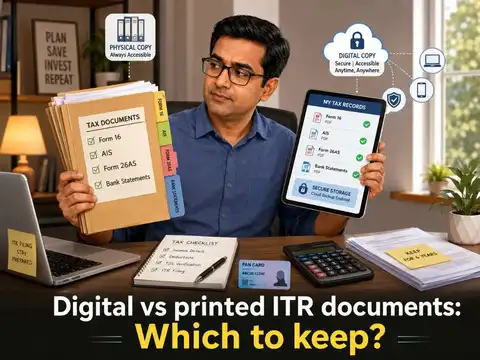
For most taxpayers, digital copies of income tax documents are sufficient, provided they are clear, complete, easily retrievable and can be reconciled when required. Most tax-related documents such as Form 16, AIS, Form 26AS, bank statements and investment proofs are now generated electronically, making digital storage adequate in most cases.
2/6
Which tax documents should you keep in physical form?
Certain documents should be preserved in their original physical form, as they establish ownership, cost or legal rights. These include property purchase deeds, gift deeds, loan agreements and other records relating to cost of acquisition or cost of improvement. A scanned copy is useful, but the original document should also be safely preserved.
3/6
Documents salaried taxpayers and capital gains taxpayers should keep
The documents you should retain depend on your source of income, not merely the ITR form.
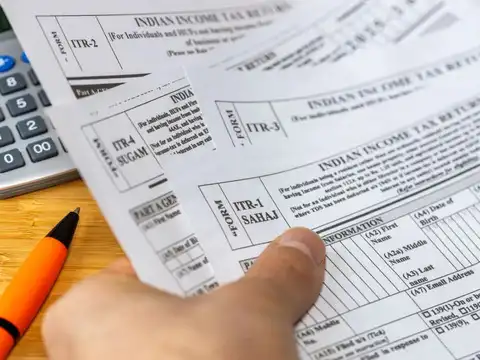
● Salaried taxpayers (ITR-1): Form 16, salary slips, bank statements, interest certificates, investment proofs and documents supporting deductions or exemptions.
● Capital gains taxpayers (ITR-2): Purchase and sale deeds, contract notes, demat statements, broker statements, cost of improvement records, stamp duty valuation details and documents supporting exemptions under Sections 54, 54EC or 54F.
● Salaried taxpayers (ITR-1): Form 16, salary slips, bank statements, interest certificates, investment proofs and documents supporting deductions or exemptions.
● Capital gains taxpayers (ITR-2): Purchase and sale deeds, contract notes, demat statements, broker statements, cost of improvement records, stamp duty valuation details and documents supporting exemptions under Sections 54, 54EC or 54F.
Amazon Top Deals
POWERED BY
4/6
Documents business and professional taxpayers should preserve
Taxpayers filing ITR-3 or ITR-4 with business or professional income should retain books of account (where prescribed), invoices, expense vouchers, GST records, bank statements, depreciation schedules, loan documents and other business records that support the income reported in the return.

5/6
Important income tax documents every taxpayer should keep
Every taxpayer should preserve:
● ITR acknowledgement (ITR-V) and a copy of the filed ITR
● Form 16/Form 16A
● Form 26AS and AIS
● Tax payment challans
● Bank statements
● Investment and deduction proofs
● Home loan interest certificate (if applicable)
● Property papers/capital gains documents (if applicable)
● Business records and invoices (if applicable)
● ITR acknowledgement (ITR-V) and a copy of the filed ITR
● Form 16/Form 16A
● Form 26AS and AIS
● Tax payment challans
● Bank statements
● Investment and deduction proofs
● Home loan interest certificate (if applicable)
● Property papers/capital gains documents (if applicable)
● Business records and invoices (if applicable)
6/6
Why preserving ITR documents is important
Retaining tax records serves two important purposes. First, these documents help taxpayers respond to any scrutiny, verification or information request from the Income Tax Department. Second, they are useful while computing taxes in future years, particularly when carrying forward losses, selling assets after several years, or determining historical cost for capital gains calculations.