
Government vs private hospital in India: Cost, wait times and which one to choose
1/10
Government or private hospital? The price gap in India can be 5 to 10 times
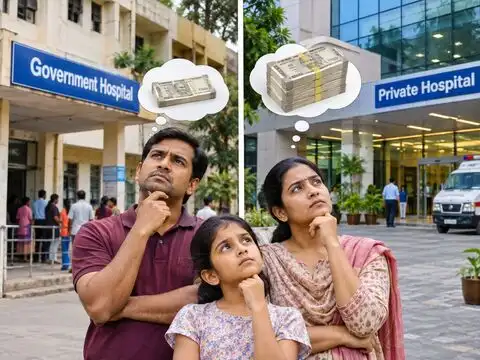
When a family member falls sick, the first big question is often where to get treated. In India, the answer can change your bill by lakhs of rupees. Treatment in a private hospital typically costs 5 to 10 times more than in a government hospital, according to a NSO survey and parliamentary data.
But cost is only one side. Waiting time, comfort, specialists and insurance also matter. This slideshow compares both options in simple terms so you can decide calmly, before an emergency forces you to decide in a hurry.
But cost is only one side. Waiting time, comfort, specialists and insurance also matter. This slideshow compares both options in simple terms so you can decide calmly, before an emergency forces you to decide in a hurry.
2/10
The real numbers: What a hospital stay costs in each
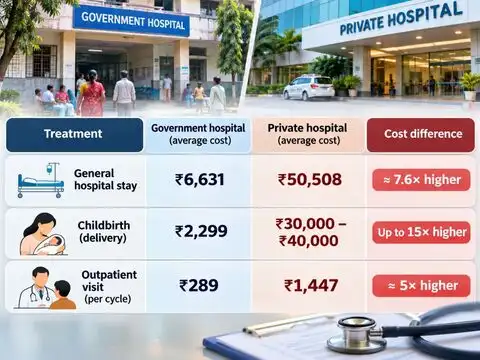
The average cost of a general hospital stay is about ₹6,631 in a government hospital and about ₹50,508 in a private one, roughly 7.6 times higher. For childbirth, the average is about ₹2,299 in a government hospital against ₹30,000 to ₹40,000 in a private hospital, which can be up to 15 times more.
Even a simple outpatient visit costs about ₹289 per treatment cycle in a government hospital and ₹1,447 in a private one. These are averages. Your actual bill depends on your city, the hospital and the illness.
Even a simple outpatient visit costs about ₹289 per treatment cycle in a government hospital and ₹1,447 in a private one. These are averages. Your actual bill depends on your city, the hospital and the illness.
3/10
ICU and heart surgery: Where the gap hurts most
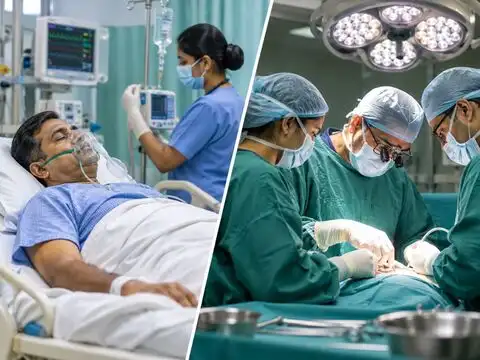
The gap grows with serious treatment. An ICU stay can cost around ₹1,500 a day in a government hospital and around ₹30,000 a day in a private one. Open-heart surgery is illustrated at about ₹95,000 in a government hospital against ₹2.8 lakh or more in a private hospital.
Remember these are illustrative figures, and real private hospital bills often include room rent, doctor fees, consumables, diagnostics and medicines on top. Ask for a written estimate before admission, and ask what is not included in it.
Remember these are illustrative figures, and real private hospital bills often include room rent, doctor fees, consumables, diagnostics and medicines on top. Ask for a written estimate before admission, and ask what is not included in it.
4/10
Why government hospitals cost so much less
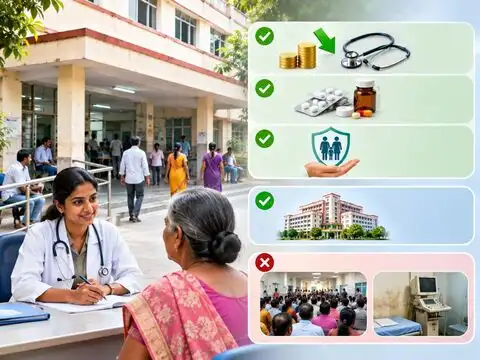
Government hospitals are funded by public authorities and heavily subsidised. Basic consultations, many diagnostic tests and generic medicines are free or very cheap, and the government supplies essential drugs and vaccines. Many also accept government health schemes and help economically weaker families.
They also have a wide network that reaches rural areas, large trauma centres and teaching hospitals with strong specialist training. The trade-off is that the patient load is heavy, so the system can feel crowded, and some facilities are old with limited equipment.
They also have a wide network that reaches rural areas, large trauma centres and teaching hospitals with strong specialist training. The trade-off is that the patient load is heavy, so the system can feel crowded, and some facilities are old with limited equipment.

5/10
What you pay for in a private hospital
Private hospitals charge market rates for doctors, rooms, consumables and tests. In return, you usually get shorter queues, direct appointments, private or en-suite rooms, newer equipment, faster test reports and a wider range of specialists.
Bills are generally itemised, but they can also carry surprise charges, so read them line by line. Private hospitals are mostly in cities, and quality varies, so check for accreditation such as NABH before choosing one. Without insurance, the out-of-pocket cost can put a serious strain on family savings.
Bills are generally itemised, but they can also carry surprise charges, so read them line by line. Private hospitals are mostly in cities, and quality varies, so check for accreditation such as NABH before choosing one. Without insurance, the out-of-pocket cost can put a serious strain on family savings.
6/10
The waiting game: Time, crowds and comfort
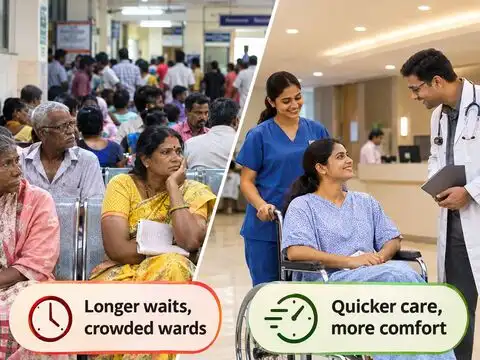
In a government hospital, you may wait a long time for a consultation or a scan, especially at big city hospitals during peak hours. Wards are shared, privacy is limited and discharge can be slow in complex cases. Referrals are common before you reach a specialist.
Private hospitals usually offer quicker check-ins, faster test turnaround and more comfort for you and your family. If your condition is urgent, ask what is faster in your town. If it is planned, such as a scheduled surgery, waiting a little longer in a government hospital could save a large sum.
Private hospitals usually offer quicker check-ins, faster test turnaround and more comfort for you and your family. If your condition is urgent, ask what is faster in your town. If it is planned, such as a scheduled surgery, waiting a little longer in a government hospital could save a large sum.

7/10
Emergency, quality and safety: What both have in common
Both types of hospital employ licensed doctors and nurses, follow infection control rules, maintain medical records and offer emergency care, though speed and capacity vary by location. Both must respect patient rights and have ways to raise a complaint.
Neither is automatically better. Some government hospitals are among the best in the country, and some private ones are poor. Check the specific hospital’s reputation, the doctor’s experience and any accreditation instead of judging by type alone.
Neither is automatically better. Some government hospitals are among the best in the country, and some private ones are poor. Check the specific hospital’s reputation, the doctor’s experience and any accreditation instead of judging by type alone.
8/10
Insurance and Ayushman Bharat: How your cover changes the math
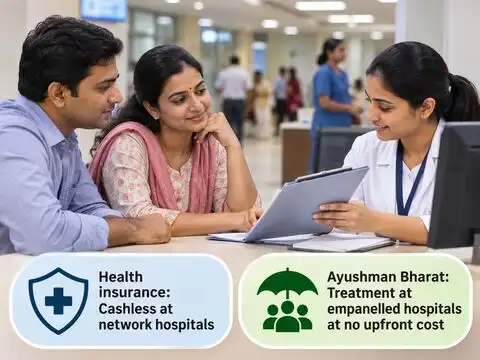
Many private hospitals offer cashless treatment if they are on your insurer’s network, but claims depend on your policy terms, waiting periods and exclusions. Eligibility checks and claim delays can happen, so keep your documents ready.
Under Ayushman Bharat PM-JAY, eligible families can get treatment at empanelled hospitals, both government and private, without paying at the counter. Before you are admitted, ask the hospital whether it accepts your policy or scheme, and get the cashless approval in writing. A good health insurance plan can narrow the cost gap between the two kinds of hospital.
Under Ayushman Bharat PM-JAY, eligible families can get treatment at empanelled hospitals, both government and private, without paying at the counter. Before you are admitted, ask the hospital whether it accepts your policy or scheme, and get the cashless approval in writing. A good health insurance plan can narrow the cost gap between the two kinds of hospital.
9/10
So, which one should you choose? A simple checklist
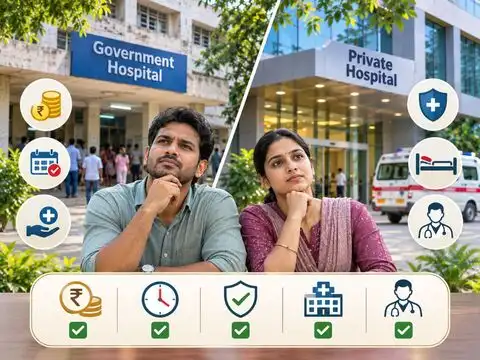
Go to a government hospital if cost is your main concern, the treatment is planned, or you need a government scheme or free medicines. Choose a private hospital if you have good insurance, need faster care, want a private room or need a specific specialist.
Before deciding, ask five things: What is the total estimated cost? How long is the wait? Is my insurance or scheme accepted? Is the hospital accredited? Who will be my treating doctor? Compare, then decide. In a medical emergency, go to the nearest hospital that can treat you without delay.
This is general information, not medical or insurance advice. Please consult a qualified doctor and read your policy terms before making decisions.

10/10
10
READ MORE:
Government hospital vs private hospital in India |Government hospital vs private hospital cost |Government vs private hospital treatment cost |Private hospital treatment expenses in India |Government hospital treatment cost in India |Government hospital charges in India |Private hospital charges in India |Hospital expenses in India |Government hospital facilities vs private hospitals