
EV buying guide: Driving range, charging speed & 5 other key factors to check before choosing your next electric car
1/8
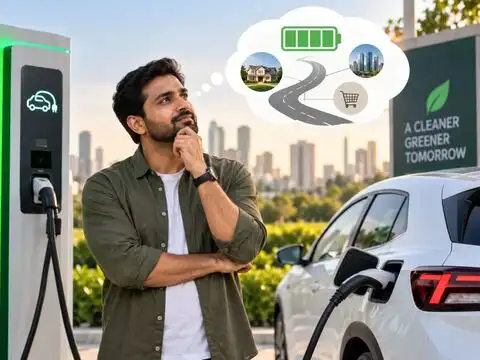
EV range anxiety is fading; but how much range do you really need?
For years, one question dominated every EV purchase: “What if the battery runs out?”
That fear is slowly changing. Newer electric cars offer longer driving ranges, charging infrastructure is expanding, and drivers are becoming more comfortable planning charging stops.
But there is a catch: more range isn't automatically better.
If you mostly drive to work, run errands and return home to a charger, paying extra for an enormous battery may not make financial sense.
The smarter question is: What range fits your actual driving life?
That fear is slowly changing. Newer electric cars offer longer driving ranges, charging infrastructure is expanding, and drivers are becoming more comfortable planning charging stops.
But there is a catch: more range isn't automatically better.
If you mostly drive to work, run errands and return home to a charger, paying extra for an enormous battery may not make financial sense.
The smarter question is: What range fits your actual driving life?
2/8
Range anxiety isn't just about the battery
Range anxiety is the worry that your EV won't have enough charge to reach your destination or the next charging station.
But battery size is only one part of the equation.
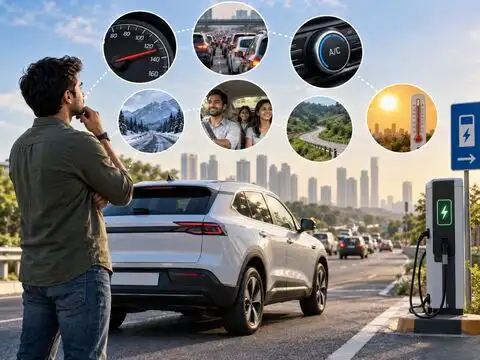
Your actual range can change with speed, traffic, air-conditioning, passengers, road conditions, driving style and temperature. A car's advertised range is therefore not a promise of the exact distance you will get on every journey.
That's why experienced EV buyers increasingly look at the entire charging ecosystem—not just the biggest range figure in the brochure.
But battery size is only one part of the equation.
Your actual range can change with speed, traffic, air-conditioning, passengers, road conditions, driving style and temperature. A car's advertised range is therefore not a promise of the exact distance you will get on every journey.
That's why experienced EV buyers increasingly look at the entire charging ecosystem—not just the biggest range figure in the brochure.
3/8
Your daily commute could need far less range than you think
Think about your normal weekday.
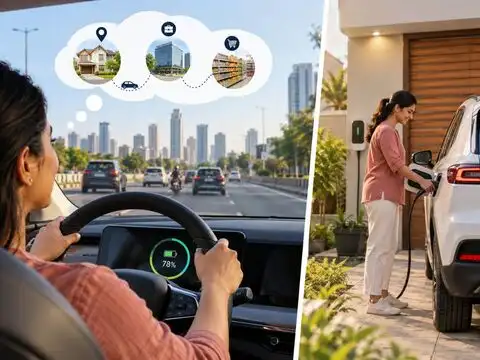
If you drive 30–50 km for work, shopping and other errands, you may only use a fraction of an EV's battery each day.
With convenient home charging, you can simply plug in after returning home and start the next morning with a healthy battery level.
Even someone driving substantially more each day may not need the longest-range EV available.
Don't buy your car around your rarest journey. Start with the kilometres you actually drive most often.
If you drive 30–50 km for work, shopping and other errands, you may only use a fraction of an EV's battery each day.
With convenient home charging, you can simply plug in after returning home and start the next morning with a healthy battery level.
Even someone driving substantially more each day may not need the longest-range EV available.
Don't buy your car around your rarest journey. Start with the kilometres you actually drive most often.
Amazon Top Deals
POWERED BY

4/8
Claimed range vs real-world range — don't confuse the two
This is where EV shopping can get tricky.
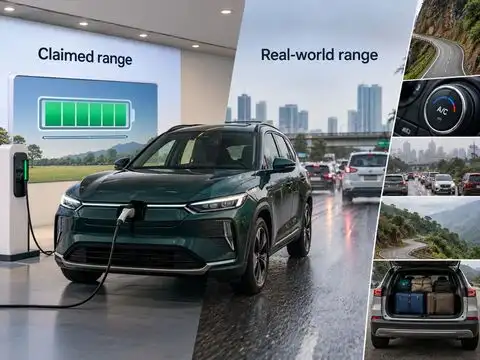
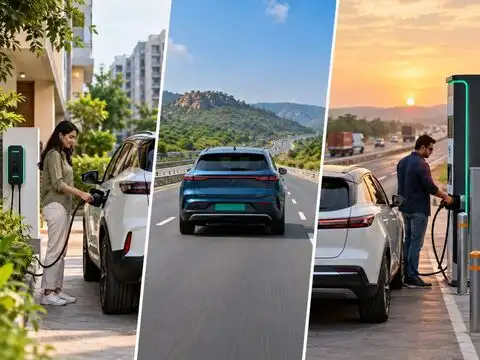
The range displayed by manufacturers is measured under standardised testing conditions. Your real-world result can be different.
A long highway drive at high speed can consume considerably more energy than a slower city commute. Heavy use of air-conditioning, steep roads, traffic and a fully loaded car can also affect efficiency.
So instead of asking, “Does this EV have 500 km of range?”, ask:
“How much range can I realistically expect from this car on the journeys I actually make?”
That is a much more useful number.
The range displayed by manufacturers is measured under standardised testing conditions. Your real-world result can be different.
A long highway drive at high speed can consume considerably more energy than a slower city commute. Heavy use of air-conditioning, steep roads, traffic and a fully loaded car can also affect efficiency.
So instead of asking, “Does this EV have 500 km of range?”, ask:
“How much range can I realistically expect from this car on the journeys I actually make?”
That is a much more useful number.
5/8
So, how much EV range is enough?
There is no single magic number for every EV buyer.
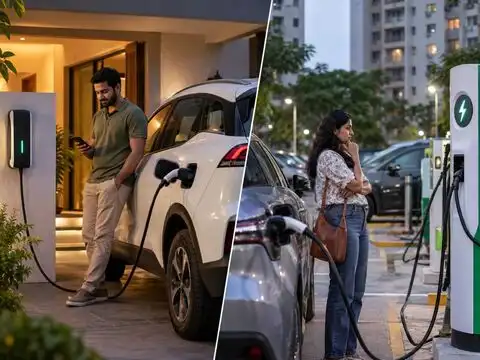
For a predominantly urban driver with dependable home charging, a practical range of around 250–350 km can be sufficient for many everyday routines.
If you regularly drive between cities, a higher practical range—say 350–450 km or more—can reduce the number of charging stops and give you more flexibility.
For frequent highway travellers, however, range shouldn't be considered alone. Fast-charging capability, charger availability and charging time can be just as important.
The goal isn't maximum range.
It's enough range to make your normal life stress-free.
For a predominantly urban driver with dependable home charging, a practical range of around 250–350 km can be sufficient for many everyday routines.
If you regularly drive between cities, a higher practical range—say 350–450 km or more—can reduce the number of charging stops and give you more flexibility.
For frequent highway travellers, however, range shouldn't be considered alone. Fast-charging capability, charger availability and charging time can be just as important.
The goal isn't maximum range.
It's enough range to make your normal life stress-free.
6/8
Home charging can change the range equation completely
Imagine two EV owners.
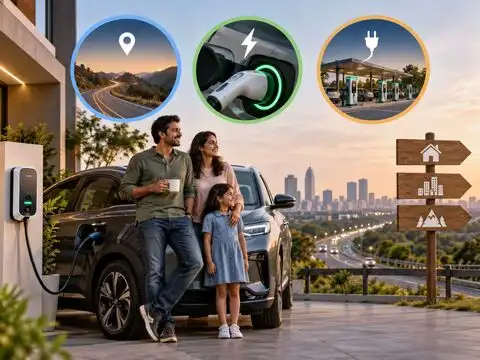
One has a dedicated parking space with a home charger. The other lives in an apartment where charging depends on public infrastructure.
They could own the same car and have completely different experiences.
For the first driver, plugging in overnight can make charging almost invisible.
For the second, a larger battery and access to reliable fast chargers may provide greater convenience.
That's why charging access should be checked before buying an EV—not after.
Ask yourself: Where will I charge? How often? And what happens when I need to make a long trip?
One has a dedicated parking space with a home charger. The other lives in an apartment where charging depends on public infrastructure.
They could own the same car and have completely different experiences.
For the first driver, plugging in overnight can make charging almost invisible.
For the second, a larger battery and access to reliable fast chargers may provide greater convenience.
That's why charging access should be checked before buying an EV—not after.
Ask yourself: Where will I charge? How often? And what happens when I need to make a long trip?
7/8
Your weekend drive is where range really gets tested
Your weekday commute might be predictable. Weekend travel is not.
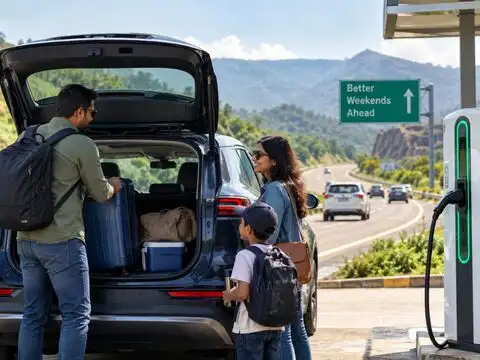
A sudden road trip, highway detour, family outing or journey to a place with fewer charging stations can quickly change your range requirements.
For example, an EV that feels perfect for city driving may require more planning when you're travelling between cities.
You don't necessarily need the biggest battery for those occasional trips.
Instead, check your regular long-distance routes, identify fast-charging stations and understand how quickly your car can recharge.
Good charging planning can often matter more than simply adding more battery capacity.
A sudden road trip, highway detour, family outing or journey to a place with fewer charging stations can quickly change your range requirements.
For example, an EV that feels perfect for city driving may require more planning when you're travelling between cities.
You don't necessarily need the biggest battery for those occasional trips.
Instead, check your regular long-distance routes, identify fast-charging stations and understand how quickly your car can recharge.
Good charging planning can often matter more than simply adding more battery capacity.
8/8
Stop chasing the biggest battery — choose the right EV for your life
The EV market is moving beyond the simple question of “How far can it go?”
Today's buyer should consider three things together:
Range + Charging Speed + Charging Access
A 500-km claimed-range EV may sound impressive, but it may be unnecessary for someone driving 40 km a day with overnight home charging.
Meanwhile, a slightly lower-range EV with faster charging and a strong charging network could be more convenient for someone who regularly travels long distances.
The best EV range isn't the biggest number on the brochure. It's the range that fits your commute, your charging setup and your lifestyle.
Today's buyer should consider three things together:
Range + Charging Speed + Charging Access
A 500-km claimed-range EV may sound impressive, but it may be unnecessary for someone driving 40 km a day with overnight home charging.
Meanwhile, a slightly lower-range EV with faster charging and a strong charging network could be more convenient for someone who regularly travels long distances.
The best EV range isn't the biggest number on the brochure. It's the range that fits your commute, your charging setup and your lifestyle.