
‘Don't fall for fake SMS messages’: NPCI explains how scammers target your money; shares tips to protect your bank account, UPI
1/5
NPCI explains how scammers target your money
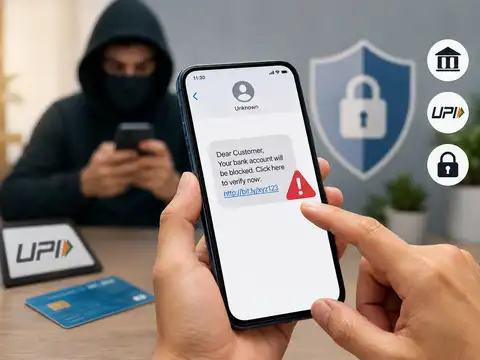
A simple text message claiming that your bank account has been blocked, promising a reward, or asking you to verify your details could be the start of a financial fraud. Many frauds begin with a simple text message designed to create urgency, fear or curiosity and influence people into taking quick decisions. As a user, everyone should know warning signs of these alerts, how they work and how you can protect yourself from financial fraud. National Payments Corporation of India (NPCI), in an attempt to create awareness about digital safety, explains what a text message scam is, how it works, and what you can do to protect yourself.

2/5
How text message scams works
The NPCI says a text message scam is a fake SMS sent to trick you into taking an action that can put your money, personal information or digital accounts at risk. These messages often pretend to be from a trusted organisation or someone you know, making them appear genuine.

3/5
What are the actions scammers want you to take?
Most text message scams are designed to get you to do one of these five things, as per the NPCI:
Click on a link that leads to a fake website
Call a fake customer care or helpline number
Download an unknown app or file
Share personal or financial information such as your OTP, PIN or passwords
Transfer money to someone (a fake SMS indicating money credited to your account)
Click on a link that leads to a fake website
Call a fake customer care or helpline number
Download an unknown app or file
Share personal or financial information such as your OTP, PIN or passwords
Transfer money to someone (a fake SMS indicating money credited to your account)
Amazon Top Deals
POWERED BY

4/5
How fraudsters build trust and create panic
The NPCI explains that scammers often present themselves as representatives of banks, government agencies, delivery companies, telecom providers, or other trusted organisations. They use social engineering techniques to encourage people to act quickly before taking the time to think or verify the request. They may create fear by claiming that your account will be blocked or that there is a problem with your money. They may also appeal to greed by offering prizes, rewards or refunds. Their messages often appear genuine and are designed to take advantage of lack of awareness and overlooked warning signs.

5/5
Tips to protect yourself from SMS fraud
The NPCI advises to read every message carefully before taking any action
Verify requests through the official website, app or customer care of the organisation
Download apps only from trusted sources such as official app stores
Never share your OTP, UPI PIN or passwords with anyone
Avoid clicking links or downloading apps from unexpected messages
Always verify by checking your bank account statement on receipt of a credit message
Review app permissions carefully and provide only those permissions that are genuinely required
Verify requests through the official website, app or customer care of the organisation
Download apps only from trusted sources such as official app stores
Never share your OTP, UPI PIN or passwords with anyone
Avoid clicking links or downloading apps from unexpected messages
Always verify by checking your bank account statement on receipt of a credit message
Review app permissions carefully and provide only those permissions that are genuinely required