
 Daily Top 5 Daily Top 5 |
Vaishnaw flags AI safety; Moneyview’s IPO, investor gains
Want this newsletter delivered to your inbox?
I agree to receive newsletters and marketing communications via e-mail

Thank you for subscribing to Daily Top 5
We'll soon meet in your inbox.
AI companies need to ensure their products are safe, union minister Ashwini Vaishnaw told us. This and more in today’s ETtech Top 5.
Also in the letter:
■ AI job worries among engineers
■ Microsoft’s zero-water cloud region
■ Chipmakers beef up security
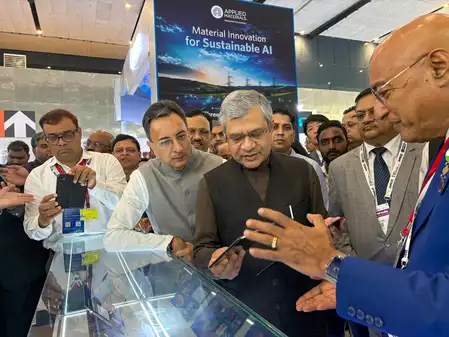 Ashwini Vaishnaw at Semicon India 2026
Artificial intelligence companies building the technology need to make sure their products are safe, union minister Ashwini Vaishnaw told us. He said that simply passing laws will not be enough and safeguards need to be built into AI models.
Recent Incidents: Vaishnaw said that some of the incidents that have happened recently are alarming and that the industry must take the lead to resolve them. He added that India has had multiple discussions with AI developers, academia, and global Big Tech companies on this matter.
Quote, unquote: “I think something similar to the nuclear kind of thing will have to happen in the AI world, where countries come together and reach a consensus that humanity comes first, it has to be safe, and AI has to bring value to the world rather than becoming a threat,” he said.
Chip push: India is also looking to build its edge in semiconductor design, advanced packaging, and niche manufacturing. The government has committed nearly $23.5 billion across two phases of the India Semiconductor Mission. Under ISM 2.0, the government has received Industry interest worth around $11-12 billion, with several companies expected to begin investments in the next six months.
Also Read: India now has five semiconductor units in production, ISM 2.0 to build wider ecosystem: MeitY secretary
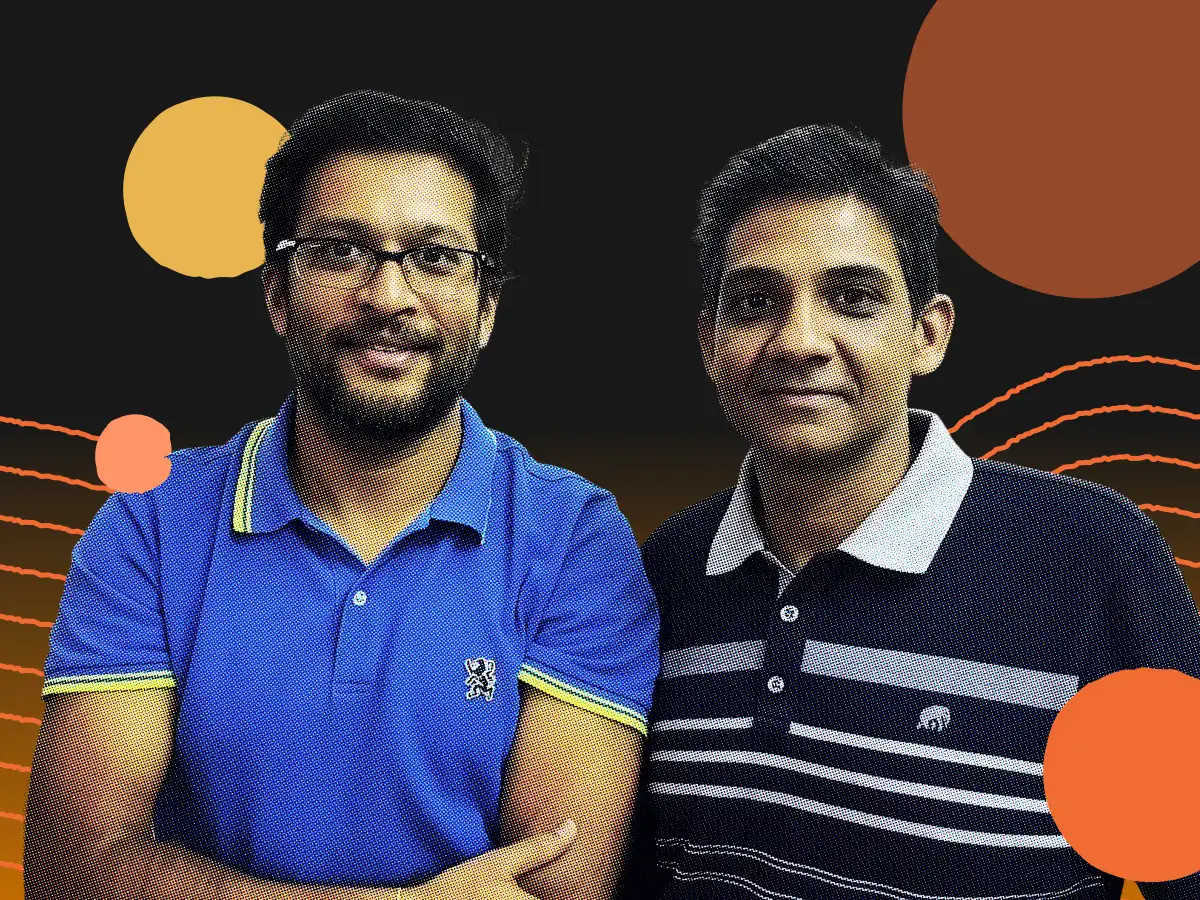 Moneyview co-founders Sanjay Aggarwal and Puneet Agarwal (L-R)
Digital lending platform Moneyview is seeking a valuation of Rs 5,985 crore ($600 million) at the upper end of the price band for its IPO (initial public offering), which is about 20% lower than the roughly Rs 7,500-crore valuation at which it last raised primary capital in December 2022.
IPO details: The company has set a price band of Rs 32-34 per share for the IPO, which will open for subscription on September 24 and close on September 28.
The deal: Existing shareholders, including Accel, Tiger Global, and Ribbit Capital, along with promoters Puneet and Sanjay Aggarwal, are selling shares in the OFS component of the IPO.
By the numbers: Moneyview will use Rs 325 crore from the fresh proceeds for loan disbursals under its default loss guarantee arrangements, and Rs 250 crore to strengthen the capital base of its NBFC (non-banking finance company) subsidiary Whizdm Finance.
Also Read: Moneyview, Chandan Steel get Sebi's approval for IPOs
: Moneyview Co-Founder and CEO Puneet Agarwal addresses a pr....jpg "Mumbai, Sep 21 (ANI): Moneyview Co-Founder and CEO Puneet Agarwal addresses a pr...") Moneyview Co-Founder and CEO Puneet Agarwal
Moneyview Co-Founder and CEO Puneet Agarwal
Venture capital firms Accel, Ribbit Capital, and Tiger Global are sitting on multi-fold returns on their investments in digital lender Moneyview at the upper end of its IPO price band, despite the public issue valuation being below its last primary funding round.
Investor returns: Ribbit is sitting on the highest returns — 11.8x — among the three. Accel is looking at about 5.6x, while Tiger Global is looking at 3.4x returns on its investment.
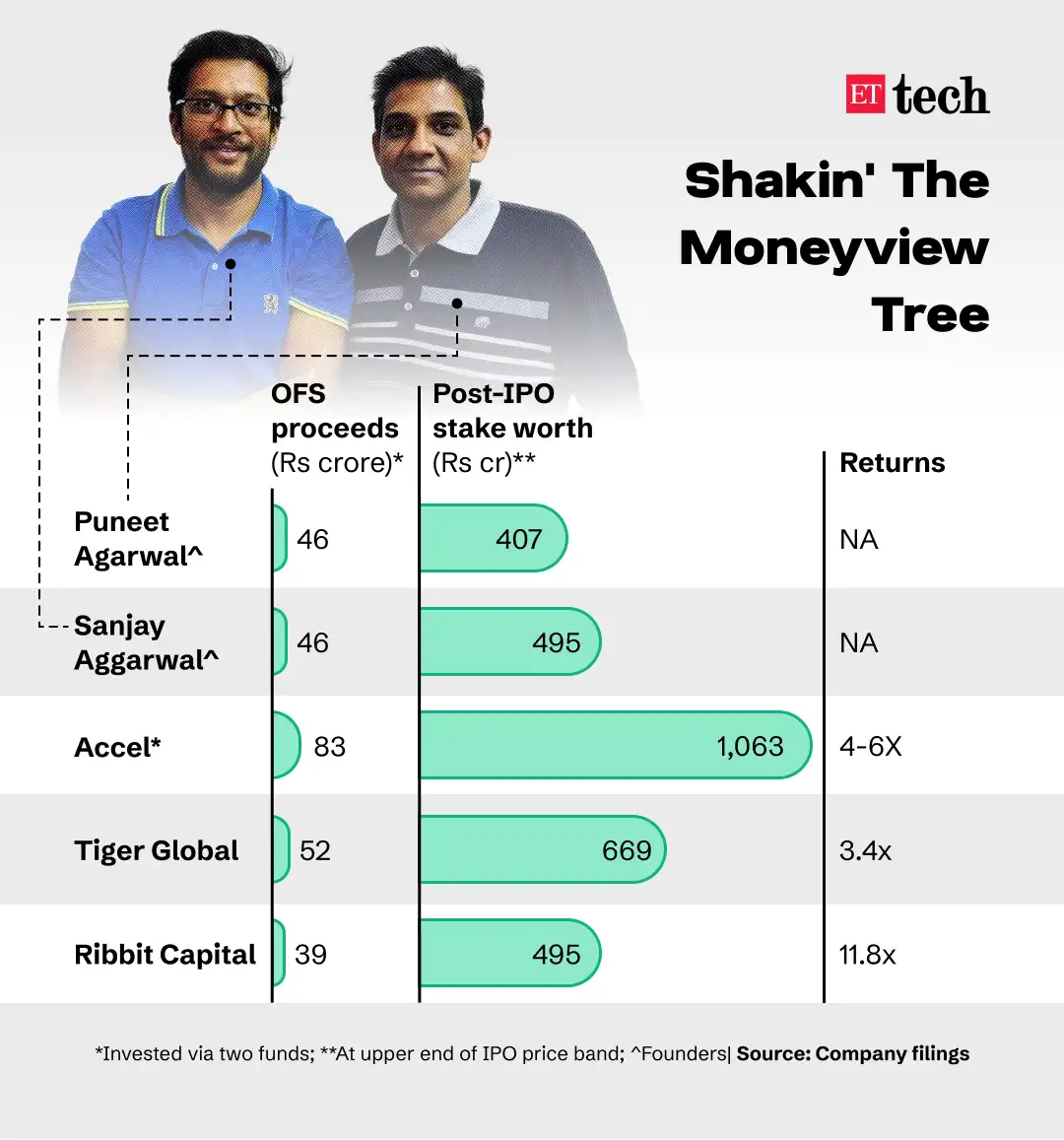
Selling shares:

AI founders told ET that engineers in India are more worried about AI affecting their jobs and making their skills less valuable than about the technology becoming a threat to humanity.
The contrast: In Silicon Valley, engineers are increasingly focussed on AI safety and the possible risks of advanced AI to humanity.
Verbatim: “What I see among engineers in India is more excitement than fear,” said Pradyot Korupolu, founder of robotics startup Ottonomy.AI. “People are impressed by each new capability and eager to understand what they can build with it.” He said the uncertainty he sees is “mostly about careers.”
This comes as concerns over AI risks have intensified in the US. Anthropic researcher Jacob Coxon recently quit his job, warning that AI companies were “racing straight to self-improving superintelligence and gambling with our lives”.
Evan Hubinger, another Anthropic researcher, has said that he sees a more than 10% chance of AI killing all humans within the next decade. Former Google DeepMind research engineer Bilal Chughtai, who left the company in July, also believes AI has the potential to kill everyone.
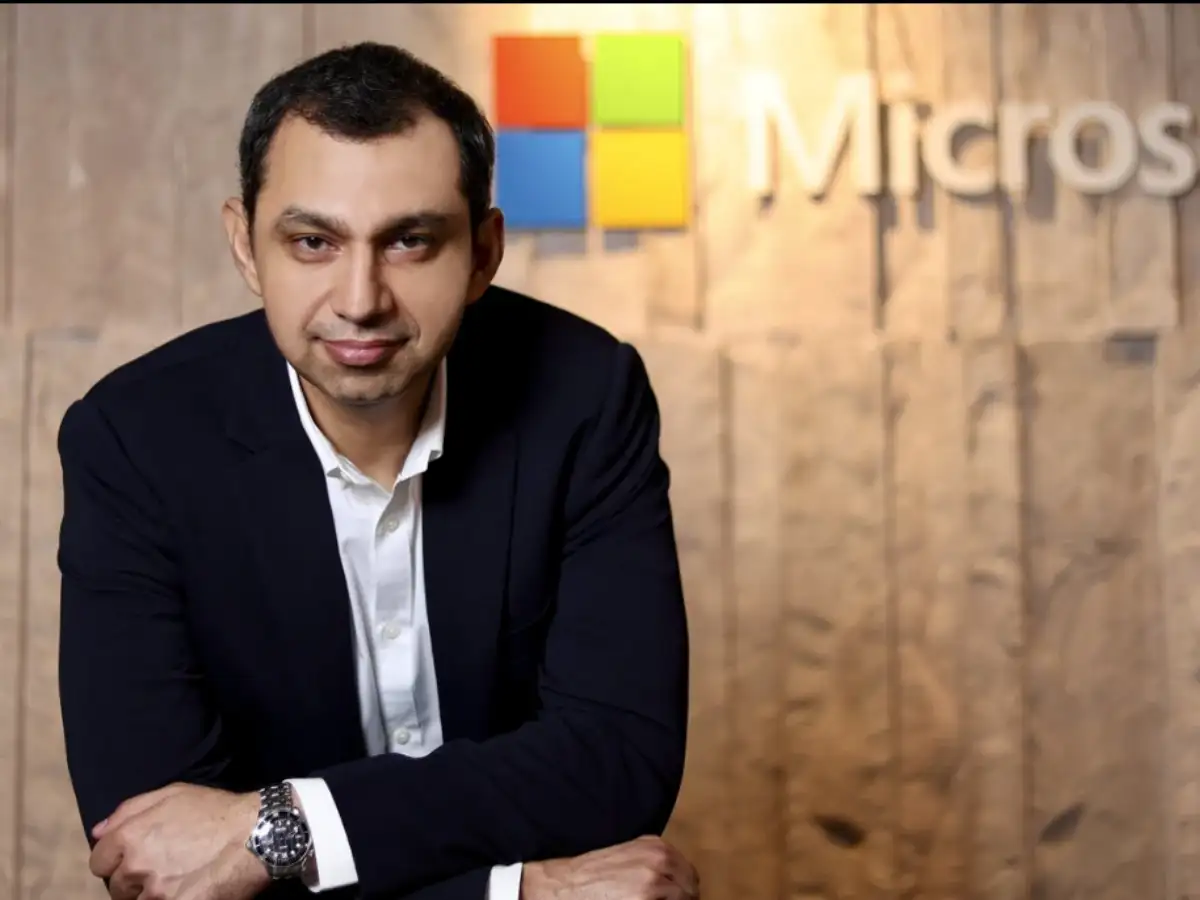 Microsoft India president Puneet Chandok
Microsoft has announced its fourth cloud region in India, in Hyderabad, which its president Puneet Chandok said has been designed to use effectively zero water for cooling.
Strategic hub: Chandok said the Hyderabad facility will be Microsoft's second strategic hub in India and one of its largest investments in the country in terms of compute capacity. The region will have three availability zones and will be built to support AI workloads from the outset.
Water and power: Microsoft is also building around 5 million litres of ground capacity and has contracted 1 GW of renewable energy in India, of which 630 MW is already flowing.
Growth: Chandok said India currently has around 2 GW of data centre capacity, which could expand six to seven times by 2035.
As AI-enabled hardware spreads across cars, cameras, and other connected devices, semiconductor companies are moving cybersecurity deeper into chip design to guard against growing risk.
Security by design: For chipmakers, some of the security work is moving into the chip architecture. Netrasemi is incorporating features such as secure boot, data security, and secure streaming into chips intended for surveillance cameras, prior to commercial production.
Policy push: The government has also tightened requirements for connected devices. In April, the ministry of electronics and information technology said CCTV cameras would have to comply with the essential requirements under India’s compulsory registration scheme to be sold in the country.
The changes point to a broader shift in how security is being considered as more devices become connected and gain computing capabilities.
Also in the letter:
■ AI job worries among engineers
■ Microsoft’s zero-water cloud region
■ Chipmakers beef up security
AI companies must take the lead on safety, says Ashwini Vaishnaw
Artificial intelligence companies building the technology need to make sure their products are safe, union minister Ashwini Vaishnaw told us. He said that simply passing laws will not be enough and safeguards need to be built into AI models.
Recent Incidents: Vaishnaw said that some of the incidents that have happened recently are alarming and that the industry must take the lead to resolve them. He added that India has had multiple discussions with AI developers, academia, and global Big Tech companies on this matter.
Quote, unquote: “I think something similar to the nuclear kind of thing will have to happen in the AI world, where countries come together and reach a consensus that humanity comes first, it has to be safe, and AI has to bring value to the world rather than becoming a threat,” he said.
Chip push: India is also looking to build its edge in semiconductor design, advanced packaging, and niche manufacturing. The government has committed nearly $23.5 billion across two phases of the India Semiconductor Mission. Under ISM 2.0, the government has received Industry interest worth around $11-12 billion, with several companies expected to begin investments in the next six months.
Also Read: India now has five semiconductor units in production, ISM 2.0 to build wider ecosystem: MeitY secretary
Moneyview eyes $600 million IPO valuation, 20% below its last private market peg
Digital lending platform Moneyview is seeking a valuation of Rs 5,985 crore ($600 million) at the upper end of the price band for its IPO (initial public offering), which is about 20% lower than the roughly Rs 7,500-crore valuation at which it last raised primary capital in December 2022.
IPO details: The company has set a price band of Rs 32-34 per share for the IPO, which will open for subscription on September 24 and close on September 28.
The deal: Existing shareholders, including Accel, Tiger Global, and Ribbit Capital, along with promoters Puneet and Sanjay Aggarwal, are selling shares in the OFS component of the IPO.
By the numbers: Moneyview will use Rs 325 crore from the fresh proceeds for loan disbursals under its default loss guarantee arrangements, and Rs 250 crore to strengthen the capital base of its NBFC (non-banking finance company) subsidiary Whizdm Finance.
Also Read: Moneyview, Chandan Steel get Sebi's approval for IPOs
Accel, Ribbit eye multi-fold returns from Moneyview IPO
Venture capital firms Accel, Ribbit Capital, and Tiger Global are sitting on multi-fold returns on their investments in digital lender Moneyview at the upper end of its IPO price band, despite the public issue valuation being below its last primary funding round.
Investor returns: Ribbit is sitting on the highest returns — 11.8x — among the three. Accel is looking at about 5.6x, while Tiger Global is looking at 3.4x returns on its investment.
Selling shares:
- Ribbit Capital: Selling Rs 39 crore worth; retaining Rs 495 crore worth of stock.
- Accel: Selling Rs 83 crore worth; retaining Rs 1,063 crore worth of stock.
- Tiger Global: Selling Rs 52 crore worth; retaining Rs 669 crore worth of stock.
AI risk or job risk? India’s engineers worry more about careers than extinction
AI founders told ET that engineers in India are more worried about AI affecting their jobs and making their skills less valuable than about the technology becoming a threat to humanity.
The contrast: In Silicon Valley, engineers are increasingly focussed on AI safety and the possible risks of advanced AI to humanity.
Verbatim: “What I see among engineers in India is more excitement than fear,” said Pradyot Korupolu, founder of robotics startup Ottonomy.AI. “People are impressed by each new capability and eager to understand what they can build with it.” He said the uncertainty he sees is “mostly about careers.”
This comes as concerns over AI risks have intensified in the US. Anthropic researcher Jacob Coxon recently quit his job, warning that AI companies were “racing straight to self-improving superintelligence and gambling with our lives”.
Evan Hubinger, another Anthropic researcher, has said that he sees a more than 10% chance of AI killing all humans within the next decade. Former Google DeepMind research engineer Bilal Chughtai, who left the company in July, also believes AI has the potential to kill everyone.
Microsoft’s Hyderabad cloud region to use almost no water
Microsoft has announced its fourth cloud region in India, in Hyderabad, which its president Puneet Chandok said has been designed to use effectively zero water for cooling.
Strategic hub: Chandok said the Hyderabad facility will be Microsoft's second strategic hub in India and one of its largest investments in the country in terms of compute capacity. The region will have three availability zones and will be built to support AI workloads from the outset.
Water and power: Microsoft is also building around 5 million litres of ground capacity and has contracted 1 GW of renewable energy in India, of which 630 MW is already flowing.
Growth: Chandok said India currently has around 2 GW of data centre capacity, which could expand six to seven times by 2035.
Chipmakers move security deeper into design as AI hardware spreads
As AI-enabled hardware spreads across cars, cameras, and other connected devices, semiconductor companies are moving cybersecurity deeper into chip design to guard against growing risk.
Security by design: For chipmakers, some of the security work is moving into the chip architecture. Netrasemi is incorporating features such as secure boot, data security, and secure streaming into chips intended for surveillance cameras, prior to commercial production.
Policy push: The government has also tightened requirements for connected devices. In April, the ministry of electronics and information technology said CCTV cameras would have to comply with the essential requirements under India’s compulsory registration scheme to be sold in the country.
The changes point to a broader shift in how security is being considered as more devices become connected and gain computing capabilities.
Want this newsletter delivered to your inbox?
I agree to receive newsletters and marketing communications via e-mail