
 Daily Top 5 Daily Top 5 |
Sarvam raises $75 million; Ather trims losses in Q1
Want this newsletter delivered to your inbox?
I agree to receive newsletters and marketing communications via e-mail

Thank you for subscribing to Daily Top 5
We'll soon meet in your inbox.
AI startup Sarvam will raise $75 million as part of a larger funding round. This and more in today’s ETtech Top 5.
Also in the letter:
■ MDR levy on the cards
■ Govt’s rare earth push
■ Shopping meets streaming
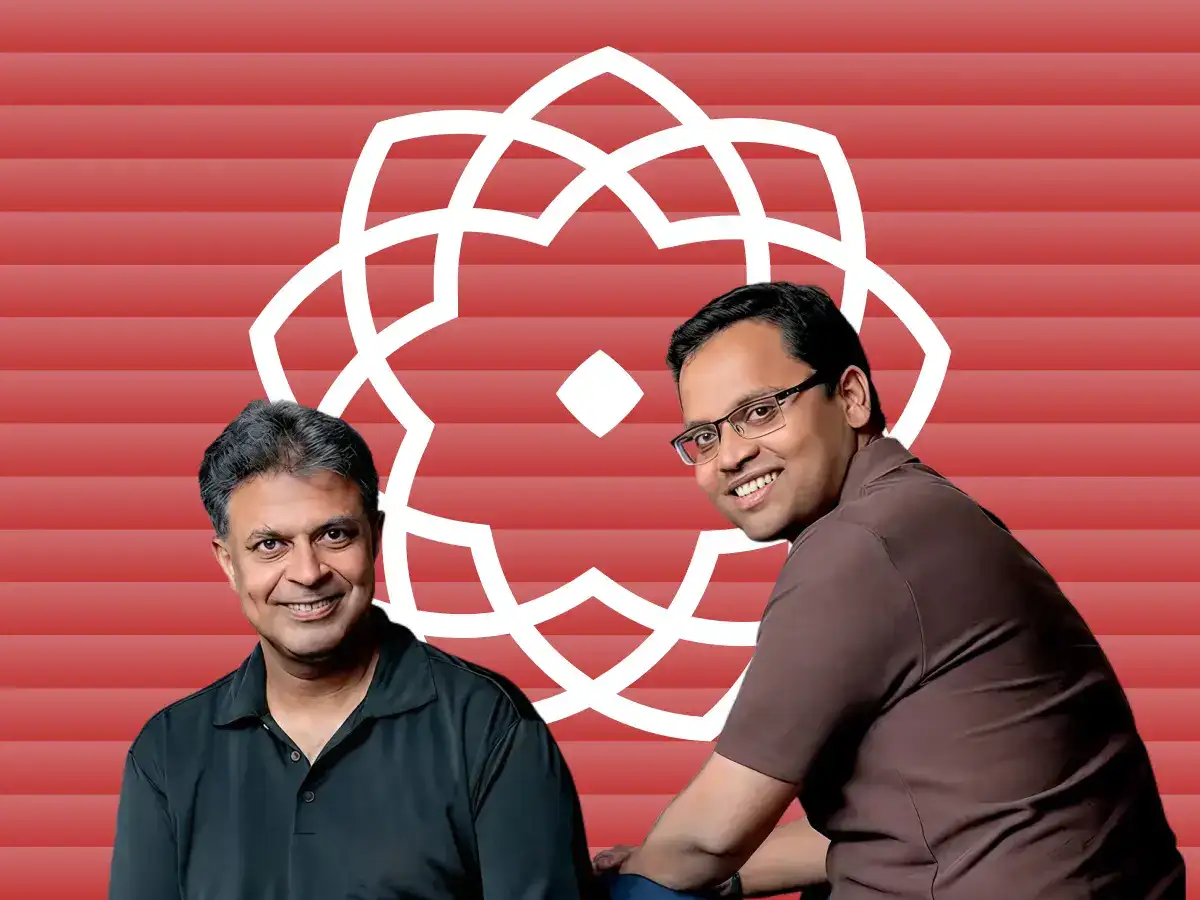 Vivek Raghavan (left) and Pratyush Kumar, founders, Sarvam AI
Homegrown artificial intelligence (AI) startup Sarvam is set to raise $75 million as part of a larger $300-310 million funding round, according to filings with the Registrar of Companies.
Round details:
Recent news: During its flagship developer event, Epoch, held on July 30, Sarvam named Devendra Chaplot, a founding member of Thinking Machines Lab and Mistral, as an adviser. The company also said it would open a new office in San Francisco.
Further, Sarvam unveiled plans to build a trillion-parameter model at the event. The company aims to compete with global frontier AI models, including Anthropic's Claude, Google's Gemini, and OpenAI's ChatGPT.
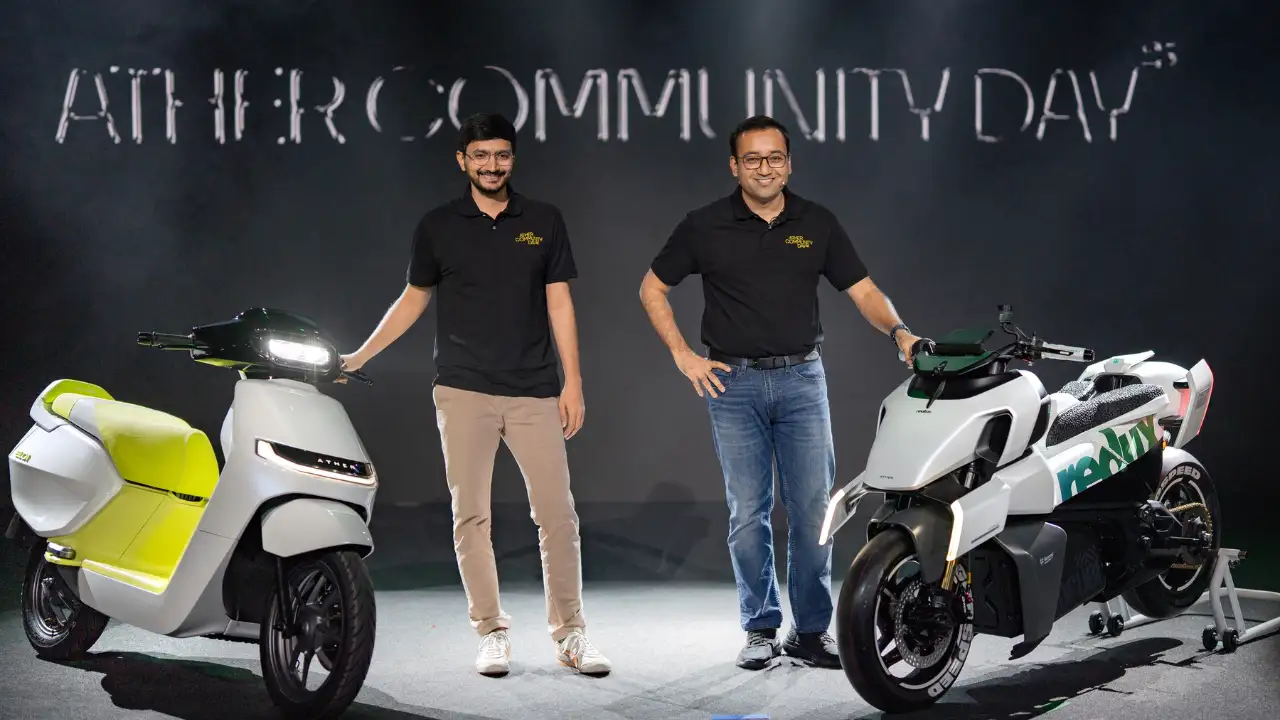 Swapnil Jain (left) and Tarun Mehta, founders, Ather Energy
Electric two-wheeler maker Ather Energy reported a narrower loss in the first quarter, supported by strong sales growth.
Financials:
CEOSpeak: “Demand is significantly ahead of what we can currently produce. We believe that, based on current demand, we could have retailed another 13,000-15,000 scooters every month if capacity was available,” said cofounder and CEO Tarun Mehta during an earnings call.
Also Read: Ather Energy raises Rs 1,300 crore via QIP, allots shares at Rs 1,202 apiece
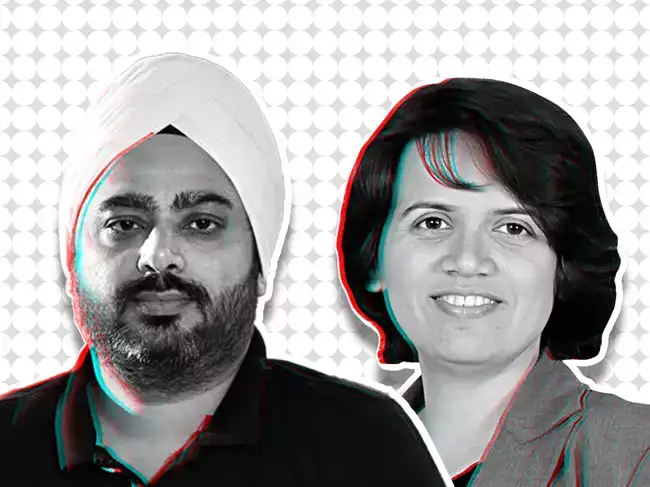 Bipin Preet Singh and Upasana Taku, founders, Mobikwik
Payments company Mobikwik reported its third straight quarterly profit as lower costs and improving margins in its lending business boosted its bottom line.
By the numbers:
Quote, unquote: “The contribution margin is what drives our profits, which includes direct costs related to customer acquisition, cost of payments and banking, etc. So, that is 66% up year-on-year to nearly Rs 129 crore,” cofounder, managing director, and CEO Bipin Preet Singh told us.
The government plans to amend the Information Technology (IT) Act to allow the levy of a merchant discount rate (MDR) on Unified Payments Interface (UPI) transactions.
Jargon buster: MDR is the fee banks charge merchants for accepting digital payments through UPI, credit cards and debit cards. The government scrapped MDR in January 2020 to make digital payments free and encourage adoption.
Tell me more: ET first reported on July 16 that the government was considering reintroducing MDR for large merchants. Sources had told us the levy could be fixed at 5-7 basis points if brought back.
Meanwhile: The combined market share of PhonePe and Google Pay in the UPI ecosystem has fallen to at least a five-year low of 82.6% by value and 79% by volume this year, according to an ET analysis.
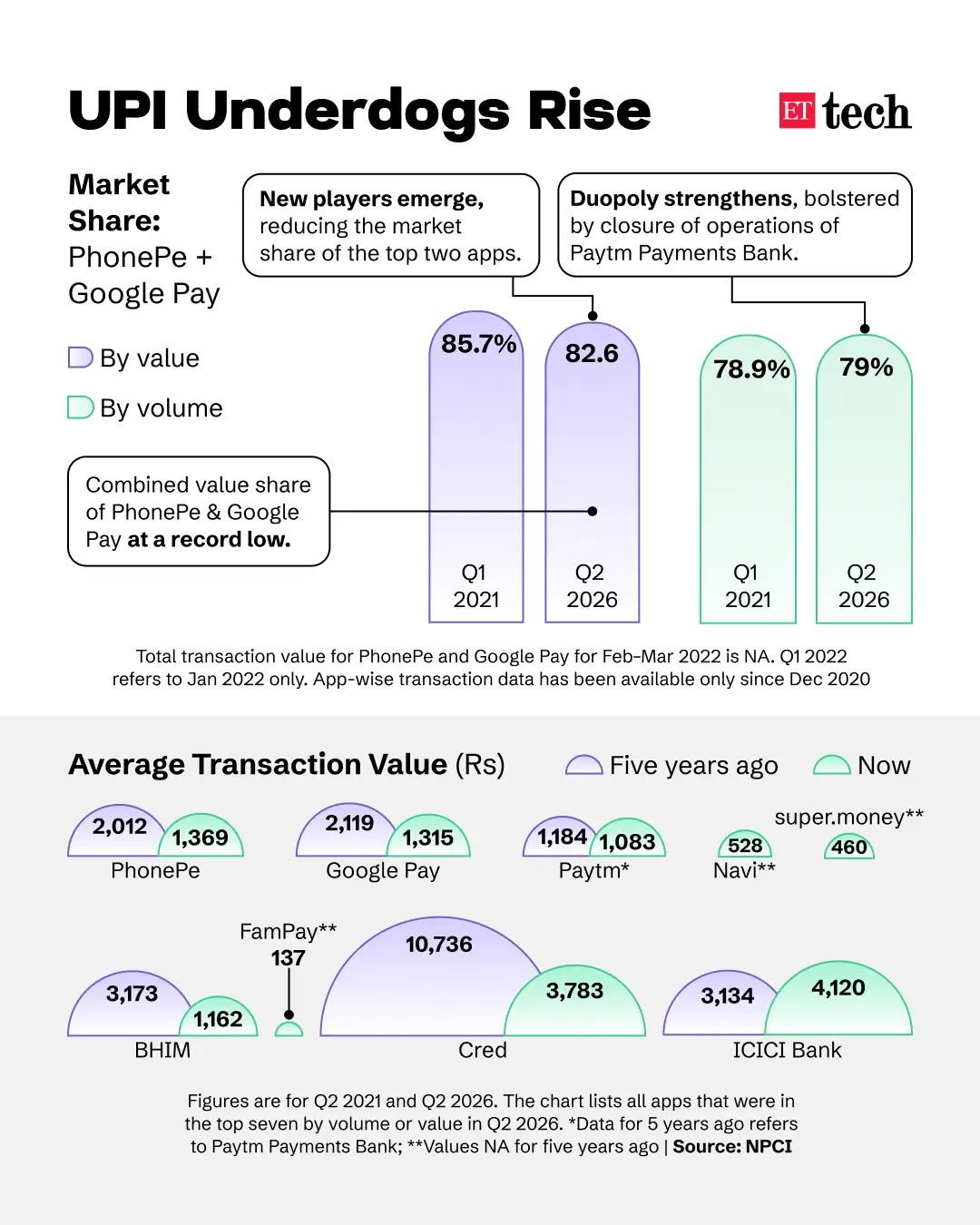
The decline has been driven by the steady rise of apps such as Supermoney, Navi and FamPay, particularly for low-value transactions.
Also Read: UPI volumes hit record high in July, nears Rs 30 lakh crore
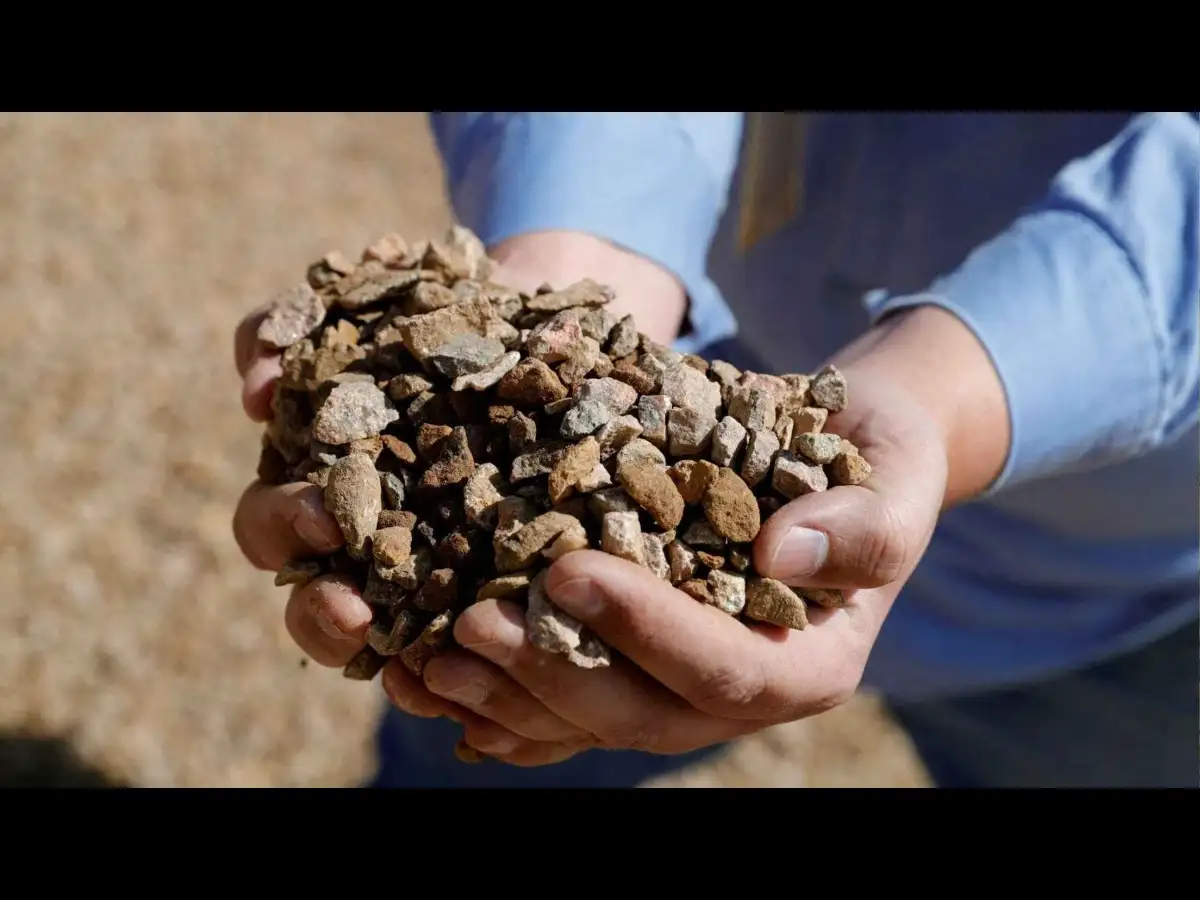
The government is likely to approve manufacturing centres for rare earth permanent magnets under the next tranche of the Electronics Component Manufacturing Scheme (ECMS), which is expected to be cleared this month, officials told us.
More on this: Officials said multiple applications covering different categories and stages of the value chain are under review. Preference will be given to companies that own their intellectual property.
"There are proposals to create magnets by converting rare earth oxides into raw magnet alloys, as well as for manufacturing specialised sintered and bonded magnets," said an official in the Ministry of Electronics and Information Technology (MeitY).
Why this matters:
Also Read: Neo Performance Materials looks at India for rare earth magnet manufacturing
A new partnership between Flipkart and Netflix marks the start of a model that combines shopping with entertainment to drive customer engagement.
What's happening? Streaming platforms in India have traditionally relied on telecom operators, broadband providers and pay-TV distributors to gain subscribers through bundled plans.
The new model links streaming benefits with shopping, helping platforms reach more users while encouraging customers to shop more frequently on ecommerce marketplaces.
Also Read: Flipkart may launch food delivery mid-August, mulls commissions of up to 11%: Sources
How it works:
Also Read: Flipkart's Kalyan Krishnamurthy rules out IPO timeline, plays down quick commerce as a separate business
Also in the letter:
■ MDR levy on the cards
■ Govt’s rare earth push
■ Shopping meets streaming
Sarvam to raise $75 million from Nvidia, Glade Brook, others as part of ongoing funding round
Homegrown artificial intelligence (AI) startup Sarvam is set to raise $75 million as part of a larger $300-310 million funding round, according to filings with the Registrar of Companies.
Round details:
- Chipmaker Nvidia, US venture capital firm Glade Brook, private equity investor Gaja Capital, IndiGo Ventures, and several individual investors took part in the round.
- The latest fundraise values Sarvam at $1.5 billion.
- ET was the first to report on how the overall funding round was being structured and that Glade Brook was in talks to invest in Sarvam.
- Sarvam had announced the first close of the larger round in June, raising $234 million led by software services firm HCLTech, with participation from Bessemer Venture Partners, Peak XV Partners, and billionaire Vinod Khosla's Khosla Ventures.
Recent news: During its flagship developer event, Epoch, held on July 30, Sarvam named Devendra Chaplot, a founding member of Thinking Machines Lab and Mistral, as an adviser. The company also said it would open a new office in San Francisco.
Further, Sarvam unveiled plans to build a trillion-parameter model at the event. The company aims to compete with global frontier AI models, including Anthropic's Claude, Google's Gemini, and OpenAI's ChatGPT.
Ather Energy consolidated net loss narrows to Rs 51 crore in Q1
Electric two-wheeler maker Ather Energy reported a narrower loss in the first quarter, supported by strong sales growth.
Financials:
- Revenue: Up 89% year-on-year (YoY) to Rs 1,217 crore.
- Net loss: Narrowed to Rs 51.1 crore from Rs 178.2 crore in the year-ago period.
- Total expenses: Grew to Rs 1,310.7 crore, compared with Rs 851.1 crore a year earlier.
CEOSpeak: “Demand is significantly ahead of what we can currently produce. We believe that, based on current demand, we could have retailed another 13,000-15,000 scooters every month if capacity was available,” said cofounder and CEO Tarun Mehta during an earnings call.
Also Read: Ather Energy raises Rs 1,300 crore via QIP, allots shares at Rs 1,202 apiece
Mobikwik swings to Rs 7.6 crore net profit in Q1
Payments company Mobikwik reported its third straight quarterly profit as lower costs and improving margins in its lending business boosted its bottom line.
By the numbers:
- Revenue: Up 3.7% YoY to Rs 281.5 crore from Rs 271.4 crore in Q1 FY26.
- Net profit: Rs 7.6 crore, compared with a loss of Rs 41.9 crore in the year-ago period.
Quote, unquote: “The contribution margin is what drives our profits, which includes direct costs related to customer acquisition, cost of payments and banking, etc. So, that is 66% up year-on-year to nearly Rs 129 crore,” cofounder, managing director, and CEO Bipin Preet Singh told us.
Government to move amendments to IT Act to pave way for levy of MDR
The government plans to amend the Information Technology (IT) Act to allow the levy of a merchant discount rate (MDR) on Unified Payments Interface (UPI) transactions.
Jargon buster: MDR is the fee banks charge merchants for accepting digital payments through UPI, credit cards and debit cards. The government scrapped MDR in January 2020 to make digital payments free and encourage adoption.
Tell me more: ET first reported on July 16 that the government was considering reintroducing MDR for large merchants. Sources had told us the levy could be fixed at 5-7 basis points if brought back.
Meanwhile: The combined market share of PhonePe and Google Pay in the UPI ecosystem has fallen to at least a five-year low of 82.6% by value and 79% by volume this year, according to an ET analysis.
The decline has been driven by the steady rise of apps such as Supermoney, Navi and FamPay, particularly for low-value transactions.
Also Read: UPI volumes hit record high in July, nears Rs 30 lakh crore
Next ECMS tranche may greenlight rare earth magnet plants
The government is likely to approve manufacturing centres for rare earth permanent magnets under the next tranche of the Electronics Component Manufacturing Scheme (ECMS), which is expected to be cleared this month, officials told us.
More on this: Officials said multiple applications covering different categories and stages of the value chain are under review. Preference will be given to companies that own their intellectual property.
"There are proposals to create magnets by converting rare earth oxides into raw magnet alloys, as well as for manufacturing specialised sintered and bonded magnets," said an official in the Ministry of Electronics and Information Technology (MeitY).
Why this matters:
- Rare earth permanent magnets (REPMs), made using elements such as neodymium and dysprosium, are critical for modern electronics because they provide strong magnetic performance despite their small size.
- Officials said the decision to include the category under the ECMS followed discussions among ministries, which highlighted slower-than-expected progress in building a domestic rare-earth magnet supply chain.
- Official data shows that more than 80% of India's $163 million metal-based permanent magnet imports in FY26 came from China.
Also Read: Neo Performance Materials looks at India for rare earth magnet manufacturing
Flipkart-Netflix deal signals new era of content-commerce partnerships
A new partnership between Flipkart and Netflix marks the start of a model that combines shopping with entertainment to drive customer engagement.
What's happening? Streaming platforms in India have traditionally relied on telecom operators, broadband providers and pay-TV distributors to gain subscribers through bundled plans.
The new model links streaming benefits with shopping, helping platforms reach more users while encouraging customers to shop more frequently on ecommerce marketplaces.
Also Read: Flipkart may launch food delivery mid-August, mulls commissions of up to 11%: Sources
How it works:
- Eligible Flipkart Plus members can use Netflix's Mobile Plan, worth Rs 149/month, after making four purchases of at least Rs 299 each in a calendar month.
- The offer was launched on August 1. Eligible orders include purchases made on Flipkart, Flipkart Grocery and Flipkart Minutes.
- After the fourth qualifying purchase, customers receive a 30-day Netflix Mobile Plan through the Flipkart app.
Also Read: Flipkart's Kalyan Krishnamurthy rules out IPO timeline, plays down quick commerce as a separate business
Want this newsletter delivered to your inbox?
I agree to receive newsletters and marketing communications via e-mail