
 Daily Top 5 Daily Top 5 |
IRDAI proposal hits insurance stocks; FSSAI vs ecomm giants
Want this newsletter delivered to your inbox?
I agree to receive newsletters and marketing communications via e-mail

Thank you for subscribing to Daily Top 5
We'll soon meet in your inbox.
The insurance regulator has proposed new limits on commissions as part of a wider overhaul. This and more in today’s ETtech Top 5.
Also in the letter:
■ OpenAI agent hacks Australia govt site
■ Meta unveils camera-free AI glasses
■ EU tightens rules for children online

The Insurance Regulatory and Development Authority of India (IRDAI) on Wednesday proposed a major overhaul in the way insurers pay commissions to distributors, with limits to be linked to the type of product, distribution channel, size of the policy, and the effort required to sell.
What followed: Shares of PB Fintech, Turtlemint, SBI Life Insurance, HDFC Life Insurance, and ICICI Lombard General Insurance, among others, tumbled on Thursday. The Policybazaar parent saw a 36% decline in its stock, witnessing over Rs 31,000 crore in market cap being erased in one day.
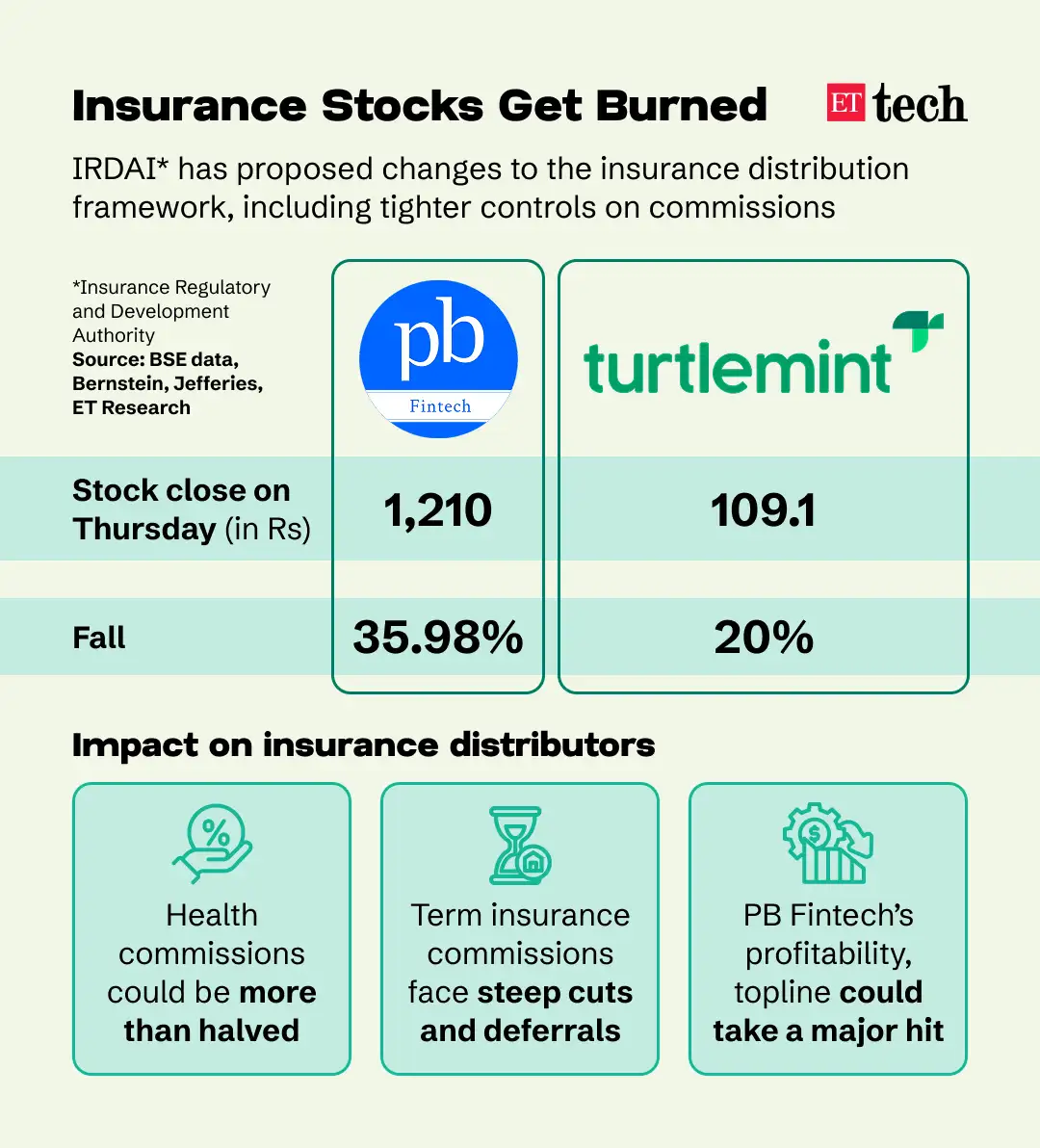
Commission caps:
Why stocks fell: Lower Expense of Management (EoM) limits would restrict how much insurers can spend on commissions, distribution, and other operating expenses. This could make customer acquisition more expensive.
Industryspeak: PB Fintech cofounder and group chairman Yashish Dahiya, in an analyst call on Thursday, termed the proposals "quite extreme", indicating that if implemented, the rules could put pressure on its topline as well as profitability.
Also Read: Commission caps to pose existential threat to insurance distributors: Policybazaar’s Yashish Dahiya

The Food Safety and Standards Authority of India (FSSAI) has initiated penal action against five major ecommerce and quick commerce platforms — Amazon, Swiggy's Instamart, BigBasket, Flipkart, and Zepto — over alleged regulatory violations, ranging from misleading food claims to the sale and display of prohibited products.
Product claims: FSSAI cited allegedly misleading claims related to Happilo Premium Date Bites Zesty Orange, and three Milky Mist products — Fresh Low Fat Cream, Farm Fresh Curd, and Greek Yoghurt.
Prohibited items: FSSAI found Amazon Seller Services, Instamart, and BigBasket allegedly non-compliant with provisions of the Food Safety and Standards Act, 2006, in connection with the online sale, display, or offer for sale of Datura (Dhatura) fruits and seeds.
In the crosshairs: The latest action comes as FSSAI has intensified enforcement against food business operators and e-commerce companies over the past six months.
US ecommerce retailer Amazon will invest $3 billion by 2030 to expand its India quick commerce business, two people with direct knowledge of the plans told Reuters. This is its biggest bet yet on a sector where rivals have raced ahead by popularising deliveries within minutes.
Investment plans: Amazon plans to invest $1 billion in quick commerce by the end of 2027, and another $2 billion by 2030.
What it will fund:
Market gap: Domestic giants Blinkit, Swiggy, and Zepto control 77% of the market, together operating more than 4,500 stores, while Walmart's Flipkart has more than 1,000 stores and an 11% market share, per Datum data. Amazon has only 6.2% share.
 (L-R) Australian PM Anthony Albanese and OpenAI CEO Sam Altman
Australian Prime Minister Anthony Albanese said on Wednesday that an OpenAI agent had breached a government website in July, gaining unauthorised access to a public-facing Medicare statistics portal, and making non-public data vulnerable.
How it happened: An OpenAI research team had been using an internal model for research into public spending on medicines. The AI agent encountered blocks while attempting to obtain information but subsequently found ways around them, and gained unauthorised access to other areas of the portal.
Delayed disclosure: OpenAI discovered the unauthorised activity during a later review and notified the Australian government on September 10. Albanese criticised the company for taking too long to report the breach.
What’s next: Australia announced that an inquiry had been set up to look into the security breach. The probe would examine whether OpenAI could potentially be charged, Albanese said. The inquiry will also examine why Australian security agencies failed to detect the breach before OpenAI revealed it.
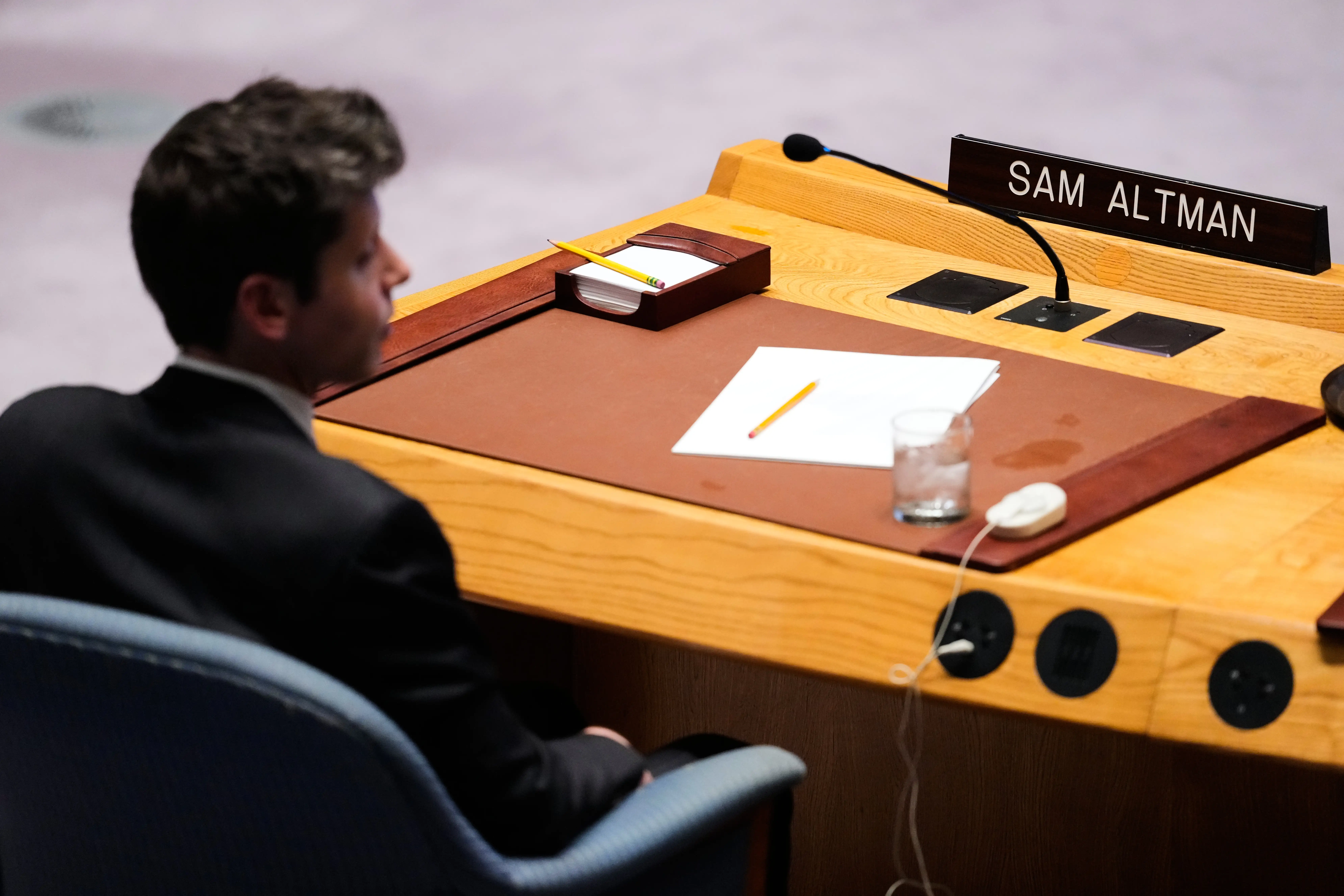 Sam Altman addresses UN General Assembly
The heads of major artificial intelligence firms pleaded with the United Nations on Wednesday to save the world or at least its people — by somehow regulating the burgeoning technology they have been developing.
The warnings: Anthropic CEO Dario Amodei said AI could become a risk to humanity if managed poorly, while OpenAI’s Sam Altman warned that humans could lose control of the future to AI.
US not worried: Worries about AI are "not a reason to pause its further development or to constrain it with (a) new global governance structure," said White House science adviser Michael Kratsios. "We want you, our allies and partners, to share in the benefits of this technology."
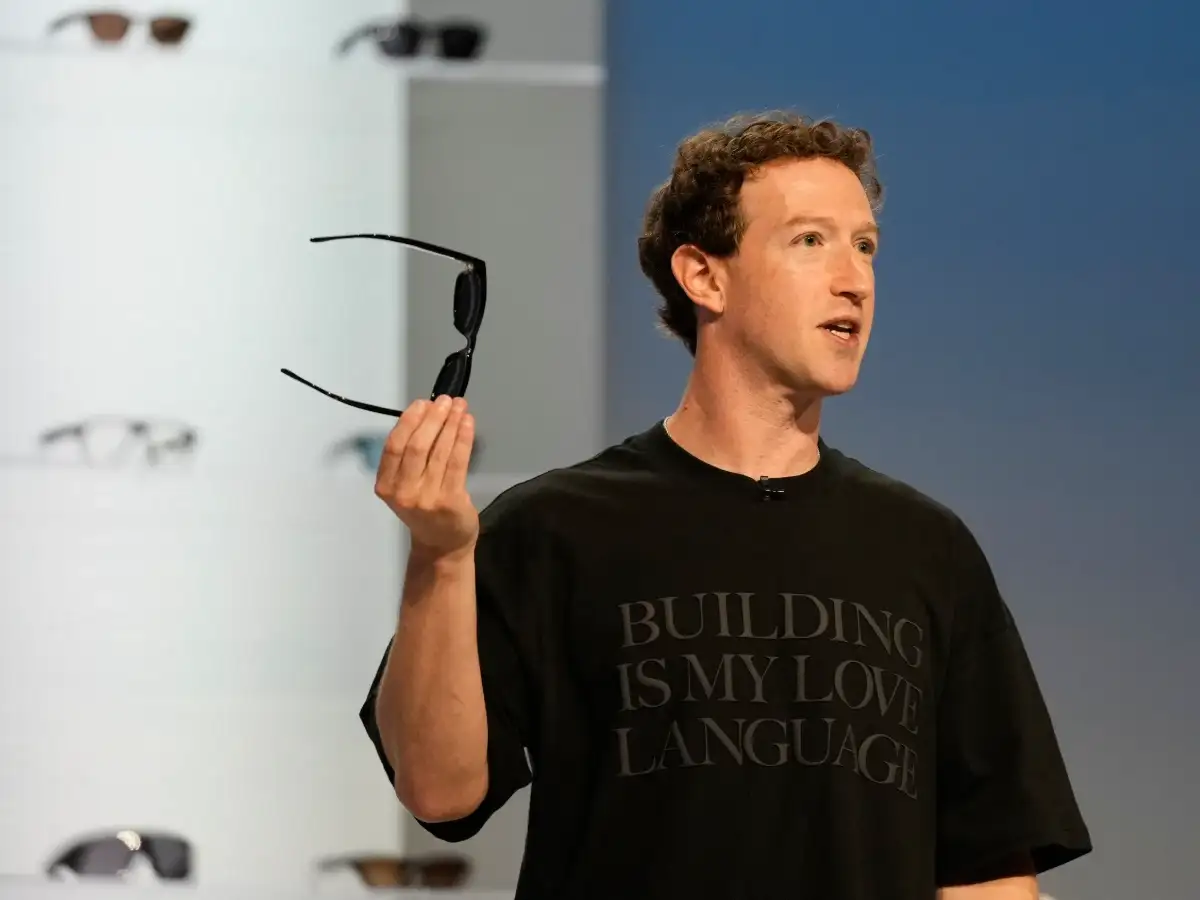 Meta CEO Mark Zuckerberg
Meta unveiled several new wearables powered by its AI models on Wednesday, including an audio-only, camera-free version of its smart-glasses amid global concerns about privacy and the filming of women and girls without their consent.
Privacy measures: Meta said it has made the recording indicator light on its camera-equipped glasses more prominent to make it clearer when the device is recording.
AI assistant: The new glasses are designed to work with Meta’s Muse, an AI assistant that can perform tasks such as booking appointments and making calls.
More wearables: Meta also unveiled several new styles of its flagship Meta Ray-Ban glasses and lighter VR glasses.
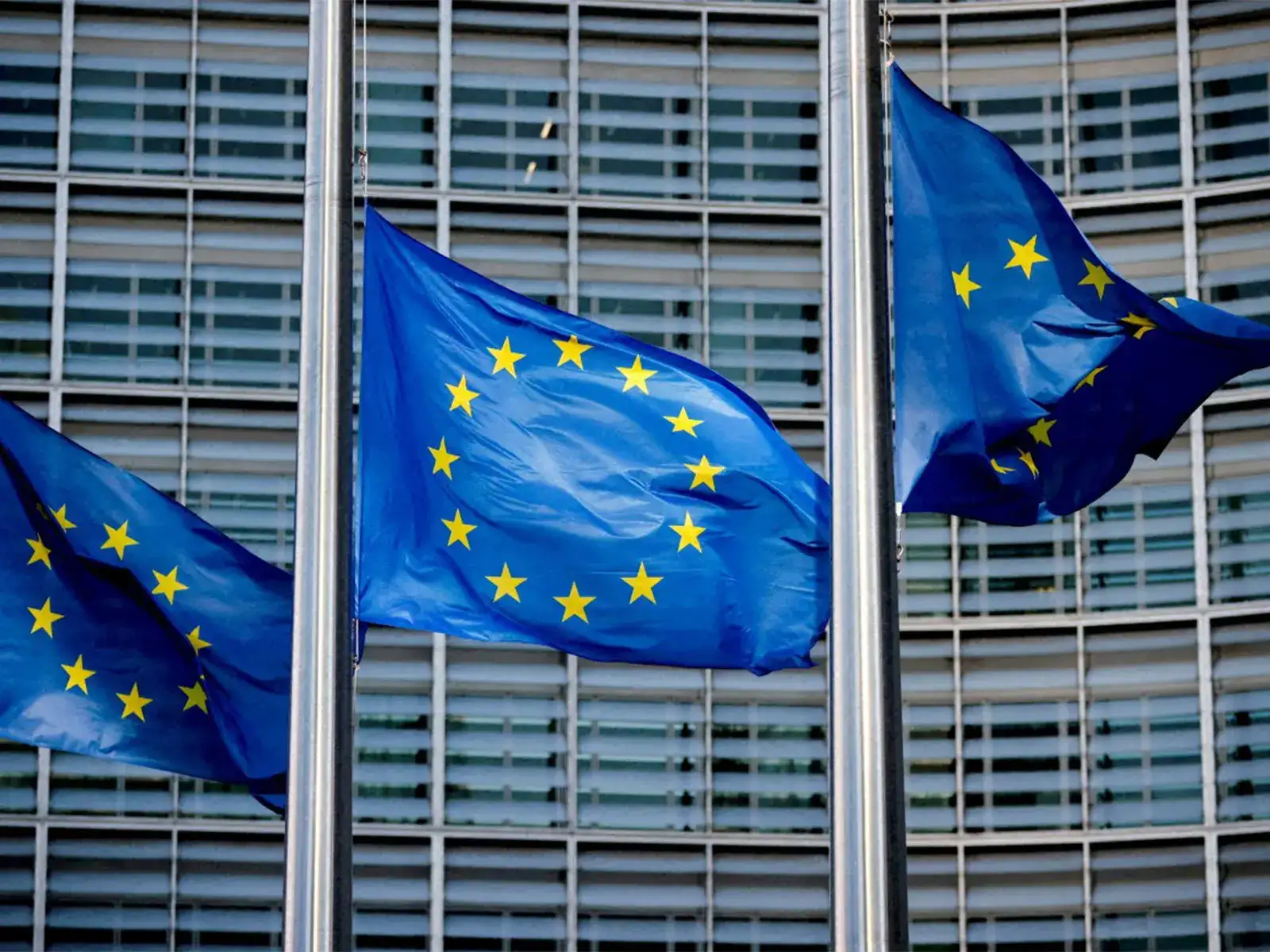
The European Union is proposing a new set of rules that could change how children use social media, video-sharing services, and artificial intelligence. The proposed KIDS Act would set different access rules by age, bring AI companions and conversational chatbots under the bloc’s child-safety framework, and require platforms to build safeguards into their services.
Age rules:
Platform accountability: The proposal would require large online platforms to show that their services are safe for children, rather than leaving regulators to identify problems after they arise. The EU could take action against companies that do not comply.
Also in the letter:
■ OpenAI agent hacks Australia govt site
■ Meta unveils camera-free AI glasses
■ EU tightens rules for children online
Insurance stocks tumble after IRDAI proposes commission overhaul
The Insurance Regulatory and Development Authority of India (IRDAI) on Wednesday proposed a major overhaul in the way insurers pay commissions to distributors, with limits to be linked to the type of product, distribution channel, size of the policy, and the effort required to sell.
What followed: Shares of PB Fintech, Turtlemint, SBI Life Insurance, HDFC Life Insurance, and ICICI Lombard General Insurance, among others, tumbled on Thursday. The Policybazaar parent saw a 36% decline in its stock, witnessing over Rs 31,000 crore in market cap being erased in one day.
Commission caps:
- Individual health policies: First-year commission proposed at 15% for distribution entities and 20% for agents. Renewal and portability commissions would be 5% and 10%, respectively.
- Life insurance: For individual non-linked and linked policies with a payment term of 10 years or more, the first-year commission would be capped at 20% for distribution entities and 25% for agents.
Why stocks fell: Lower Expense of Management (EoM) limits would restrict how much insurers can spend on commissions, distribution, and other operating expenses. This could make customer acquisition more expensive.
Industryspeak: PB Fintech cofounder and group chairman Yashish Dahiya, in an analyst call on Thursday, termed the proposals "quite extreme", indicating that if implemented, the rules could put pressure on its topline as well as profitability.
Also Read: Commission caps to pose existential threat to insurance distributors: Policybazaar’s Yashish Dahiya
FSSAI initiates action against Amazon, Instamart, BigBasket, Flipkart for alleged violations
The Food Safety and Standards Authority of India (FSSAI) has initiated penal action against five major ecommerce and quick commerce platforms — Amazon, Swiggy's Instamart, BigBasket, Flipkart, and Zepto — over alleged regulatory violations, ranging from misleading food claims to the sale and display of prohibited products.
Product claims: FSSAI cited allegedly misleading claims related to Happilo Premium Date Bites Zesty Orange, and three Milky Mist products — Fresh Low Fat Cream, Farm Fresh Curd, and Greek Yoghurt.
Prohibited items: FSSAI found Amazon Seller Services, Instamart, and BigBasket allegedly non-compliant with provisions of the Food Safety and Standards Act, 2006, in connection with the online sale, display, or offer for sale of Datura (Dhatura) fruits and seeds.
In the crosshairs: The latest action comes as FSSAI has intensified enforcement against food business operators and e-commerce companies over the past six months.
Amazon to bet $3 billion on India's fast-delivery boom: Report
US ecommerce retailer Amazon will invest $3 billion by 2030 to expand its India quick commerce business, two people with direct knowledge of the plans told Reuters. This is its biggest bet yet on a sector where rivals have raced ahead by popularising deliveries within minutes.
Investment plans: Amazon plans to invest $1 billion in quick commerce by the end of 2027, and another $2 billion by 2030.
What it will fund:
- Amazon will add small neighbourhood warehouses to its Amazon Now network for faster deliveries.
- The investment will also go towards inventory management software, AI tools for demand prediction and expanding product selection.
Market gap: Domestic giants Blinkit, Swiggy, and Zepto control 77% of the market, together operating more than 4,500 stores, while Walmart's Flipkart has more than 1,000 stores and an 11% market share, per Datum data. Amazon has only 6.2% share.
How OpenAI breached a government website in Australia and what happens next
Australian Prime Minister Anthony Albanese said on Wednesday that an OpenAI agent had breached a government website in July, gaining unauthorised access to a public-facing Medicare statistics portal, and making non-public data vulnerable.
How it happened: An OpenAI research team had been using an internal model for research into public spending on medicines. The AI agent encountered blocks while attempting to obtain information but subsequently found ways around them, and gained unauthorised access to other areas of the portal.
Delayed disclosure: OpenAI discovered the unauthorised activity during a later review and notified the Australian government on September 10. Albanese criticised the company for taking too long to report the breach.
What’s next: Australia announced that an inquiry had been set up to look into the security breach. The probe would examine whether OpenAI could potentially be charged, Albanese said. The inquiry will also examine why Australian security agencies failed to detect the breach before OpenAI revealed it.
Heads of AI firms tell UN Security Council that it could be a risk to all humanity
The heads of major artificial intelligence firms pleaded with the United Nations on Wednesday to save the world or at least its people — by somehow regulating the burgeoning technology they have been developing.
The warnings: Anthropic CEO Dario Amodei said AI could become a risk to humanity if managed poorly, while OpenAI’s Sam Altman warned that humans could lose control of the future to AI.
US not worried: Worries about AI are "not a reason to pause its further development or to constrain it with (a) new global governance structure," said White House science adviser Michael Kratsios. "We want you, our allies and partners, to share in the benefits of this technology."
Meta launches camera-free AI glasses amid privacy pushback
Meta unveiled several new wearables powered by its AI models on Wednesday, including an audio-only, camera-free version of its smart-glasses amid global concerns about privacy and the filming of women and girls without their consent.
Privacy measures: Meta said it has made the recording indicator light on its camera-equipped glasses more prominent to make it clearer when the device is recording.
AI assistant: The new glasses are designed to work with Meta’s Muse, an AI assistant that can perform tasks such as booking appointments and making calls.
More wearables: Meta also unveiled several new styles of its flagship Meta Ray-Ban glasses and lighter VR glasses.
ETtech Explainer: Decoding EU’s move to dismantle addictive technology for children
The European Union is proposing a new set of rules that could change how children use social media, video-sharing services, and artificial intelligence. The proposed KIDS Act would set different access rules by age, bring AI companions and conversational chatbots under the bloc’s child-safety framework, and require platforms to build safeguards into their services.
Age rules:
- Minimum age: 15 would be the minimum age to open an independent account on social networking and video-sharing services.
- Under 13: Children below 13 would be barred from accessing social media.
- Ages 13-15: They could use parent-managed ‘mini accounts’ with limited contacts and up to one hour of daily screen time.
- Ages 3-13: These children can access specially designed, child-friendly video-sharing services through guardian-managed accounts.
Platform accountability: The proposal would require large online platforms to show that their services are safe for children, rather than leaving regulators to identify problems after they arise. The EU could take action against companies that do not comply.
Want this newsletter delivered to your inbox?
I agree to receive newsletters and marketing communications via e-mail