
 Morning Dispatch Morning Dispatch |
Ashwini Vaishnaw on India’s chip push; Emergent's new AI bet
Want this newsletter delivered to your inbox?
I agree to receive newsletters and marketing communications via e-mail

Thank you for subscribing to Morning Dispatch
We'll soon meet in your inbox.
Happy Monday! The next set of investments under India’s semiconductor scheme are expected to begin in the next six months, IT minister Ashwini Vaishnaw told us. This and more in today’s ETtech Morning Dispatch.
Also in the letter:
■ No daily cap on repeat UPI payments
■ CityMall in talks to raise Rs 400-500 crore
■ Applied Materials to invest $5 billion in India
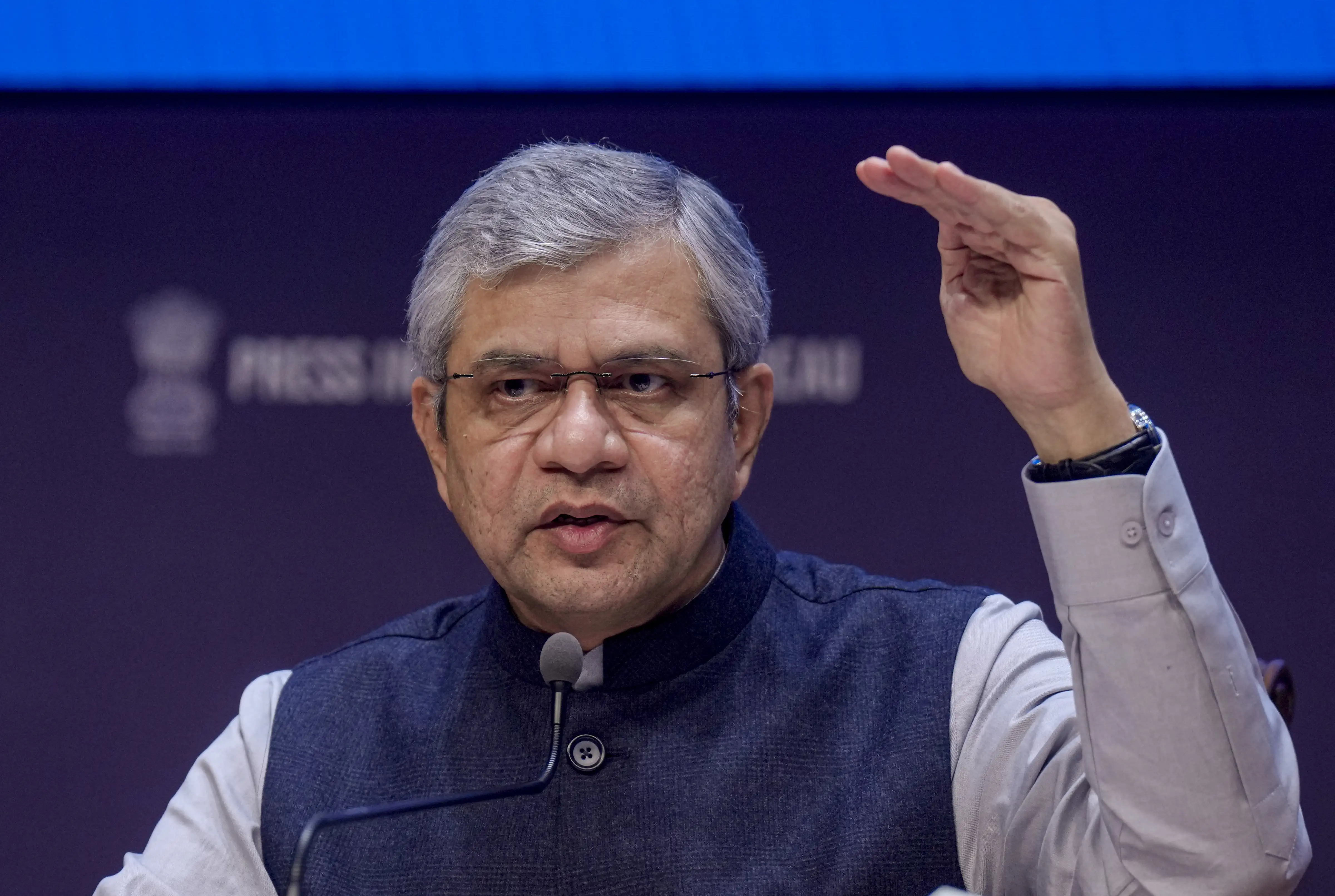 Union Minister of Electronics & IT Ashwini Vaishnaw
India is expecting the next wave of semiconductor investments to begin within six months, as the government looks to build on nearly $23.5 billion committed under the first two phases of its chip mission, Minister of Electronics & IT Ashwini Vaishnaw told us in an interview.
Semiconductor push: ISM 2.0 has attracted around $12 billion of interest across fabs, packaging, materials, equipment, design and R&D, he said. Vaishnaw also underscored that the country’s semiconductor strategy will lean on its design talent while focusing fabs on niche products and building an advanced packaging ecosystem.
AI guardrails: The government is consulting AI developers, academia and Big Tech on a techno-legal framework, with companies expected to build safeguards into models themselves.
The wider concern: Vaishnaw also flagged risks from AI agents and social media, including child safety and algorithm-driven addiction, arguing that online safety needs to be balanced with technology’s benefits.
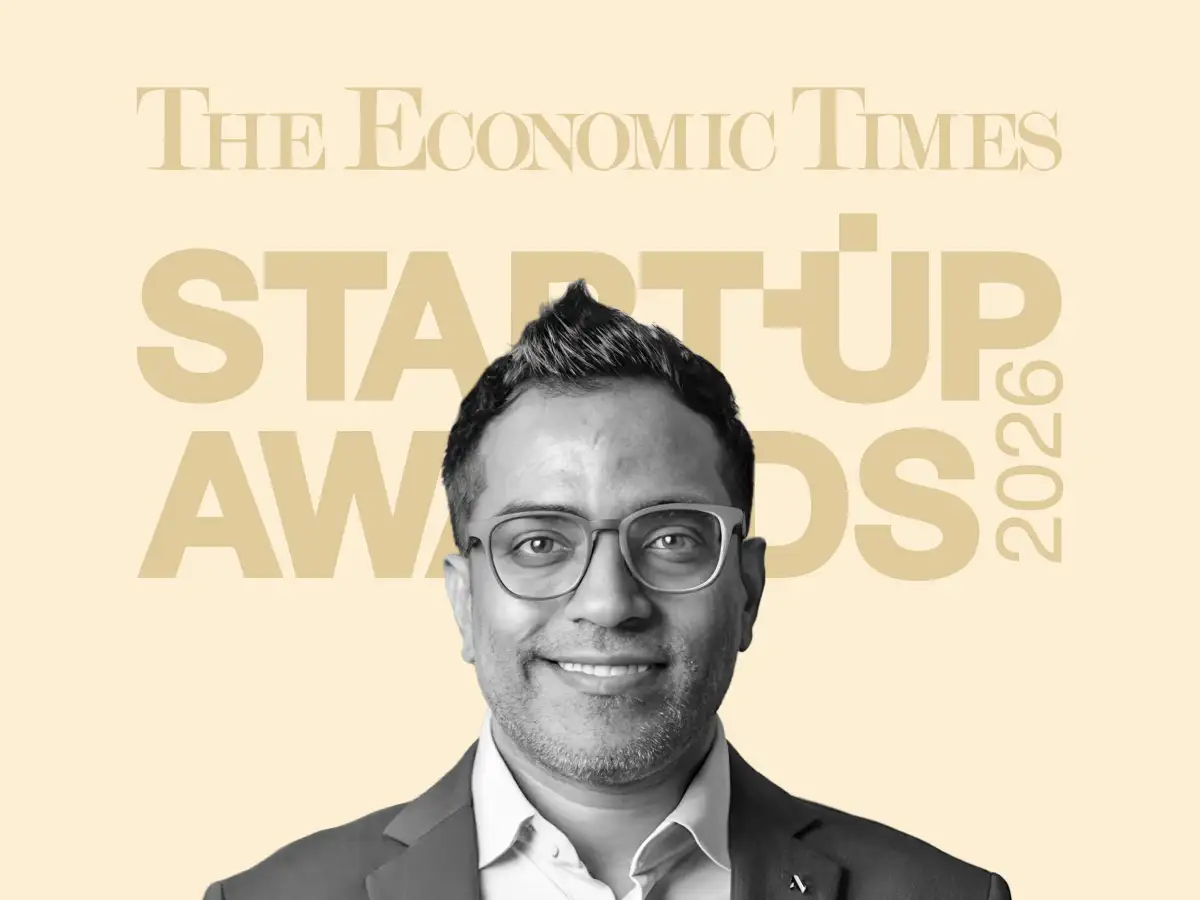 Mukund Jha, cofounder and CEO, Emergent
Emergent is broadening its AI ambitions beyond software development, with cofounder and CEO Mukund Jha betting that AI agents will eventually automate much of the day-to-day work at small businesses.
Bouncing back: Jha won the Comeback Kid prize at The ET Startup Awards 2026 for building a successful AI startup in Emergent after his previous venture, hyperlocal platform Dunzo, unravelled.
The shift: Emergent is developing agents that can monitor business metrics and handle tasks such as cash-flow analysis, scheduling and social media management, moving from building software to running it.
The startup expects agents to become a significantly larger part of its revenue over the next 15-20 months.
The ambition: Jha sees businesses becoming increasingly autonomous as AI models improve, with agents handling large parts of operations.
Learnings from the past: Jha's strategy is shaped partly by Dunzo, where he said the company scaled across too many initiatives before figuring out its economics. Emergent is now taking a more measured approach to new products.

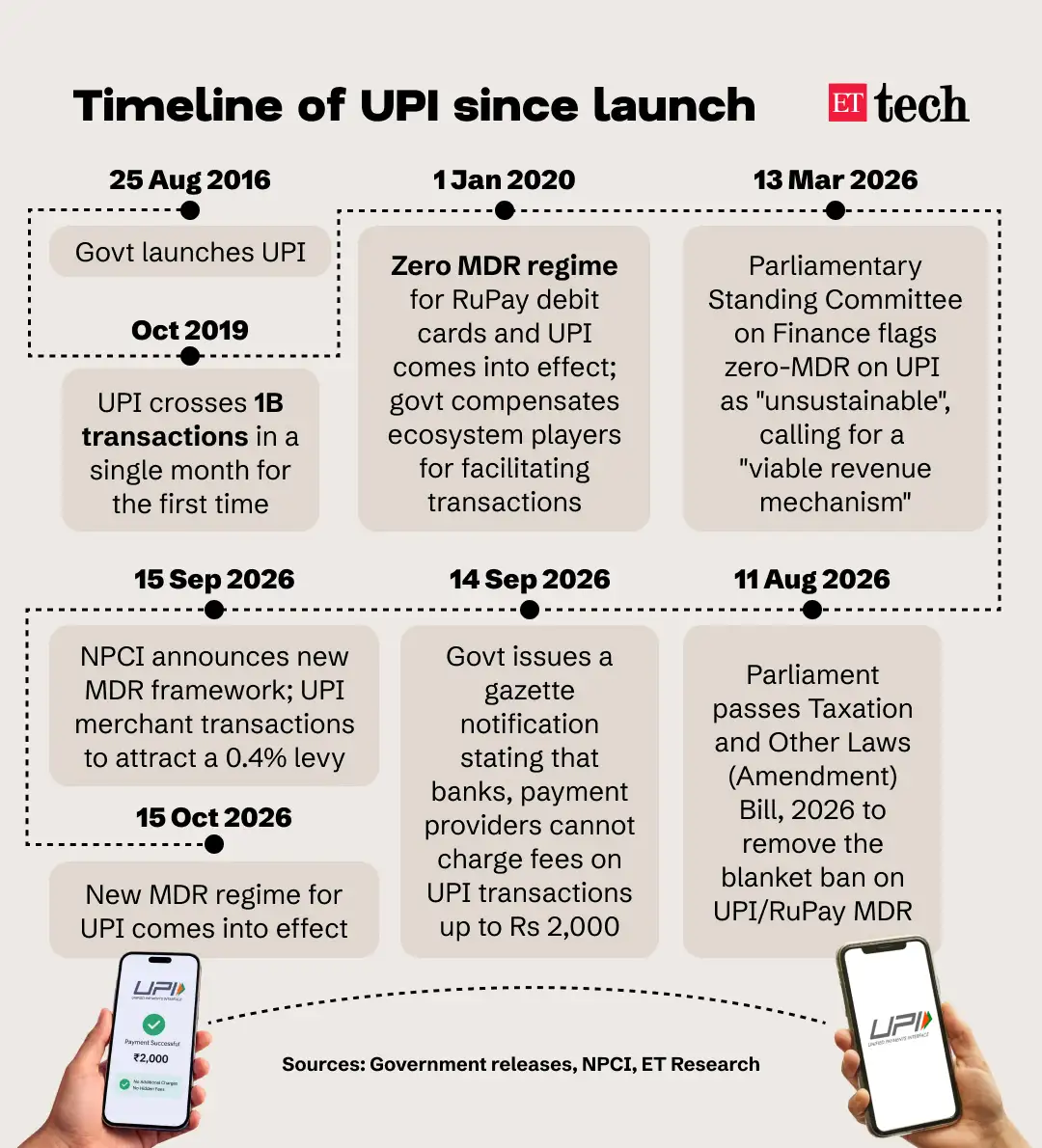
NPCI is not planning an additional daily cap on repeated UPI payments to the same merchant, leaving open a potential workaround to the new MDR regime taking effect October 15. Merchants could split a larger bill into multiple payments of Rs 2,000 or less, which remain free.
The gap: A Rs 6,000 bill could theoretically be split into three Rs 2,000 payments, avoiding the Rs 24 MDR that would apply to a single transaction.
Another loophole: Small merchants eligible for zero MDR could potentially spread collections across bank accounts, QR codes or payment providers to stay below the Rs 1 lakh monthly threshold.
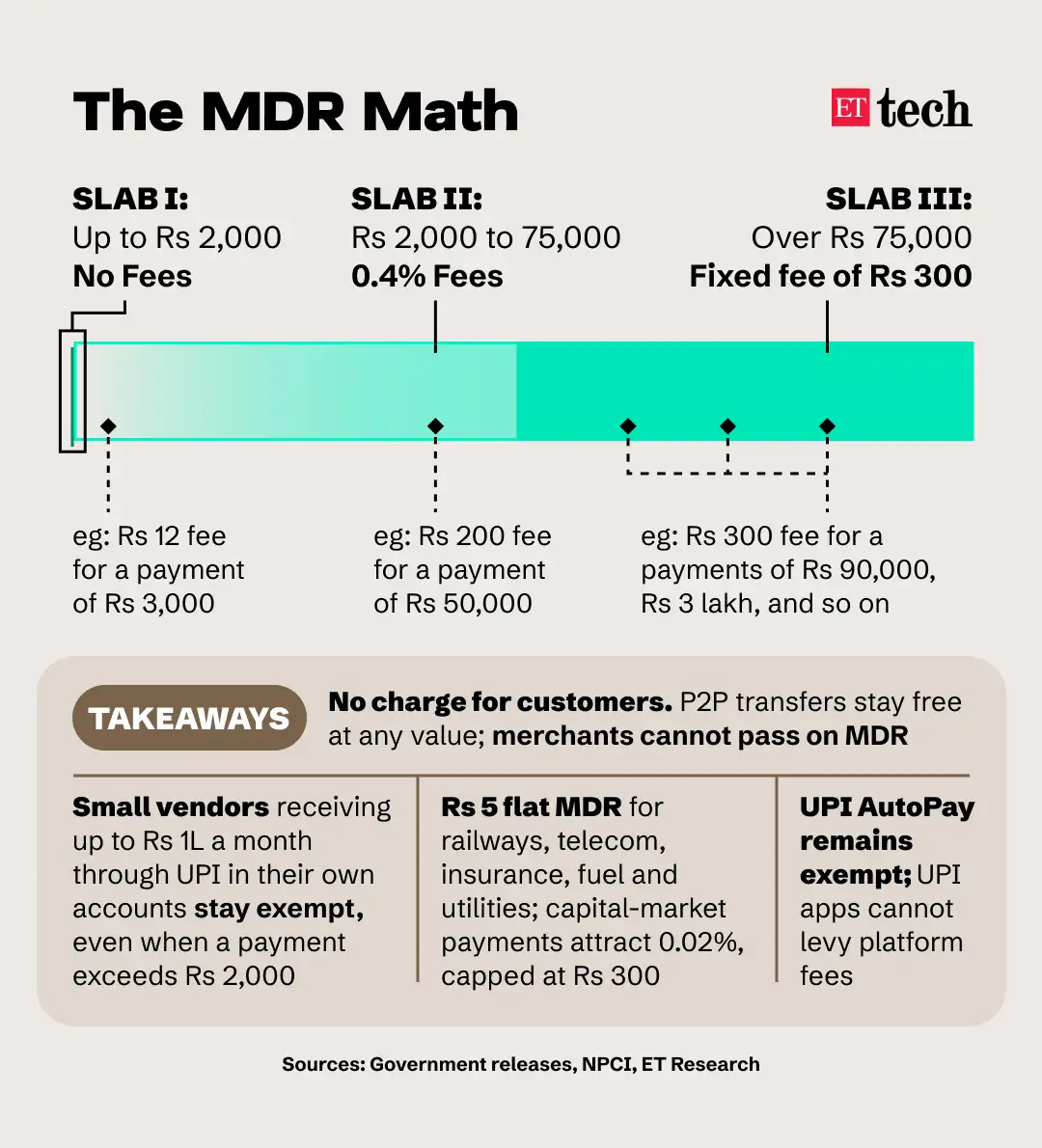 The warning: Routing business receipts through personal UPI IDs or deliberately using concessional merchant categories would amount to misclassification and could trigger reclassification by banks or payment providers.
The bigger picture: More than 95% of merchant-payment volume will remain free, but transactions above Rs 2,000 account for roughly two-thirds of merchant-payment value, making potential workarounds significant.
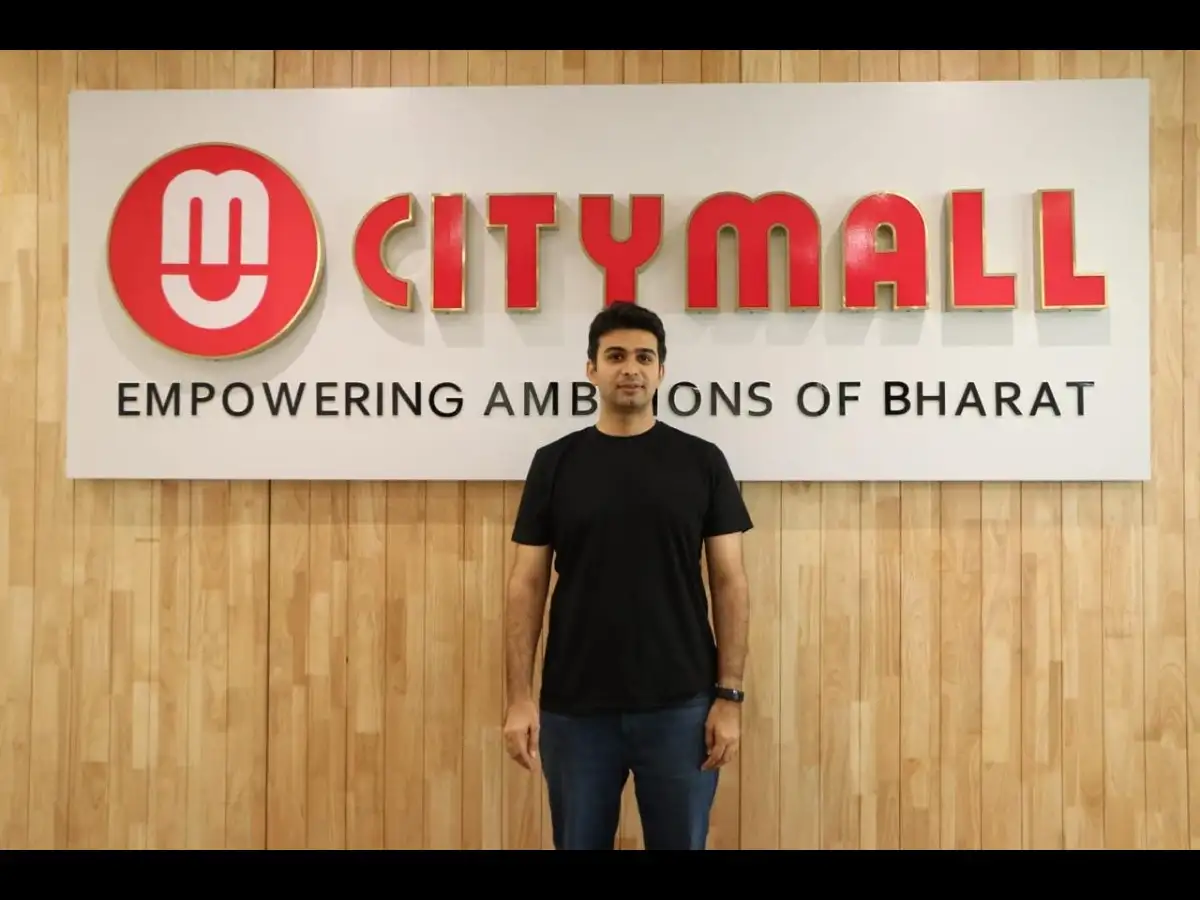 Angad Kikla, cofounder and CEO, CityMall
Gurugram-based CityMall is in talks to raise Rs 400-500 crore at a valuation of around Rs 4,000 crore, while also laying the groundwork for a potential IPO.
Deal details: CityMall's existing backer Jungle Ventures is doubling down through the latest round with other new and current investors also planning to invest.
Growth engine: Revenue nearly doubled to around Rs 1,000 crore in FY26, while private labels now contribute about a third of grocery NMV, up sharply over two years.
IPO watch: The company has started preparing for a public listing over the next six to eight quarters, according to a person aware of the plans.
The backdrop: Investors are showing renewed appetite for value and rural commerce as startups such as Rozana, SuperK and CityKart raise capital and expand deeper into smaller towns and villages.
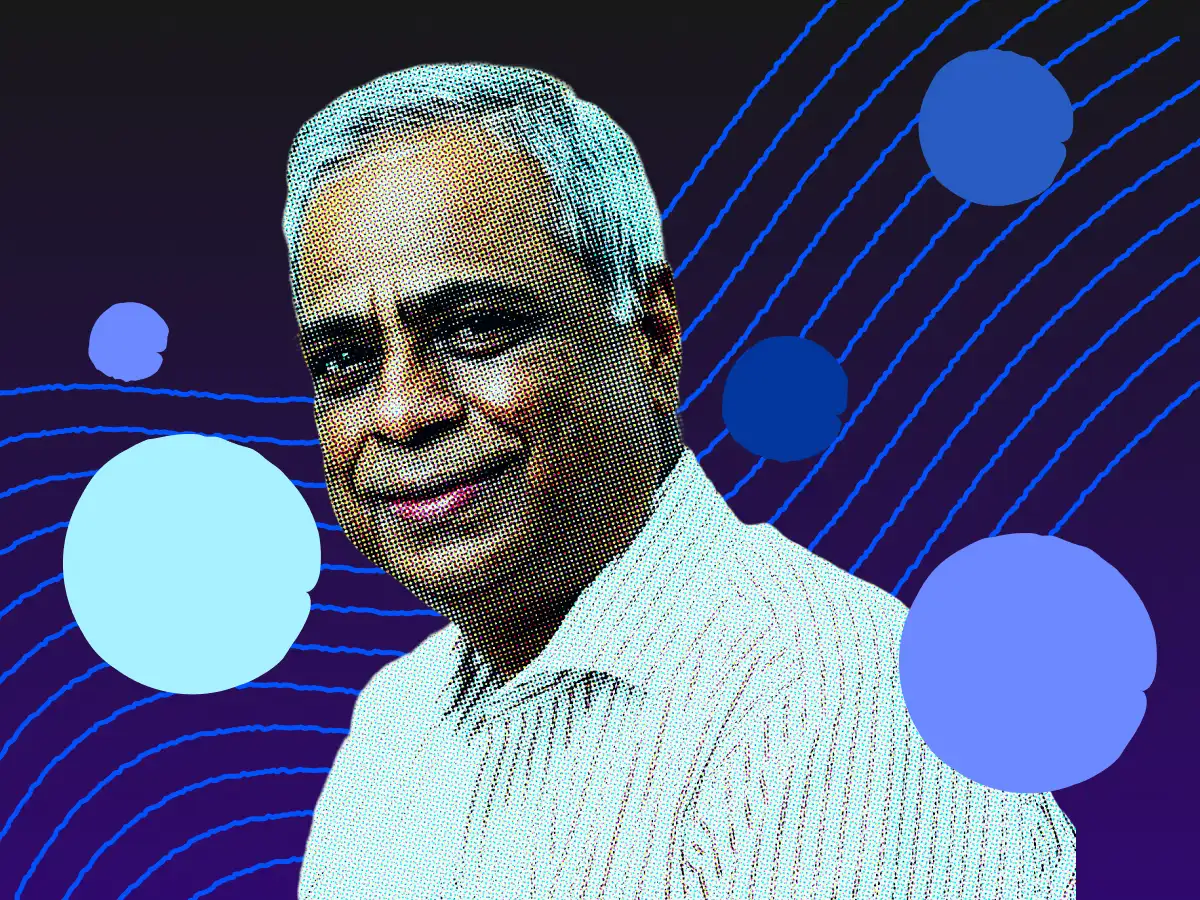 Ashok Jhunjhunwala, professor, IIT Madras
IIT Madras professor Jhunjhunwala calls for startup-friendly PLI: IIT Madras professor Ashok Jhunjhunwala has called for changes to the government’s production-linked incentive scheme, saying smaller companies and startups developing new technologies should also be eligible for incentives.
Applied Materials to invest $5 billion in India for R&D: Applied Materials plans to export products designed and developed in India to every advanced fab in the world, Prabu Raja, president of the company’s Semiconductor Products Group (SPG), told ET.
■ Big Tech uses guarantees to keep $300bn AI exposure off balance sheets (FT)
■ South Africa joins the global resistance against American data centers (Rest of World)
■ Not all AI workers think the tech could kill everyone (BBC)
Also in the letter:
■ No daily cap on repeat UPI payments
■ CityMall in talks to raise Rs 400-500 crore
■ Applied Materials to invest $5 billion in India
ISM 2.0 draws $12 billion in interest; Vaishnaw says AI firms must ensure safety
India is expecting the next wave of semiconductor investments to begin within six months, as the government looks to build on nearly $23.5 billion committed under the first two phases of its chip mission, Minister of Electronics & IT Ashwini Vaishnaw told us in an interview.
Semiconductor push: ISM 2.0 has attracted around $12 billion of interest across fabs, packaging, materials, equipment, design and R&D, he said. Vaishnaw also underscored that the country’s semiconductor strategy will lean on its design talent while focusing fabs on niche products and building an advanced packaging ecosystem.
AI guardrails: The government is consulting AI developers, academia and Big Tech on a techno-legal framework, with companies expected to build safeguards into models themselves.
The wider concern: Vaishnaw also flagged risks from AI agents and social media, including child safety and algorithm-driven addiction, arguing that online safety needs to be balanced with technology’s benefits.
ETSA 2026: Emergent shifting focus from AI software to business automation, says CEO Mukund Jha
Emergent is broadening its AI ambitions beyond software development, with cofounder and CEO Mukund Jha betting that AI agents will eventually automate much of the day-to-day work at small businesses.
Bouncing back: Jha won the Comeback Kid prize at The ET Startup Awards 2026 for building a successful AI startup in Emergent after his previous venture, hyperlocal platform Dunzo, unravelled.
The shift: Emergent is developing agents that can monitor business metrics and handle tasks such as cash-flow analysis, scheduling and social media management, moving from building software to running it.
The startup expects agents to become a significantly larger part of its revenue over the next 15-20 months.
The ambition: Jha sees businesses becoming increasingly autonomous as AI models improve, with agents handling large parts of operations.
Learnings from the past: Jha's strategy is shaped partly by Dunzo, where he said the company scaled across too many initiatives before figuring out its economics. Emergent is now taking a more measured approach to new products.
No daily cap on repeat UPI payments could open MDR loophole
NPCI is not planning an additional daily cap on repeated UPI payments to the same merchant, leaving open a potential workaround to the new MDR regime taking effect October 15. Merchants could split a larger bill into multiple payments of Rs 2,000 or less, which remain free.
The gap: A Rs 6,000 bill could theoretically be split into three Rs 2,000 payments, avoiding the Rs 24 MDR that would apply to a single transaction.
Another loophole: Small merchants eligible for zero MDR could potentially spread collections across bank accounts, QR codes or payment providers to stay below the Rs 1 lakh monthly threshold.
The bigger picture: More than 95% of merchant-payment volume will remain free, but transactions above Rs 2,000 account for roughly two-thirds of merchant-payment value, making potential workarounds significant.
CityMall in talks to raise Rs 400-500 crore led by Jungle Ventures: Sources
Gurugram-based CityMall is in talks to raise Rs 400-500 crore at a valuation of around Rs 4,000 crore, while also laying the groundwork for a potential IPO.
Deal details: CityMall's existing backer Jungle Ventures is doubling down through the latest round with other new and current investors also planning to invest.
Growth engine: Revenue nearly doubled to around Rs 1,000 crore in FY26, while private labels now contribute about a third of grocery NMV, up sharply over two years.
IPO watch: The company has started preparing for a public listing over the next six to eight quarters, according to a person aware of the plans.
The backdrop: Investors are showing renewed appetite for value and rural commerce as startups such as Rozana, SuperK and CityKart raise capital and expand deeper into smaller towns and villages.
Other Top Stories By Our Reporters
IIT Madras professor Jhunjhunwala calls for startup-friendly PLI: IIT Madras professor Ashok Jhunjhunwala has called for changes to the government’s production-linked incentive scheme, saying smaller companies and startups developing new technologies should also be eligible for incentives.
Applied Materials to invest $5 billion in India for R&D: Applied Materials plans to export products designed and developed in India to every advanced fab in the world, Prabu Raja, president of the company’s Semiconductor Products Group (SPG), told ET.
Global Picks We Are Reading
■ Big Tech uses guarantees to keep $300bn AI exposure off balance sheets (FT)
■ South Africa joins the global resistance against American data centers (Rest of World)
■ Not all AI workers think the tech could kill everyone (BBC)
Want this newsletter delivered to your inbox?
I agree to receive newsletters and marketing communications via e-mail