
Extreme travel experiences for people who love adventure
1/8
Seven adventures that will take you out of your comfort zone
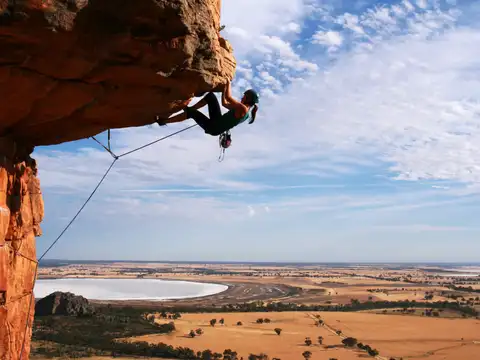
Some travellers plan holidays around beautiful beaches, leisurely walks and long lunches. Others would rather be dangling above a canyon, crossing a frozen glacier or climbing towards the crater of a volcano. For them, the real thrill of travelling lies somewhere beyond the familiar, where the landscape is challenging, the adrenaline is high, and every step brings a new sense of achievement. Around the world, there are extraordinary adventures that test physical endurance, push personal limits and offer a closer encounter with nature at its most dramatic. From navigating underground cave systems and trekking through high-altitude mountain trails to descending waterfalls and exploring volcanic terrain, these experiences are not for those looking for a quiet getaway. If your idea of a memorable holiday involves a little risk, plenty of adventure and stories worth telling long after you return, these seven experiences deserve your attention.
2/8
Walk across ancient glaciers and explore a world of ice
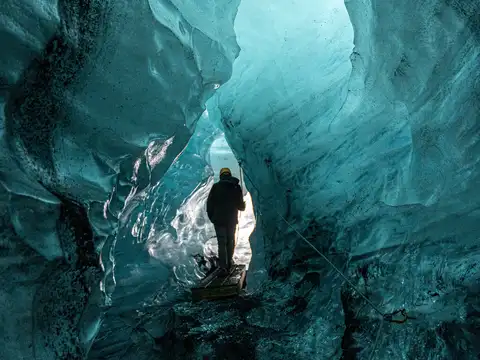
A frozen landscape can look beautiful from a distance, but walking across one is an entirely different experience. Glacier exploration takes travellers into a world of deep blue ice, towering frozen formations, narrow crevasses and landscapes that have been shaped over thousands of years.
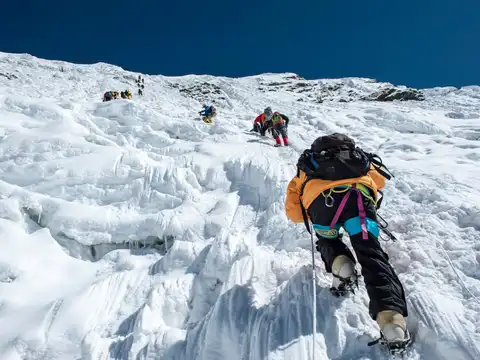
Iceland is among the most popular destinations for this adventure, particularly around Vatnajökull, Europe's largest glacier by volume. With a trained guide, visitors can strap on crampons, carry ice axes and make their way across sections of the glacier. Along the route, they may encounter dramatic ice formations, deep crevasses and caves formed by melting and refreezing ice, depending on the season and conditions.
The experience demands proper equipment, physical preparation and careful attention to safety instructions. But for those who take it on, the reward is extraordinary: standing on an immense sheet of ice and experiencing a landscape that feels almost like another planet.
3/8
Descend waterfalls and race through narrow canyons
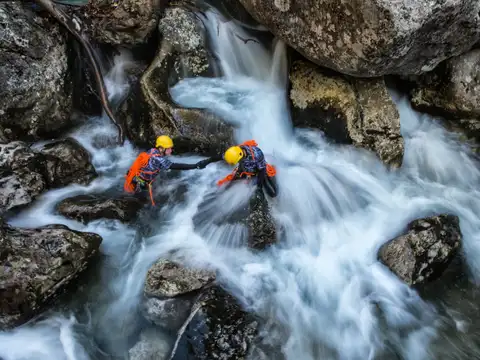
Walking through a mountain valley is one way to explore the outdoors. Canyoning takes the experience several steps further. Instead of following a trail around a gorge, you travel through it, navigating natural obstacles using a combination of swimming, climbing, sliding and abseiling.
The Swiss Alps, particularly around Interlaken, are a popular setting for this adventure. Mountain streams have carved deep gorges through the rock, creating narrow passages, natural pools and waterfalls. Equipped with wetsuits, helmets and harnesses, participants follow a guided route through the canyon. One moment you could be swimming through a cold natural pool; the next, you might be lowering yourself down a waterfall using ropes.
Some routes also include natural water slides and controlled jumps into deep pools. The difficulty varies considerably, making it possible to find experiences for different levels of adventure. It is wet, physically demanding and occasionally nerve-racking, but that is precisely what makes reaching the end of a canyon so satisfying.
4/8
Hike up a volcano and get close to the power of the Earth
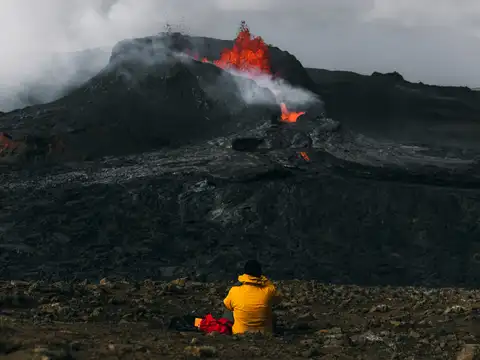
Few travel experiences bring you as close to the raw power of nature as walking across a volcanic landscape. The ground beneath your feet may be covered in dark lava rock, steam may rise from the earth, and the landscape can change dramatically as you climb higher.
Mount Etna in Sicily, Italy, offers one of Europe's best-known volcano hiking experiences. Europe's most active volcano has a constantly changing landscape, with vast lava fields, volcanic craters and dramatic views across the surrounding region. Depending on volcanic activity and access restrictions, guided excursions can take visitors along lower slopes or towards permitted higher-altitude areas.
The climb is as much about the landscape as the physical challenge. Loose volcanic ash, uneven terrain and changing weather make the journey demanding. And unlike a conventional mountain hike, the surroundings carry reminders that the volcano is still active. This is an adventure where checking official access conditions and following qualified guides is essential. The reward is a rare glimpse into the forces that continue to shape our planet.
5/8
Enter some of the world's largest underground cave systems
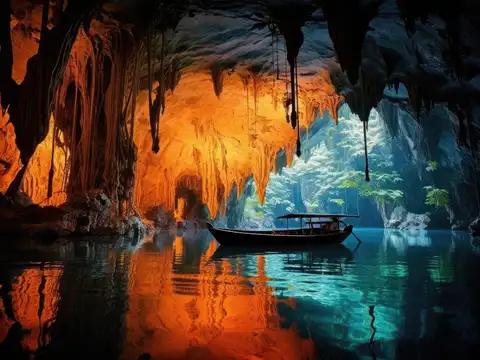
What lies beneath the ground can be just as extraordinary as anything visible above it. Deep underground, enormous caverns, hidden rivers, underground forests and rock formations create landscapes that few travellers ever get to experience.
Vietnam's Son Doong Cave, located in Phong Nha-Ke Bang National Park, is one of the world's most remarkable examples. Often described as the world's largest known natural cave passage by volume, it is so vast that it contains its own weather system and areas where sunlight enters through collapsed sections of its roof. Inside, explorers encounter enormous chambers, underground rivers, unusual rock formations and jungle-like vegetation.
Reaching the cave is not a casual sightseeing excursion. The multi-day expedition involves trekking through dense forest, crossing rivers, climbing over rocky terrain and navigating challenging underground sections. Access is tightly controlled and requires an organised expedition. For adventure travellers, however, the chance to explore an underground world on such an extraordinary scale is difficult to match.
6/8
Climb vertical mountain routes with nothing but a cable between you and the rock
For those who want the thrill of climbing a mountain without committing to a conventional technical rock-climbing expedition, via ferrata offers an exciting alternative. The Italian term translates to 'iron path', and the name describes the experience rather well.
In the Dolomites of northern Italy, mountain routes are fitted with fixed steel cables, metal ladders, steps and bridges to help climbers navigate steep rock faces. Participants wear a helmet, harness and a special lanyard that clips onto the safety cable as they move along the route. Some sections involve climbing exposed vertical walls, crossing narrow ledges and negotiating suspended bridges high above the valley floor.
The views are spectacular, but there is little opportunity to forget how high up you are. Routes range from relatively accessible mountain walks to demanding exposed climbs requiring considerable fitness and confidence. For adventure lovers, it is a chance to experience the mountains from a completely different angle, quite literally.
7/8
Trek into the thin air of the Himalayas
There is a particular kind of satisfaction in reaching a destination after days of walking through some of the world's toughest terrain. High-altitude trekking offers precisely that feeling, combining physical endurance with extraordinary mountain scenery and encounters with remote communities.
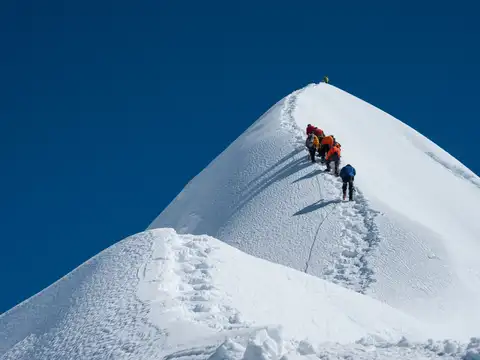
Nepal's Everest Base Camp trek is among the most recognised adventures of this kind. The journey takes trekkers through the Khumbu region, past suspension bridges, mountain villages, Buddhist monasteries and dramatic Himalayan valleys. As the trail climbs higher, the air becomes thinner and even relatively short stretches of walking can feel exhausting.
The trek typically takes around 12 to 14 days, depending on the itinerary and acclimatisation schedule. Reaching Everest Base Camp, at approximately 5,364 metres above sea level, is a major achievement for many trekkers. But the journey requires preparation, gradual acclimatisation and awareness of altitude sickness. Here, the challenge is not simply how far you can walk, but how patiently you can adapt to the mountains.
8/8
Take on the rapids of a wild mountain river
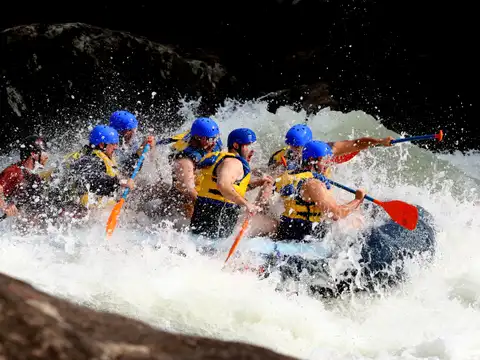
If walking, climbing and trekking are not enough to get your adrenaline going, perhaps it is time to let a river decide the pace of your adventure. White-water rafting takes travellers through powerful currents, sudden drops and turbulent rapids, with every stretch demanding teamwork and quick reactions.
The Zambezi River, below Victoria Falls along the Zambia-Zimbabwe border, is one of the world's famous white-water rafting destinations. Its dramatic Batoka Gorge provides a spectacular setting, with steep rocky walls rising on either side of the river. Depending on water levels and the season, rafting excursions navigate a series of rapids that can send boats bouncing through waves and swirling currents.
Participants are equipped with helmets, life jackets and paddles, while professional guides lead the expedition and provide safety instructions. Between the rapids, calmer stretches offer an opportunity to take in the surrounding gorge. It is a physically demanding adventure that combines teamwork, excitement and spectacular scenery. Just remember that the river sets the rules, and the experience is subject to seasonal water conditions.