
Magnificent seven earnings to decide next move for Wall Street
1/11
S&P 500 faces AI reality check
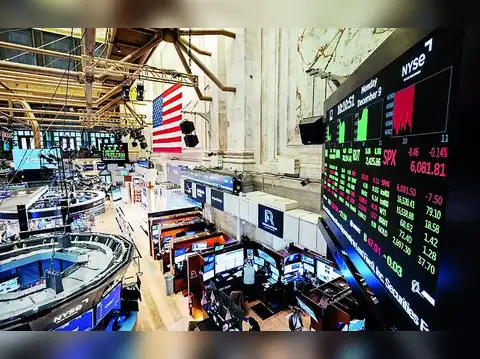
The S&P 500 has struggled to extend its rally after reaching a record high in early June. While the index performance appears subdued, significant changes are underway beneath the surface as AI-driven megacap technology stocks lose momentum and investors look for opportunities elsewhere in the market. (Source: Reuters)

2/11
AI leaders lose steam after record run
The stocks that powered the AI-led market rally are facing a pullback. The Magnificent Seven ETF has declined more than 8% since the June peak, while the Philadelphia Semiconductor Index has dropped over 19% after soaring earlier in the year on optimism around artificial intelligence growth. The weakness in these AI-linked names has weighed on the broader S&P 500.
3/11
Market breadth improves despite index weakness
Despite the decline in major technology stocks, the broader market has shown resilience. Nearly two-thirds of S&P 500 companies have gained since the June record high, while eight of the index’s 11 sectors are trading higher. Investors see this expansion in market participation as a sign of a healthier and more sustainable bull market.
Amazon Top Deals
POWERED BY

4/11
Magnificent Seven earnings take centre stage
The market’s next major test comes from quarterly results of the Magnificent Seven companies. Investors will closely monitor revenue growth, AI investments and whether these companies can justify their high valuations.

5/11
AI investment boom faces return concerns
Large technology companies including Microsoft, Amazon, Meta and Alphabet have committed massive amounts of capital toward AI infrastructure and data centres. However, rising spending has increased concerns about whether these investments will generate adequate returns. A slowdown in confidence around the AI theme could put pressure on the broader market.

6/11
Market rotation replaces broad-based selling
The recent weakness in technology stocks appears to be driven more by sector rotation than widespread selling. Investors have shifted funds from expensive momentum-driven technology shares into relatively cheaper sectors. Healthcare and financial stocks have emerged as major beneficiaries, gaining 14% and 12% respectively since the June peak.
7/11
Equal-weight S&P 500 shows broader strength
The equal-weight version of the S&P 500, which gives the same importance to every stock, has outperformed the traditional index. Since June 2, the equal-weight index has risen nearly 4%, while the standard S&P 500 has declined about 2.4%. This indicates that gains are spreading beyond the largest companies.

8/11
Mid- and small-caps gain investor attention
The market rally has expanded beyond megacap technology stocks, with investors increasingly moving toward mid- and small-cap companies. In 2026, the equal-weight S&P 500 has gained more than 13%, while mid-cap stocks have risen around 15% and small-cap stocks have advanced nearly 19%.

9/11
Broader earnings growth challenges tech dominance
The Magnificent Seven have delivered stronger profit growth than the broader market in recent years, but that advantage is narrowing. Investors believe earnings growth across other sectors is improving, with forecasts suggesting that the broader market could outperform megacap technology stocks by the end of the year.

10/11
Magnificent Seven still hold significant influence
Despite recent weakness, the Magnificent Seven remain critical to the direction of the S&P 500. Together, these companies account for around one-third of the index’s total weighting. Any major movement in these stocks could have a substantial impact on overall market performance.

11/11
Market outlook: Healthier rally or AI reset?
The current rotation suggests that investors are not abandoning equities but are diversifying beyond AI leaders. Broader participation could make the ongoing bull market more durable. However, a sharp reversal in the AI trade remains a key risk, given the outsized influence of technology giants on the market.