Six income tax slabs in, 70 exemptions out: Impact on taxpayers

Highlights
- The claim that taxpayers will save tax under the new regime raises questions.
- Finance Minister Nirmala Sitharaman said in her budget speech that a taxpayer earning Rs 15 lakh will save Rs 78,000 in tax under the new regime.
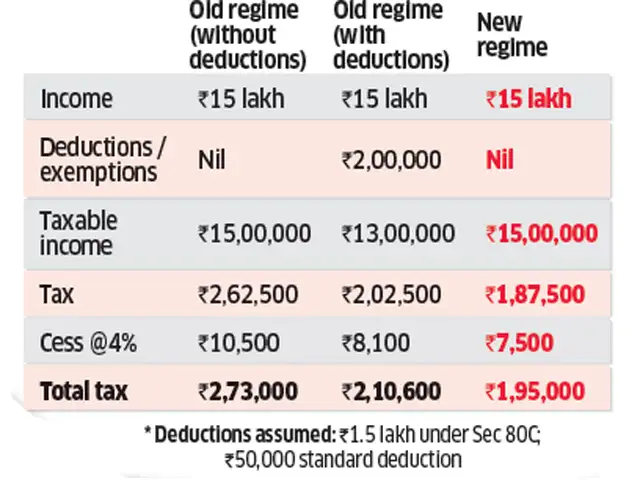
Even the claim that taxpayers will save tax under the new regime raises questions. Finance Minister Nirmala Sitharaman said in her budget 2020 speech that a taxpayer earning Rs 15 lakh will save Rs 78,000 in tax under the new regime. “A person earning Rs 15 lakh in a year and not availing any deductions and exemptions will pay only Rs 1.95 lakh tax as compared to Rs 2.73 lakh in the old regime,” said the Finance Minister.
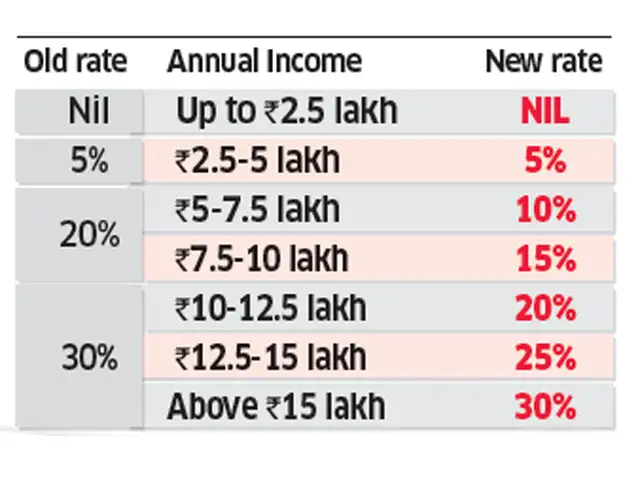
New income tax slabs and rates
No change in tax exemption given to incomes up to Rs 5 lakh in interim.

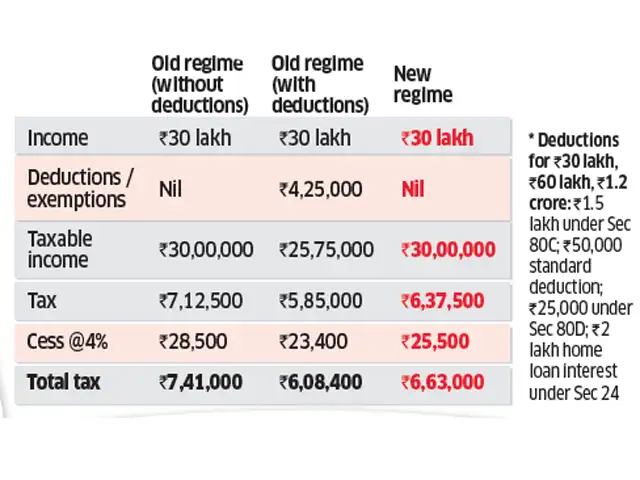
But this is without any deductions under various sections of Chapter VI-A. If the taxpayer claims deductions for Rs 2.5 lakh (Rs 50,000 standard deduction, Rs 1.5 lakh under 80C and Rs 50,000 contribution to NPS), his tax will not change. If he also claims house rent allowance (HRA) exemption or home loan interest deduction of Rs 2 lakh, his tax in the old regime would be lower by Rs 46,800 (see graphics).
Salaried taxpayers who opt for the new regime will have to forgo the standard deduction as well as the exemptions under chapter VI-A, including the HRA, investments under Section 80C, medical insurance premium and even the leave travel allowance which is tax free if claimed once in a block of two years.
What’s out
Some of the 70 exemptions and deductions you won’t get in new regime.
- Section 80C investments
- House rent allowance
- Housing loan interest
- Leave travel allowance
- Medical insurance premium
- Standard deduction
- Savings bank interest
- Education loan interest
What stays
Some 50 tax exemptions have been left untouched. These include.
- Standard deduction on rent
- Agricultural income
- Income from life insurance
- Retrenchment compensation
- VRS proceeds
- Leave encashment on retirement
To be fair, taxpayers will have the option to switch to the new tax structure. “This is a good move because taxpayers will be able to make the choice depending on their financial situation,” says Sudhir Kaushik, co-founder of Taxspanner. “Taxpayers who avail several exemptions and deductions such as house rent allowance and 80C deductions may not benefit from switching to the new system,” says Amit Maheshwari, India Tax Leader at Ashok Maheshwary & Associates.
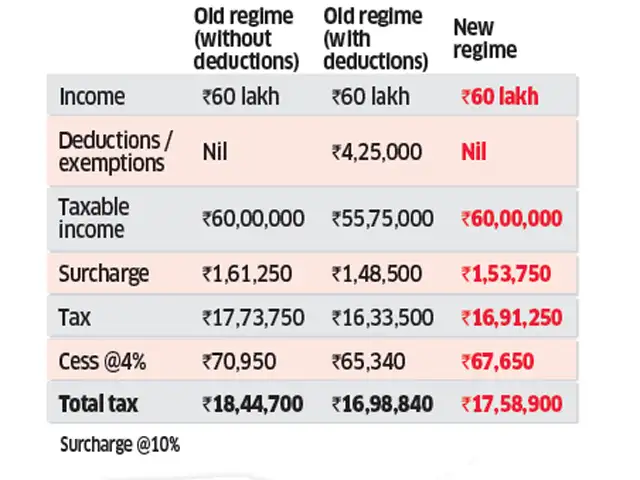
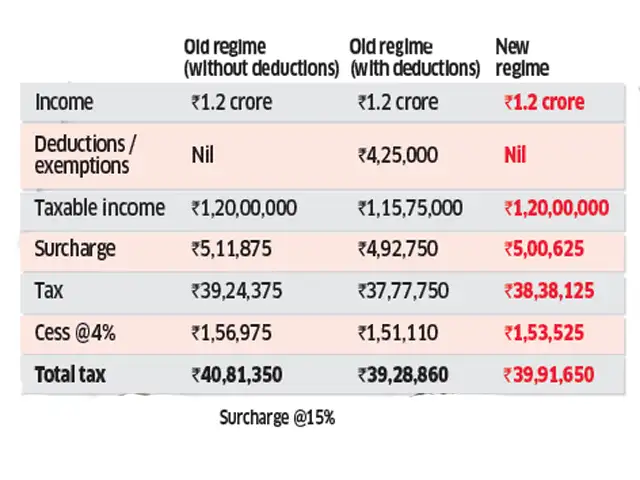
The budget has, however, left the surcharge on tax untouched. Taxpayers with income between Rs 50 lakh and Rs 1 crore will continue to pay 10% surcharge on the tax. The surcharge is 15% for income between Rs 1 crore and Rs 2 crore, 25% for between Rs 2 crore and Rs 5 crore and 37% for income over RS 5 crore. So taxpayers earning just below these threshold limits will not benefit if they forego the exemptions and move to the new tax regime.
Impact on taxpayers
Here’s how the new tax regime will affect the tax outgo of taxpayers at different income levels.
Income: Rs 15 lakh
Income: Rs 30 lakh
Income: Rs 60 lakh
Income: Rs 1.2 crore
In Union Budget 2020, Nirmala Sitharaman introduced a "simplified", optional regime with three new tax slabs. However, taxpayers can continue with the existing structure if that suits them more. Although the doing away of exemptions and deductions simplifies compliance, taxpayers who exploited deductions to the fullest may pay more tax under the new regime. The budget has tried to put more money in the hands of taxpayers by curtailing the incentives to save.
The tax exemption given to incomes up to Rs 5 lakh remains unchanged. Salaried taxpayers who opt for the new regime will have to forgo standard deduction as well as exemptions under chapter VI-A, including HRA, investments under Section 80C, medical insurance premium and even leave travel allowance which is tax free, if claimed once in a block of two years.

The Economic Times Business News App for the Latest News in Business, Sensex, Stock Market Updates & More.
The Economic Times News App for Quarterly Results, Latest News in ITR, Business, Share Market, Live Sensex News & More.




