
Presumptive taxation: Why some taxpayers could pay more tax under the new Income Tax Act
1/8
Presumptive taxation under the Income Tax Act, 2025: What's changing?
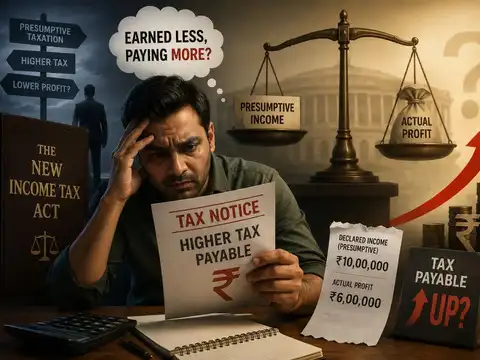
The new Income Tax Act consolidates the existing presumptive taxation provisions into a single Section 58. While turnover limits and presumptive income rates remain largely unchanged, the law introduces changes to deductions, loss adjustments and tax audit provisions that may have practical implications for eligible taxpayers.

2/8
Presumptive taxation: Who can opt for this simplified tax scheme?
The scheme continues to benefit eligible small businesses with turnover up to ₹3 crore and specified professionals with gross receipts up to ₹75 lakh, subject to prescribed conditions. Instead of maintaining detailed books of account, eligible taxpayers can declare income at the prescribed percentage of turnover or receipts.
3/8
Presumptive taxation deductions: Why your taxable income could increase
One of the biggest changes is that Section 58(4) restricts taxpayers from claiming losses, allowances or deductions against income computed under the presumptive taxation scheme. As a result, some taxpayers could end up with a higher taxable income and, consequently, a higher tax liability than under the earlier law.
Amazon Top Deals
POWERED BY

4/8
Section 87A rebate: How presumptive taxation changes could affect your tax bill
Under the earlier law, eligible taxpayers could generally adjust certain losses before calculating taxable income, which in some cases helped them qualify for the Section 87A rebate. Under the new Act, those adjustments may no longer be available, making it harder for some taxpayers to reduce their tax liability.

5/8
Presumptive taxation example: How a social media influencer could pay more tax
Consider a social media influencer with ₹3 crore of digital receipts and a ₹6 lakh short-term capital loss. Under the old law, the loss could generally reduce taxable income and potentially help the taxpayer qualify for the Section 87A rebate. Under the new law, the loss cannot be adjusted, leaving taxable income higher and increasing the tax liability.

6/8
Presumptive taxation and tax audit: Could more taxpayers face audit?
The language used in the new Act has raised concerns that some taxpayers falling within the presumptive taxation category could face tax audit if their actual profit is below the prescribed presumptive rate. Experts say this interpretation may increase compliance for some small businesses, although further clarification from the government is expected.
7/8
Income Tax Act, 2025: What hasn't changed under presumptive taxation?
The new law continues the existing turnover limits and presumptive income rates. Eligible businesses can still declare income at 6% or 8% of turnover, depending on the mode of receipts, while specified professionals can continue declaring 50% of gross receipts as presumptive income, subject to the prescribed conditions.

8/8
Presumptive taxation: What taxpayers should do before opting for the scheme
Although the presumptive taxation regime remains a simplified option, taxpayers should now carefully evaluate whether they may lose the benefit of deductions, loss set-off or tax rebates. Businesses, professionals, freelancers, consultants and content creators may benefit from reviewing the impact with a tax professional before opting for the scheme under the new law.