
Physical gold vs gold ETF: Which saves more tax when you sell your gold?

1/10
Physical gold vs gold ETF: Which is more tax-efficient for investors?
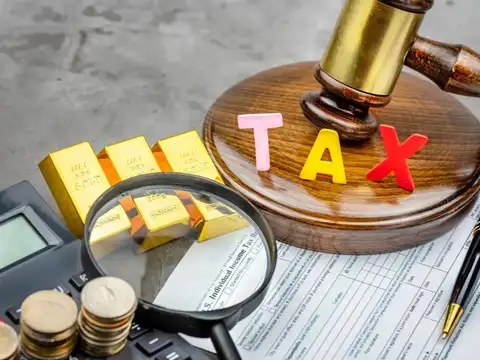
Buying gold this Diwali? Before choosing between jewellery, coins, bars or gold ETFs, look beyond the price of gold. The tax you pay when buying and selling can affect your final returns. Gold ETFs have a shorter holding period for long-term capital gains tax, while physical gold attracts GST at the time of purchase.
2/10
Physical gold tax: How much capital gains tax will you pay when selling?
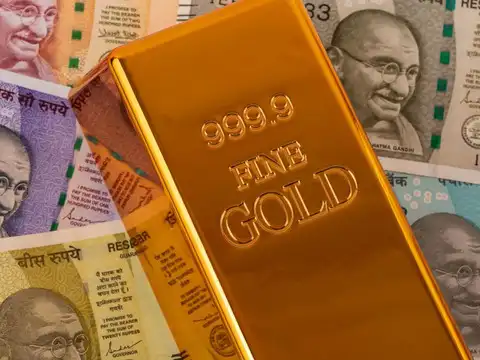
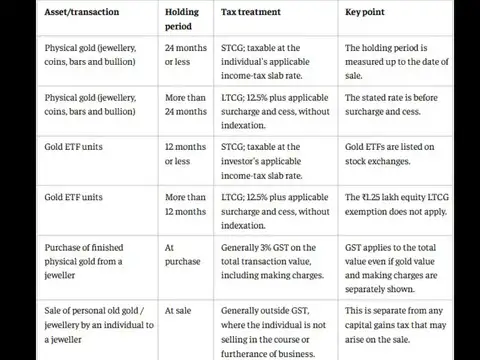
The tax on physical gold depends on how long you hold it. If you sell jewellery, coins or bars within 24 months of purchase, the profit is treated as short-term capital gains (STCG) and taxed at your applicable income-tax slab rate. If you sell after 24 months, the gain qualifies as long- term capital gains (LTCG) and is taxed at 12.5%, plus surcharge and cess, without indexation.

3/10
Physical gold: How much tax on a ₹4 lakh capital gain?
Suppose you buy physical gold worth ₹10 lakh and sell it after holding it for more than two years for ₹14 lakh. Your capital gain will be ₹4 lakh. Since the holding period exceeds 24 months, the gain will be taxed at 12.5%, plus applicable surcharge and cess, without indexation benefit.
4/10
Buying physical gold? Don't overlook the 3% GST
When you buy finished gold jewellery, coins or bars from a jeweller, you generally pay 3% GST on the total transaction value. This includes making charges, even when the gold value and making charges are separately mentioned on the invoice. This purchase cost can affect your overall investment returns.
5/10
Gold ETF taxation: When does your investment qualify for LTCG?
Gold ETFs have a shorter holding period for long-term capital gains tax compared with physical gold. If you sell gold ETF units within 12 months of purchase, the gains are treated as STCG and taxed at your applicable income-tax slab rate. If you hold them for more than 12 months, the gains qualify as LTCG and are taxed at 12.5%, plus surcharge and cess, without indexation.
6/10
Physical gold vs gold ETF: Check the capital gains tax difference
Gold ETFs qualify for LTCG treatment after 12 months, compared with more than 24 months for physical gold. This gives ETFs an advantage in terms of the holding period required for long- term capital gains taxation.

7/10
Gold ETF investors cannot claim the ₹1.25 lakh LTCG tax exemption
The ₹1.25 lakh annual LTCG exemption available for specified equity shares and equity- oriented mutual funds does not apply to gold ETFs. So even though gold ETFs qualify for LTCG taxation after a shorter holding period, investors cannot use this equity-related exemption to reduce their taxable gains.

8/10
Selling old gold jewellery? Do you have to pay GST?
If you sell your personal old gold or jewellery to a jeweller, the transaction is generally outside the scope of GST, provided you are not selling it in the course or furtherance of business. However, this does not automatically mean the sale is free of tax. Capital gains tax may still apply depending on the circumstances.

9/10
Selling inherited gold? Why should you preserve purchase documents?
Keep purchase invoices for physical gold. If the jewellery is inherited or gifted, maintain documents establishing the inheritance or gift and, wherever possible, the original owner's acquisition details. These records can help establish the source of the gold and determine its acquisition cost when calculating capital gains at the time of sale.
10/10
Physical gold or gold ETF: Which should you choose this Diwali?
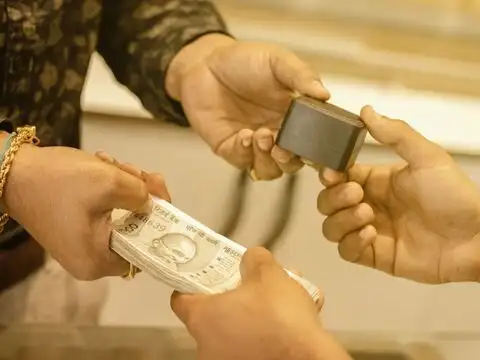
Gold ETFs offer a shorter holding period for LTCG taxation and do not involve the 3% GST charged on buying finished physical gold. Physical gold, however, may suit those who want jewellery or tangible ownership. Your choice should depend on whether you are buying gold for personal use, investment gains or both.