
ITR filing 2026: July 31 isn't the deadline for everyone; check 5 other key dates

1/6
July 31 is not the ITR filing deadline for every taxpayer
The Income Tax Return (ITR) filing deadline for most salaried individuals is July 31, 2026. However, different categories of taxpayers have different due dates depending on factors such as the source of income, audit requirements and transfer pricing provisions.

2/6
Who is required to file an ITR?
Apart from taxpayers with taxable income, certain individuals are required to file an ITR if they meet specified conditions under the Income-tax Act. These include spending Rs 2 lakh or more on foreign travel, paying Rs 1 lakh or more as electricity bills during the financial year, or depositing Rs 1 crore or more in current accounts, among other prescribed conditions.

3/6
New filing relief for non-audit businesses and professionals
A key change in AY 2026-27 is that non-audit businesses and professionals filing ITR-3 or ITR-4 have been given an additional month to file their returns. They can now file their ITR up to August 31, 2026, while salaried taxpayers continue to have a July 31 deadline.
Amazon Top Deals
POWERED BY

Crompton Ozone 75 Litres Desert Air Cooler for home | Large & Easy Clean Ice Chamber | 4-Way Air Deflection | High Density Honeycomb Pads | Everlast Pump | Auto Fill| 3 Year Brand Warranty
₹9,798Buy Now43%
OFF

LG 32 L Convection Microwave Oven (MC3286BRUM, Black, 360° Motorised Rotisserie for Bar-be-queing, 301 Auto Cook Menu, Stainless steel cavity, Indian Cuisine, Tandoor Se, Steam Clean & Diet Fry)
₹19,340Buy Now19%
OFF
4/6
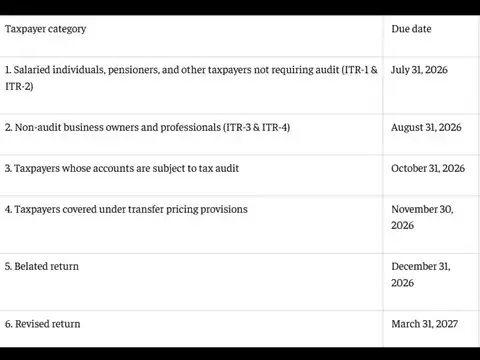
ITR filing due dates for different taxpayers
The table above shows the applicable ITR filing deadlines for different taxpayer categories in AY 2026-27.

5/6
What happens if you miss the ITR deadline?
Under Section 234F of the Income Tax Act, 1961, a late filing fee of up to Rs 5,000 may be levied for filing the return after the due date. For taxpayers with taxable income up to Rs 5 lakh, the maximum late fee is Rs 1,000. The fee can apply even if no tax is payable.

6/6
Why is filing an ITR important?
According to the Income Tax Department, filing an ITR is not only a legal obligation but also serves as proof of income and tax compliance. A filed return can strengthen your credit profile and may be required while applying for loans, visas and other financial services.