
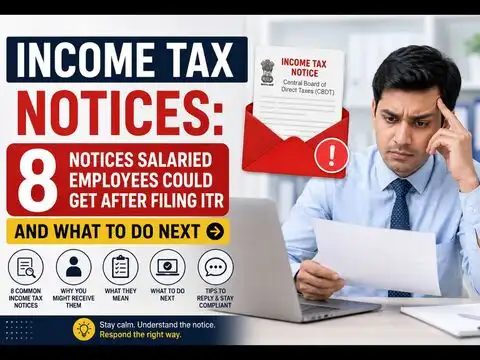
Income tax notices: 8 notices salaried employees could get after filing ITR and what to do next
1/9
Income tax notice after ITR filing: Don't panic, first check what it means
Receiving an income tax notice does not automatically mean you have done something wrong. Some notices are procedural, system-generated or simply ask you to clarify a discrepancy. The important thing is to verify the notice, understand why it was issued and respond within the prescribed deadline. For complex scrutiny or reassessment matters, professional tax advice may help.

2/9
Section 143(1)(a) income tax notice: What does a tax mismatch mean?
This notice may be issued when the Income Tax Department identifies a possible mismatch or apparent error while processing your return. The issue could involve deductions, tax credits or information reported by your employer, bank or another institution. Check the proposed adjustment against your records. If it is incorrect, submit an online response with supporting documents before the deadline.
3/9
Section 139(9) income tax notice: What if your ITR is defective?
A notice under Section 139(9) means the department has found your return to be defective. Missing information, incomplete disclosures or other prescribed defects can trigger it. Read the notice carefully, identify what needs correction and submit the corrected return within the specified period. If you fail to rectify the defect within the prescribed time, your ITR may be treated as invalid.
Amazon Top Deals
POWERED BY

Crompton Ozone 75 Litres Desert Air Cooler for home | Large & Easy Clean Ice Chamber | 4-Way Air Deflection | High Density Honeycomb Pads | Everlast Pump | Auto Fill| 3 Year Brand Warranty
₹9,798Buy Now43%
OFF

LG 32 L Convection Microwave Oven (MC3286BRUM, Black, 360° Motorised Rotisserie for Bar-be-queing, 301 Auto Cook Menu, Stainless steel cavity, Indian Cuisine, Tandoor Se, Steam Clean & Diet Fry)
₹19,090Buy Now20%
OFF

4/9
Section 142(1) income tax notice: When does the department seek documents?
The Income Tax Department may issue a Section 142(1) notice when it needs additional information, documents or explanations to complete an assessment. It can also require a taxpayer to file an ITR where one has not been filed. Respond through the e-proceedings portal within the given timeline and provide complete, relevant documents to support your explanation.

5/9
Section 143(2) income tax notice: What happens when ITR is selected for scrutiny?
A Section 143(2) notice means your return has been selected for scrutiny. The department may examine whether your reported income, deductions, exemptions and other tax positions are correct. This is more serious than a routine processing communication. Taxpayers should respond to every query within the prescribed timeline and provide relevant supporting evidence during the assessment proceedings.

6/9
Section 148 income tax notice: What if the department suspects escaped income?
A Section 148 notice relates to proposed reassessment where the Assessing Officer believes income may have escaped assessment, subject to applicable conditions and safeguards. Taxpayers should carefully examine the basis of the notice, file the return as required and provide a detailed response. Because reassessment proceedings can be complex, seeking professional tax advice may be appropriate.

7/9
Section 245 income tax notice: Can your tax refund be adjusted against old dues?
A Section 245 notice is issued when the department proposes to adjust your tax refund against an outstanding demand from another assessment year. First verify whether the demand is valid and unpaid. If it is correct, the adjustment can be accepted. If you have already paid the amount or dispute the demand, file an online objection with appropriate supporting evidence.

8/9
Section 154 income tax notice: What if your tax order has an obvious error?
Section 154 deals with rectification of a mistake apparent from the record, such as an obvious clerical or arithmetical error in an order. Review the proposed correction carefully. If the error is genuine, the rectification can be accepted. If you disagree with the proposed change, submit your objections along with reasons and relevant supporting documents.

9/9
Section 263 income tax notice: When can the Commissioner revise an assessment?
A Section 263 notice may arise when the Commissioner believes an Assessing Officer's order is erroneous and prejudicial to the interests of the Revenue. This is a serious proceeding. The taxpayer should submit a detailed written explanation addressing why the assessment order is neither erroneous nor prejudicial, supported by relevant legal and factual evidence. Professional representation is generally advisable.