
Debt mutual funds, bonds tax rules: How much tax will you pay on gains in Tax Year 2026?

1/7
Debt funds and bonds: How will your capital gains be taxed in Tax Year 2026?
Investing in debt mutual funds, bonds or debentures? The tax you pay on gains depends on the product, its holding period and when you sell it. With different rules applying to listed bonds, unlisted bonds, market-linked debentures and debt mutual funds, here is a breakdown of the capital gains tax framework for Tax Year 2026.
2/7
Debt investment taxation: What changed after July 23, 2024?
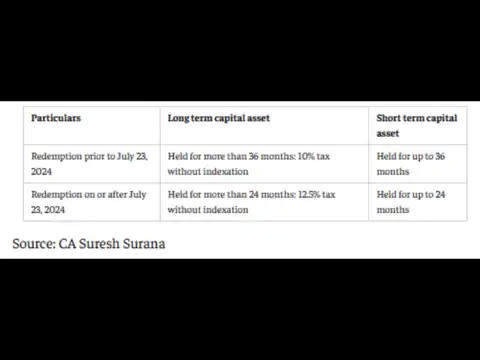
The capital gains tax rules for debt assets changed from July 23, 2024. For relevant debt assets, the long-term holding period was reduced from more than 36 months to more than 24 months. The LTCG tax rate also changed from 10% to 12.5%, without indexation benefit. The applicable treatment depends on when the asset is sold.

3/7
Debt mutual funds: Why holding them longer may not reduce your tax
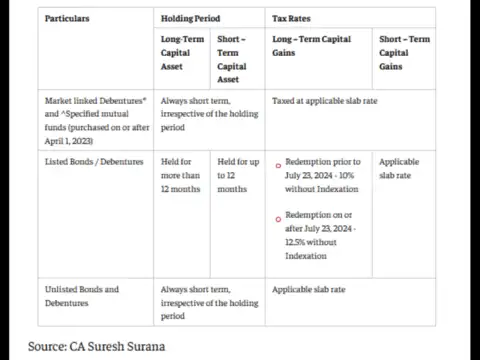
Specified mutual funds purchased on or after April 1, 2023, are treated as short-term capital assets irrespective of how long they are held. Their gains are taxed at the investor's applicable income-tax slab rate. This category includes funds investing more than 65% of their proceeds in debt and money market instruments, as well as qualifying funds investing in units of such funds.

4/7
Market-linked debentures: Why gains are always taxed at your slab rate
Market-linked debentures are treated as short-term capital assets irrespective of their holding period. This means gains are taxed at the investor's applicable income-tax slab rate. These securities have an underlying debt component, but their returns are linked to market performance of other securities or indices.
5/7
Listed vs unlisted bonds: How does the holding period affect taxation?
Listed bonds and debentures qualify as long-term capital assets when held for more than 12 months. If held for 12 months or less, gains are short-term and taxed at the applicable slab rate. Unlisted bonds and debentures, however, are always treated as short-term capital assets under the rules outlined in the article, irrespective of the holding period.

6/7
Debt investment gains: Can you claim the Section 87A tax rebate?
No. Section 87A tax rebate is not available against capital gains tax, whether the gains are short-term or long-term. Therefore, even if your total income is below ₹12 lakh under the new tax regime, you will still have to pay the applicable tax on taxable capital gains. The capital gains tax framework applies irrespective of the tax regime you choose.

7/7
Debt fund and bond losses: Can you carry forward capital losses?
You can set off short-term capital losses against both short-term and long-term capital gains. Long-term capital losses, however, can be adjusted only against long-term capital gains. If losses remain unadjusted, they can be carried forward for up to eight tax years, provided you file your income tax return within the prescribed due date.