
EV Charging: Home vs Public, where will you spend less
1/8
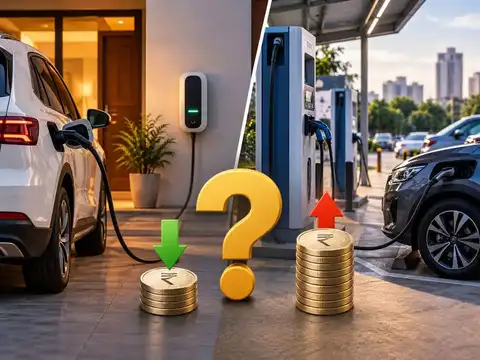
Home Charging vs Public Charging: Which Is Actually Cheaper for Your EV?
Buying an EV can cut your fuel bill—but where you charge it can make a big difference to your running costs.
Charging at home is usually cheaper. Public chargers, however, can save time when you’re travelling or need a quick top-up.
So, how much can you actually save?
Charging at home is usually cheaper. Public chargers, however, can save time when you’re travelling or need a quick top-up.
So, how much can you actually save?
2/8
The cheapest charger may be sitting at home
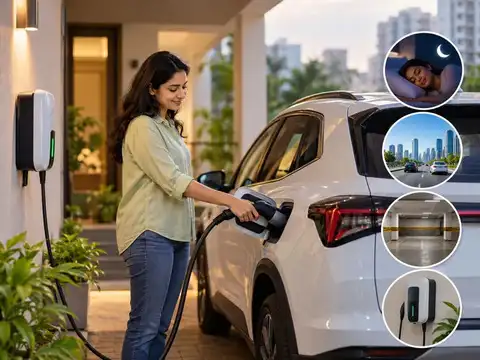
For everyday EV use, home charging is generally the more economical option.
You pay your regular electricity tariff rather than a public charging operator’s tariff.
That makes home charging especially useful if:
*Your car is parked overnight
*Most of your driving is within the city
*You have dedicated parking
*You can install a suitable home charger
Think of it like cooking at home versus ordering food—convenience comes at a price.
You pay your regular electricity tariff rather than a public charging operator’s tariff.
That makes home charging especially useful if:
*Your car is parked overnight
*Most of your driving is within the city
*You have dedicated parking
*You can install a suitable home charger
Think of it like cooking at home versus ordering food—convenience comes at a price.
3/8
Public charging can cost more—but you’re buying convenience
Public charging isn't necessarily “expensive” without reason.
You’re paying for access to:
Faster charging + charging infrastructure + maintenance + convenience
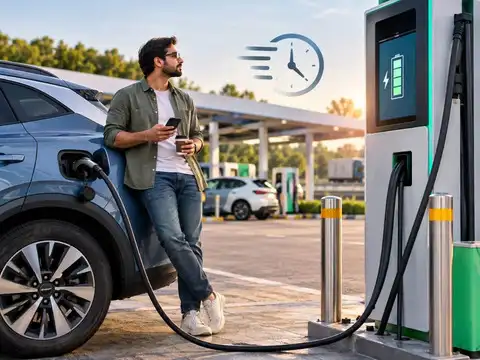
DC fast chargers can add significant range in a relatively short stop, making them useful on road trips.
The trade-off: less waiting, but potentially a higher cost.
You’re paying for access to:
Faster charging + charging infrastructure + maintenance + convenience
DC fast chargers can add significant range in a relatively short stop, making them useful on road trips.
The trade-off: less waiting, but potentially a higher cost.
Amazon Top Deals
POWERED BY

4/8
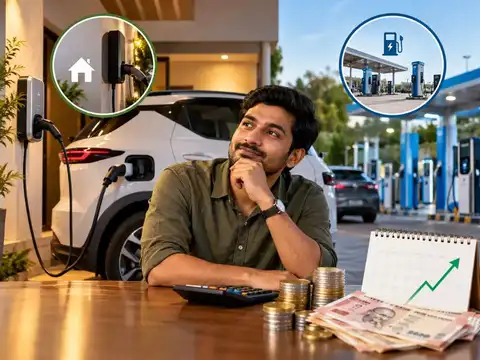
Let’s do the math
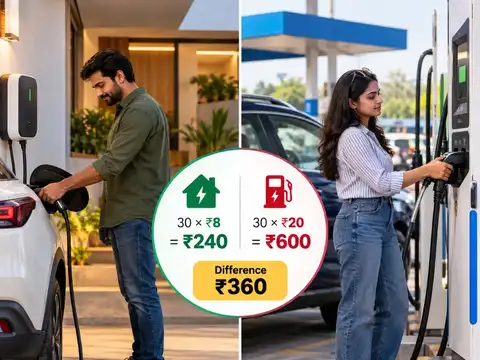
Imagine your EV needs 30 kWh to recharge.
If your effective home electricity cost is ₹8 per kWh, the energy cost would be:
30 × ₹8 = ₹240
At a hypothetical public charging rate of ₹20 per kWh:
30 × ₹20 = ₹600
Difference: ₹360
That’s why charging location can matter over thousands of kilometres.
(Illustrative calculation. Actual tariffs may vary)*.
If your effective home electricity cost is ₹8 per kWh, the energy cost would be:
30 × ₹8 = ₹240
At a hypothetical public charging rate of ₹20 per kWh:
30 × ₹20 = ₹600
Difference: ₹360
That’s why charging location can matter over thousands of kilometres.
(Illustrative calculation. Actual tariffs may vary)*.
5/8
But don't compare only the ₹/kWh number
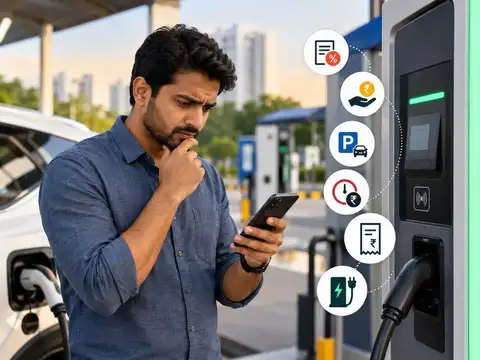
The price displayed on a public charger isn't always the entire story.
Depending on the operator and location, check for:
*GST
*Session/service charges
*Parking charges
*Idle fees
*Minimum charges
*Different AC and DC rates
Always check the final amount before assuming one charger is cheaper.
Depending on the operator and location, check for:
*GST
*Session/service charges
*Parking charges
*Idle fees
*Minimum charges
*Different AC and DC rates
Always check the final amount before assuming one charger is cheaper.
6/8
What does this mean for your monthly EV bill?
Suppose you drive 1,500 km a month and your EV consumes around 0.15–0.20 kWh per km.
Your monthly energy requirement could be roughly:
225–300 kWh
If most of that energy comes from home charging, your monthly charging expense could be considerably lower than relying heavily on public fast chargers.
Small differences per kWh add over a year.
Your monthly energy requirement could be roughly:
225–300 kWh
If most of that energy comes from home charging, your monthly charging expense could be considerably lower than relying heavily on public fast chargers.
Small differences per kWh add over a year.
7/8
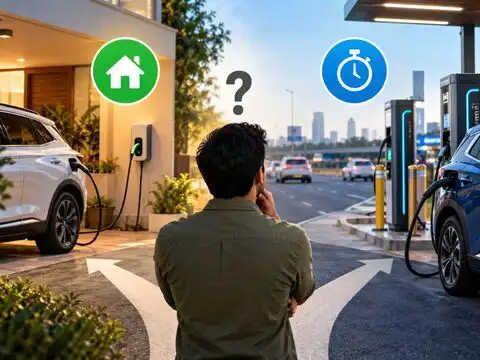
So, when should you use each one?
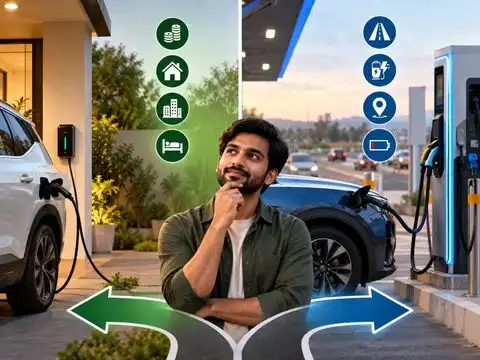
HOME CHARGING → For your everyday driving
Lower running cost
Convenient overnight charging
Ideal for regular city commutes
No need to make a separate charging stop
PUBLIC CHARGING → For when you need speed or flexibility
Long road trips
Quick top-ups
No home-charging access
Unexpected low-battery situations
The smart strategy?
Charge at home whenever practical. Use public chargers when you need them.
Lower running cost
Convenient overnight charging
Ideal for regular city commutes
No need to make a separate charging stop
PUBLIC CHARGING → For when you need speed or flexibility
Long road trips
Quick top-ups
No home-charging access
Unexpected low-battery situations
The smart strategy?
Charge at home whenever practical. Use public chargers when you need them.
8/8
The bottom line
Home charging saves money. Public charging saves time.
For most EV owners with access to home charging, home charging makes more sense for everyday use.
Public fast chargers become valuable when time, distance, and convenience matter more than the lowest possible charging cost.
Before buying an EV, ask yourself one question:
“Where will I charge it most of the time?”
Because the answer can have a bigger impact on your running cost than you might expect.
For most EV owners with access to home charging, home charging makes more sense for everyday use.
Public fast chargers become valuable when time, distance, and convenience matter more than the lowest possible charging cost.
Before buying an EV, ask yourself one question:
“Where will I charge it most of the time?”
Because the answer can have a bigger impact on your running cost than you might expect.