
Will you lose cashback on UPI payments if MDR is introduced? Know what the proposal could mean for users
1/8
UPI above ₹2,000: Will you really have to pay extra?
Plenty of people woke up to the same worry: is UPI no longer free once a payment crosses ₹2,000? The short answer from the Finance Ministry is no. UPI remains free for you as a customer. What has changed is a charge called the Merchant Discount Rate, or MDR, on certain larger payments to merchants. It is not something customers are supposed to pay. Swipe to see who it affects and who it doesn’t.
2/8
Sending money to family or friends? Nothing changes
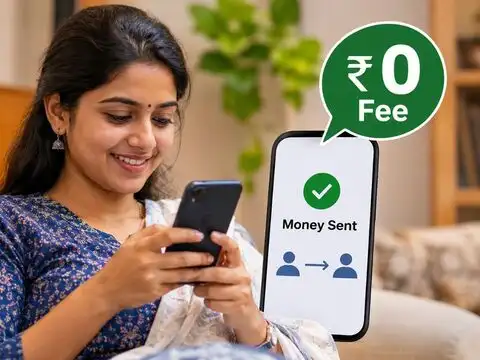
If you are paying another person, you can ignore the headlines. UPI stays free for person-to-person payments, whatever the amount. Send ₹1,000, ₹5,000 or ₹50,000 and there is no fee. These P2P transfers make up about 70% of the total value moved through UPI, and the government says they stay completely outside the new MDR framework.
3/8
Shop payments up to ₹2,000 are still free
Paying a merchant works a little differently, but the everyday stuff is safe. Merchant payments up to ₹2,000 continue to be free. Think groceries, a quick lunch, an auto ride, a recharge. According to the government, around 96% of all merchant UPI transactions will not be affected, either because they fall under ₹2,000 or because the shop qualifies for zero MDR.
4/8
So where does the new 0.4% fee actually apply?
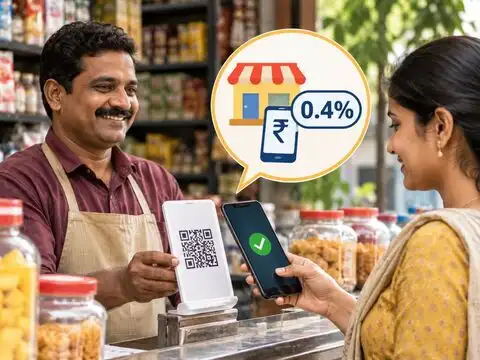
The new MDR applies only to specified person-to-merchant transactions above ₹2,000. The rate is 0.4%, and it is capped at ₹300 for payments of ₹75,000 and above. Small merchants who receive up to ₹1 lakh a month through UPI QR codes under the P2PM category will keep getting zero MDR, so the corner shop is not the target here.
5/8
₹3,000, ₹50,000, ₹1 lakh: the real numbers
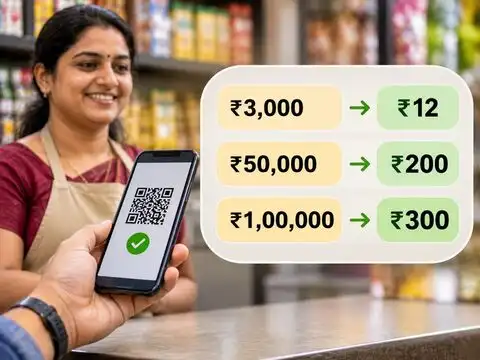
Here is how the math plays out. On a ₹3,000 payment, the MDR comes to ₹12. On ₹50,000, it is ₹200. On ₹1 lakh, the calculation would normally be ₹400, but the ₹300 cap kicks in. The key point is that the government does not expect these amounts to be added to your bill. The fee sits within the payment system, between the merchant and the bank.
6/8
Railways, fuel, insurance: a flat ₹5 instead
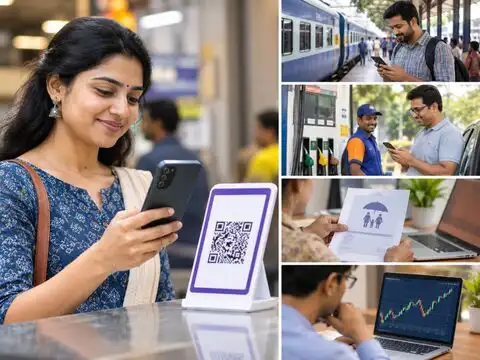
Some essential sectors get their own, much lower rate. For railways, telecom, insurance, fuel and agricultural inputs, payments above ₹2,000 attract a flat MDR of just ₹5. Payments linked to mutual funds, securities and stockbrokers carry an MDR of 0.02%, again capped at ₹300. So your train ticket, petrol fill-up or insurance premium is treated far more lightly than a big-ticket retail purchase.
7/8
Using a RuPay credit card on UPI? Read this
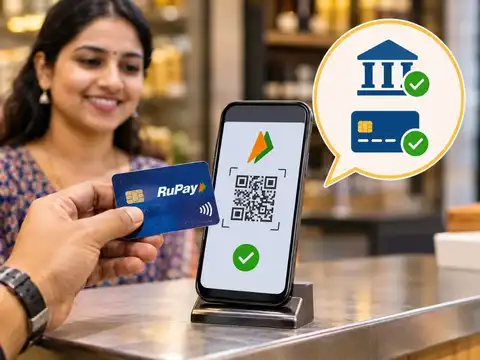
The new MDR framework covers direct bank-account-to-merchant UPI payments. Credit-linked payments, including RuPay credit cards on UPI, follow separate card rules. So the 0.4% should not be read as an automatic extra charge on every credit-card UPI payment above ₹2,000. These transactions involve credit from the card issuer and stay under existing credit regulations. The thing to check is the source of funds: bank account or credit line.

8/8
What about cashback and reward points?
Free UPI does not mean guaranteed rewards. Often the cashback is a promotional benefit from apps, banks or merchants, and it varies by transaction. One app may give cashback, another may offer coupons, scratch cards or points. Minimum spends, eligible merchants and validity periods often apply. The new MDR framework neither promises nor removes any of these, so read the terms of your rewards programme before choosing how to pay. Crossing ₹2,000 doesn’t make UPI chargeable for you.