
Old gold jewellery value: How much is your grandmother’s gold worth today?
1/8
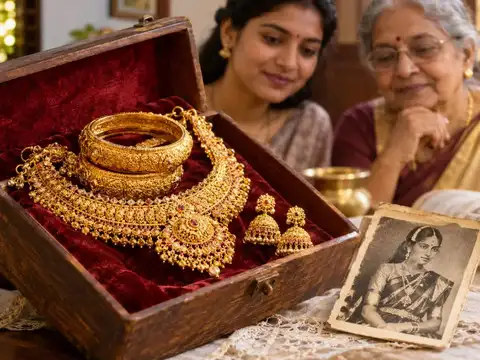
That old gold in your family could be worth a fortune
The necklace your grandmother wore at her wedding or the bangles she passed down may be worth much more today than your family realises. With gold prices having risen over the years, old jewellery can represent a valuable family asset. But the amount you receive when selling it may be very different from the value you have in mind. Purity, actual gold weight and the buyer’s deductions can all affect the final payout.
2/8
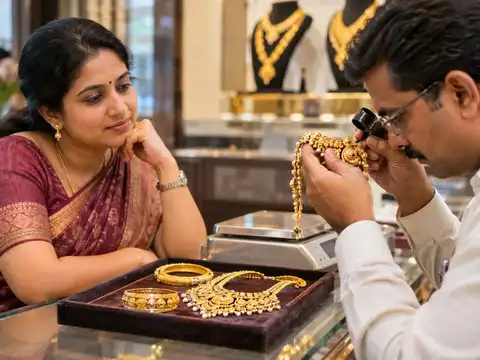
The gold rate is only the beginning
The day’s gold rate gives you a starting point, not a guaranteed selling price. A jeweller needs to establish the purity of your ornaments and the weight of the gold they contain. Stones, beads, threads and other non-gold components may be excluded from the calculation. Even two necklaces that look similar can have different values if their purity or gold content differs.
3/8
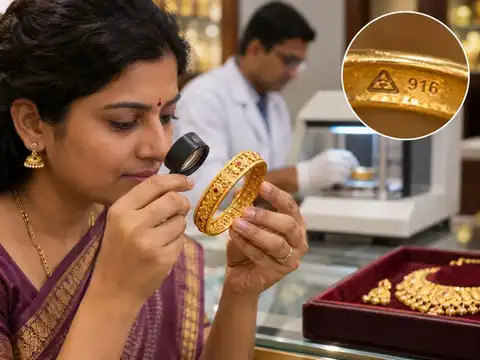
Check the purity before you accept an offer
Older jewellery may not have the purity you expect, particularly if it has been repaired or modified over the years. For reference, 22-carat gold is marked 916, indicating 91.6% gold, while 18-carat gold is marked 750, indicating 75% gold. If your jewellery carries a hallmark, check its details. You can verify a six-character HUID through the BIS CARE app. For an independent assessment, a BIS-recognised Assaying and Hallmarking Centre can test consumer jewellery for a fee.
Bureau of Indian Standards+1
Bureau of Indian Standards+1
4/8
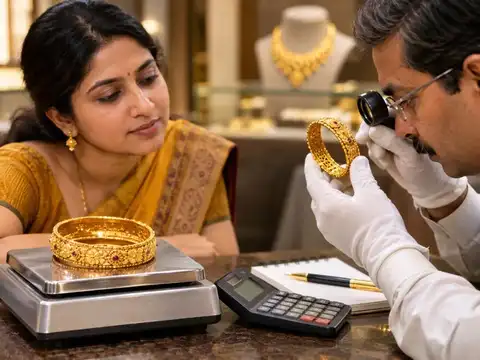
Here’s how to estimate your old gold’s value
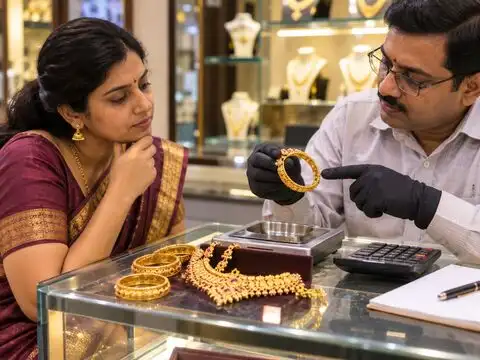
Consider an illustrative example. Suppose your grandmother’s bangles weigh 30 grams in total, and testing establishes that they are 22-carat gold. If the entire 30 grams is gold jewellery with no stones or other components to exclude, the pure-gold equivalent is approximately 27.48 grams.
The calculation is:
Total gold jewellery weight: 30 grams
Purity: 91.6%
Pure-gold equivalent: 30 × 0.916 = 27.48 grams
To estimate the metal value, multiply 27.48 grams by the applicable pure-gold rate per gram. The actual amount offered may differ because the buyer may use a different rate basis and apply disclosed deductions or charges.
This is an illustrative calculation, not a live valuation or a guaranteed selling offer.
5/8
Why the final offer may be lower than you expect
A jeweller’s offer may differ from your estimate because of the assessed purity, net gold weight, applicable buying rate and the buyer’s pricing policy. If the jewellery contains stones or other non-gold parts, their weight may be deducted. Ask the buyer to explain the calculation, including any testing, melting or other charges that apply. Compare the final payable amount rather than focusing only on the advertised gold rate.
6/8
Don’t melt antique jewellery before checking its value
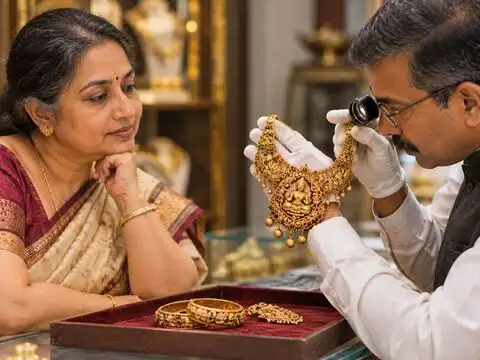
An old ornament can be worth more than the gold it contains. Intricate craftsmanship, age, rarity and cultural significance may make a piece interesting to an antique or heritage jewellery specialist. A routine gold-buying assessment may not account for these qualities. Once a necklace or bangle is melted, its original design is lost. If the piece is distinctive or has been in your family for generations, seek a specialist opinion before selling it for its metal value.
7/8
Sell, exchange or keep? Think before you decide
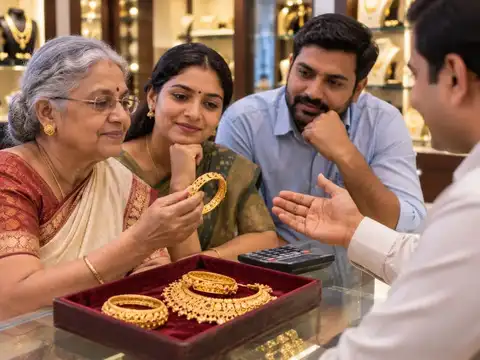
Selling can make sense when you need money, while exchanging old jewellery may suit a family planning to buy new ornaments. But compare the old gold’s valuation with the complete cost of the replacement, including making charges, taxes and other applicable costs. Keeping the jewellery may be preferable if there is no urgent financial need or if it has deep sentimental value. Discuss ownership and family expectations before making a decision that cannot easily be reversed.
8/8
Three checks to make before selling your grandmother’s gold
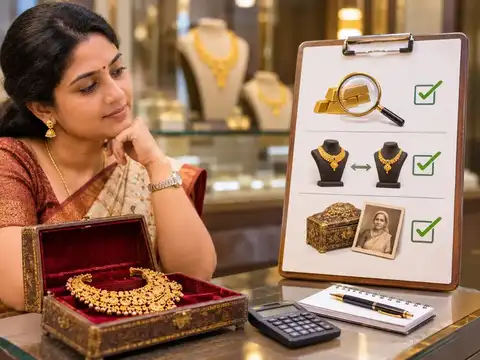
Before you part with a family heirloom, remember three things. First, establish the purity and net gold weight. Second, obtain comparable offers from at least two reputable jewellers and ask for a clear breakdown of the final amount. Third, consider whether the ornament has antique, cultural or sentimental value beyond its gold content.
Keep written records of the assessment and payment. If you are unsure about the purity, consider independent testing before accepting an offer.
Your grandmother’s gold may be a valuable asset. Knowing exactly what you own—and what a buyer is offering—is the best way to protect its value.
Keep written records of the assessment and payment. If you are unsure about the purity, consider independent testing before accepting an offer.
Your grandmother’s gold may be a valuable asset. Knowing exactly what you own—and what a buyer is offering—is the best way to protect its value.