
Not the government: The hidden tax draining India's middle class money

1/8
You're paying a tax nobody told you about
Every time you upgrade your car, phone or vacation to "match" your income bracket, you're paying what economists now call the Social Approval Tax. It's not collected by the government, it's collected by your peer group, your Instagram feed, and your own fear of looking like you haven't "made it." And for India's middle class, this invisible tax is quietly eating the raise you worked so hard to get.

2/8
The wealth drain with a very polite name
The Social Approval Tax is the money you spend to look a certain way, not to live a certain way. A new SUV on EMI, the latest iPhone, a resort weekend picked purely because it photographs well — none of it is really about utility. It's about signaling status to relatives, colleagues and followers. The catch: the moment your salary rises, this "tax" rises with it, often consuming the entire hike before it ever reaches your savings account.
3/8
You can afford the EMI. You can't afford the car
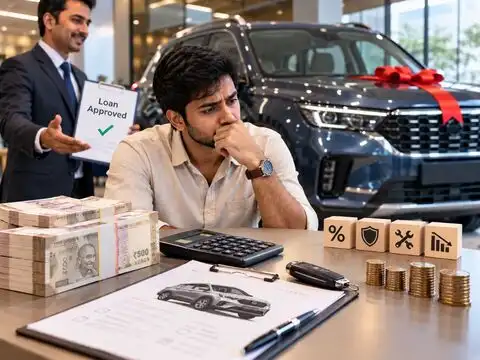
Banks make this trap easy. The moment your salary jumps, so does your pre-approved loan limit. A ₹40 lakh SUV suddenly feels "doable" at ₹60,000 a month. But affording the monthly payment isn't the same as affording the asset — you're locking yourself into 5-7 years of interest, insurance and depreciation on something that loses a third of its value the day you drive it out of the showroom.
Amazon Top Deals
POWERED BY

Crompton Ozone 75 Litres Desert Air Cooler for home | Large & Easy Clean Ice Chamber | 4-Way Air Deflection | High Density Honeycomb Pads | Everlast Pump | Auto Fill| 3 Year Brand Warranty
₹9,798Buy Now43%
OFF

LG 32 L Convection Microwave Oven (MC3286BRUM, Black, 360° Motorised Rotisserie for Bar-be-queing, 301 Auto Cook Menu, Stainless steel cavity, Indian Cuisine, Tandoor Se, Steam Clean & Diet Fry)
₹18,690Buy Now22%
OFF

4/8
The Instagram effect: Your vacation was chosen by your followers, not you
Social media has turned everyday spending into a performance. Trips get picked for the photo, not the experience. Restaurants get chosen for the aesthetic, not the food. This "curated life" tax means families routinely overspend on things designed to be seen — while the boring, wealth-building stuff, like a SIP or an emergency fund, gets postponed indefinitely because it doesn't make a good story.

5/8
The ₹15,000 you "saved" could have been ₹40 lakh
Here's the real damage: it's not what you spend, it's what that money could have become. A ₹15,000 monthly car EMI, invested instead in an index fund over 20 years, could realistically grow into ₹1 crore or more with compounding. The social approval tax isn't just an expense, it's a silent transfer of your future wealth to your present image.
6/8
The richer you get, the poorer you feel
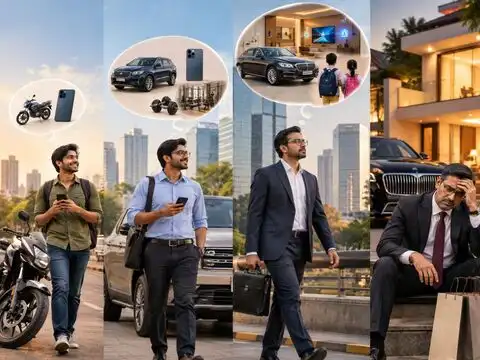
At entry level, spending stays close to basic needs, a reliable bike or a used car, a decent phone. The moment a promotion hits, upgrades follow fast: a financed SUV, a flagship phone, a premium gym. By senior management, it's a leased luxury car, a smart home and expensive schooling for the kids to match the "new" social tier. Income keeps climbing, but so does the tax, often faster than the raise itself.

7/8
High income, zero net worth
This is how families end up earning ₹2 lakh a month and still living one job loss away from a crisis. Every rupee of extra income is already spoken for by EMIs, subscriptions and "keeping up" costs. Net worth stays flat even as the salary slip looks impressive — because impressive salary slips don't protect you, savings do.

8/8
How to break the cycle: Save the raise before you see it
The fix is simple, even if it's not easy: the moment a salary hike lands, automatically move 50% of the increase straight into investments before it ever touches your spending account. Then ask one question before every big purchase — am I buying this for me, or for who's watching? That single habit is often the difference between a lifestyle and a legacy.