
How the middle class lose their savings to WhatsApp investment scams, and 5 red flags to spot early
1/9
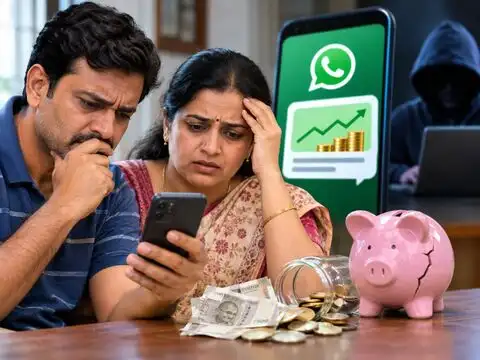
The scam that empties a family’s savings starts with one WhatsApp message
Nine short slides on how investment fraud really works in India, the warning signs that give it away, and exactly what to do if you have already paid.
2/9
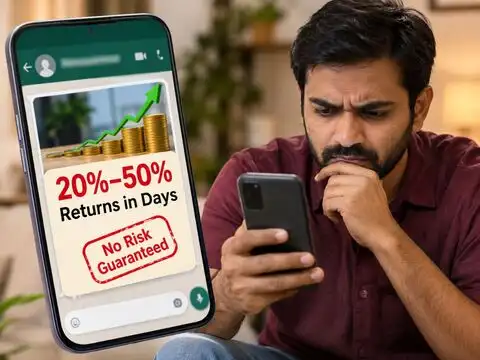
20% in a few days? That offer was never meant to be real
Every scam needs a hook, and the hook is nearly always the same: a return so big that you stop asking questions. Honest investments grow slowly, over years. Nobody can promise to double your money in a few weeks, and the people who try are counting on you to feel lucky instead of careful.
The promise: Guaranteed returns of 20% to 50% in days, with “no risk”. Real investing always carries some risk, so a guarantee is a lie.
The delivery: WhatsApp groups, Telegram channels, cold calls and even deepfake videos of people you trust.
The promise: Guaranteed returns of 20% to 50% in days, with “no risk”. Real investing always carries some risk, so a guarantee is a lie.
The delivery: WhatsApp groups, Telegram channels, cold calls and even deepfake videos of people you trust.
3/9
Inside the WhatsApp investment group trap that catches smart people
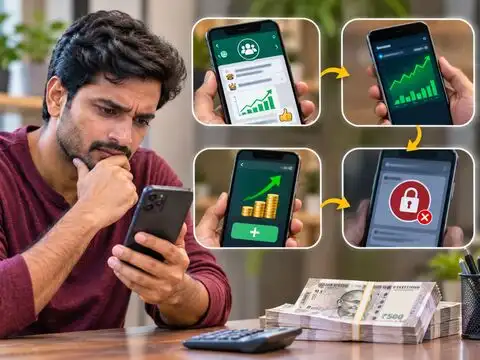
It rarely feels like a scam while it is happening. It feels like a friendly group, a few quick wins and a chance you don’t want to miss. Here is how it usually plays out.
You get added: A stranger adds you to an investment-tips group where members cheer and post screenshots of big profits.
You start small: A fake app or website shows your first deposit growing fast. The dashboard is made up, but it looks real.
You put in more: Encouraged by the “profit” on screen, you send a much bigger amount, often to a personal bank account.
The door shuts: When you try to withdraw, new fees appear, or the group goes quiet and you get blocked.

4/9
Ponzi schemes, fake officials and copycat apps: 4 more ways they get in
The WhatsApp group is only one door. Fraudsters use whatever looks most trustworthy to you, from a government badge to a slick app.
Ponzi schemes: Old investors get paid with new investors’ money. It looks like profit until the new money dries up.
Get-rich-quick offers: Job-cum-investment offers by SMS or DM that ask you to put money in first before you earn anything.
Fake officials: Callers pose as staff from a real bank or a regulator and press you to act on a made-up problem.
Fake sites and apps: Copycat websites and trading apps with invented profit screens, built only to take your depos
5/9
5 warning signs you can spot in under 10 seconds
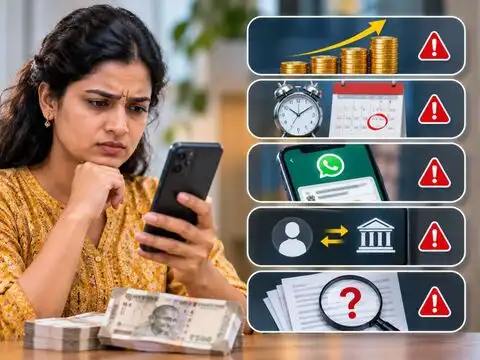
You don’t need to be a finance expert to catch a scam. If an offer shows even one of these, stop and step away before you reply or pay.
Guaranteed returns: Doubling your money in weeks sounds great and is almost certainly false.
Pressure to hurry: A “limited-time window” exists to stop you from thinking it over.
Offers from strangers: Tips or schemes that arrive by WhatsApp, Telegram, SMS or a random DM.
Personal bank accounts: Real firms take payment through verified official channels, not random accounts.
Vague answers: No clear explanation of how money is made, or no papers when you ask.

6/9
The one question That stops most scams cold
Before you pay anyone, ask them: “What exactly is generating these returns?” A real business can answer that in plain words. A scam can only give you excitement.
Check the registration: Confirm that the adviser, broker or platform is registered with SEBI, RBI or another official body before you send a rupee.
Listen to the answer: If they can’t explain the business behind the returns, or why they are qualified to handle your money, do not invest.
Choose regulated options: Government-backed schemes like PPF and RBI bonds, and registered providers, come with clear rules and safety nets.
7/9
Never share these 6 things with anyone
No bank, broker or official will ever need these from you on a call or a chat, however real the caller sounds.
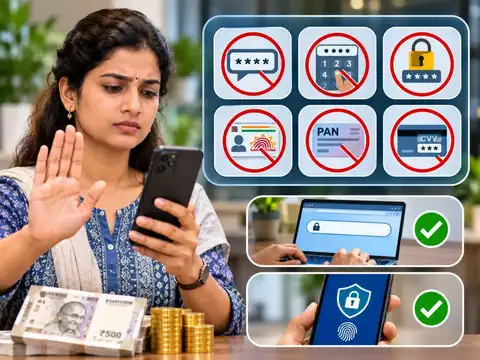
OTPs, PINs, passwords, Aadhaar number, PAN, card CVV.
Type the address yourself: Never log in through a link sent by SMS, email or chat. Type the official web address by hand.
Add a second lock: Switch on two-factor login and SIM or biometric binding for your banking and investment accounts.
OTPs, PINs, passwords, Aadhaar number, PAN, card CVV.
Type the address yourself: Never log in through a link sent by SMS, email or chat. Type the official web address by hand.
Add a second lock: Switch on two-factor login and SIM or biometric binding for your banking and investment accounts.
8/9
Scammed? Do these 3 things in the first hour
Feeling embarrassed is normal, and it is exactly what scammers rely on to keep you quiet. Act fast and follow these steps in order.
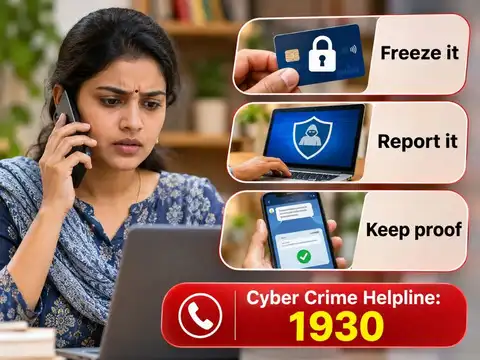
Freeze it: Call your bank or card issuer right away and ask them to block the transactions or freeze the compromised account.
Report it: Call the national cybercrime helpline or file on the National Cyber Crime Reporting Portal. You can also complain to SEBI or tell your local police.
Keep proof: Screenshot every chat, transaction ID, fake profile and payment receipt. It all helps the investigation.
National Cyber Crime Helpline: 1930
9/9
One hospital bill can undo decades of saving. Here’s how to stop it
Medical costs are rising by around 13% to 14% a year. A single emergency can wipe out savings that took a lifetime to build, so protect the core of your money before you chase anything bigger.
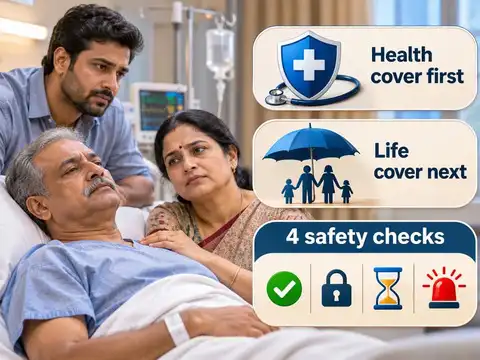
Health cover first: A comprehensive health policy keeps a medical emergency from eating into your savings.
Life cover next: Life insurance protects the family that depends on your income.
Remember four things: Verify who you are dealing with, never share your codes, never rush, and report fast.
Health cover first: A comprehensive health policy keeps a medical emergency from eating into your savings.
Life cover next: Life insurance protects the family that depends on your income.
Remember four things: Verify who you are dealing with, never share your codes, never rush, and report fast.