
EPS pension hike 2026: Will your monthly pension rise to ₹3,000? Check eligibility now

1/9
EPS pension hike news: Why this move is crucial for retirees
The Employees’ Pension Scheme (EPS-95) could soon see a hike in minimum pension from Rs 1,000 at present. This long-awaited move could improve monthly income for lakhs of retirees. The biggest relief is expected for low-income pensioners struggling with rising costs, making this proposal highly significant.

2/9
EPS pension eligibility criteria: Who can get EPS-95 benefits?
In order to qualify for EPS pension, you must complete at least 10 years of service and contribute through the EPFO. Pension is calculated on salaries of up to Rs 15,000 per month. Employees who opted for higher contributions earlier may already be receiving higher pension and they may not benefit much from a minimum pension hike.

3/9
EPS pension calculation formula: How your pension is decided
EPS pension is calculated using this formula:
(Average salary of last 60 months × service years) ÷ 70
Employees with 20+ years of service get a bonus of 2 extra years in calculation. This rule helps increase pension amounts for long-term workers, making service duration a key factor.
(Average salary of last 60 months × service years) ÷ 70
Employees with 20+ years of service get a bonus of 2 extra years in calculation. This rule helps increase pension amounts for long-term workers, making service duration a key factor.
Amazon Top Deals
POWERED BY

4/9
EPS pension: How much you get on ₹15,000 salary; full calculation
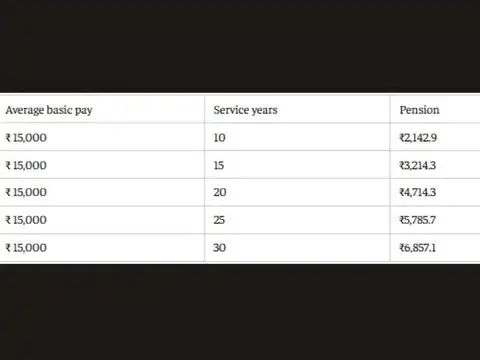
At the wage ceiling of Rs 15,000, pension rises with service years. For example, 10 years of service gives around Rs 2,143, while 30 years can give over Rs 6,800. These individuals already earn above Rs 1,000, so only a major hike will increase their pension further.
5/9
Minimum EPS pension Rs 1,000: Who benefits today
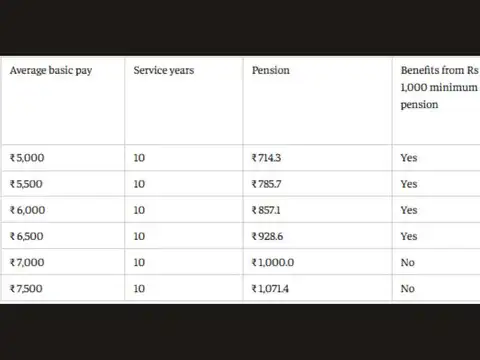
Workers with average salaries below Rs 7,000 and 10 years of service get pensions below Rs 1,000 based on calculation. They benefit from the guaranteed minimum pension. Those earning above this level typically receive Rs 1,000 or more without needing this safety net.
6/9
EPS pension hike to Rs 1,500: Who will benefit?
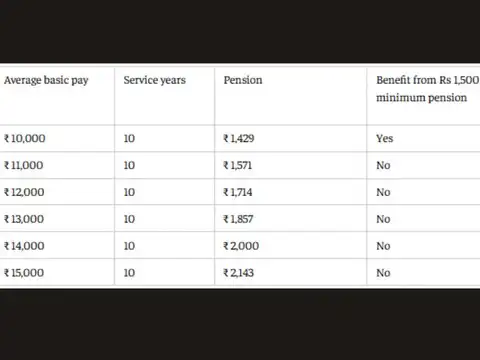
If the minimum pension rises to Rs 1,500, employees earning around Rs 10,000 with 10 years of service (pension ~Rs 1,429) will benefit. However, those earning Rs 11,000 or more already cross Rs 1,500 and are unlikely to see any additional gain from this level.
7/9
EPS pension hike to Rs 2,000: Who will benefit?
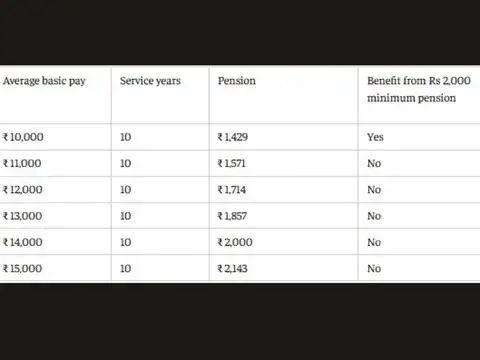
At a Rs 2,000 minimum pension, workers earning about Rs 10,000 with 10 years of service will still benefit. But employees earning Rs 11,000–Rs 15,000 already receive pensions close to or above Rs 2,000, so the impact remains limited to lower-income groups.
8/9
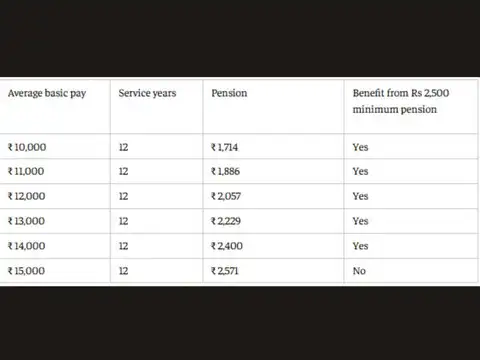
EPS pension hike to Rs 2,500: Who will benefit?
If the minimum pension increases to Rs 2,500, employees with 12 years of service earning between Rs 10,000 and Rs 14,000 will benefit. Their calculated pensions fall below Rs 2,500, so they gain directly. Those at a Rs 15,000 salary may not benefit as their pension already exceeds this level.
9/9
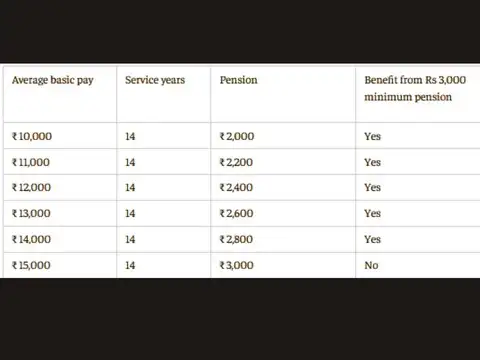
EPS pension hike to Rs 3,000: Maximum impact scenario explained
With a Rs 3,000 minimum pension, employees earning Rs 10,000–Rs 14,000 with around 14 years of service will benefit significantly. Their pensions fall short of Rs 3,000, so they gain the most. Employees at a Rs 15,000 salary typically already reach Rs 3,000 and may not benefit.