
Counterfeit capital: This city tops India’s fake goods list; Chennai, Bengaluru close behind
1/10
Almost every Indian has bought a fake product
A new nationwide study has found that 89% of Indian consumers have purchased a counterfeit product at least once in their lifetime. The findings come from the ASPA-CRISIL State of Counterfeiting in India 2025 report, based on a survey of 1,639 consumers across nine cities and six sectors, including apparel, FMCG, automotive parts, consumer durables, healthcare products and agro-products. The numbers suggest fake goods aren't a fringe problem in India, they're an everyday reality.
2/10
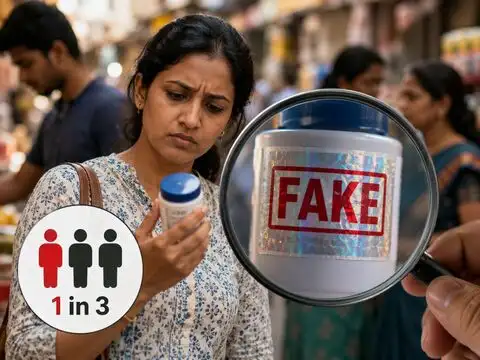
1 in 3 people ran into a fake in just the last year
It's not just a lifetime statistic. As many as 35% of consumers said they had personally encountered a counterfeit product in the past 12 months alone. On top of that, consumers estimated that nearly 29% of all products sold in their local markets could be fake, a sign of just how deeply counterfeiting is embedded in everyday shopping across the country.
3/10
Hyderabad has India's worst counterfeit problem
Among the nine cities studied (Delhi, Chennai, Bengaluru, Hyderabad, Kolkata, Mumbai and Ahmedabad) Hyderabad recorded the highest share of consumers, 46%, who ran into a counterfeit product in the past year. Chennai (39%) and Bengaluru (33%) weren't far behind, pointing to a troubling pattern across southern India. The report was presented at a "Fake Free India" awareness event held in Hyderabad.
Amazon Top Deals
POWERED BY

Crompton Ozone 75 Litres Desert Air Cooler for home | Large & Easy Clean Ice Chamber | 4-Way Air Deflection | High Density Honeycomb Pads | Everlast Pump | Auto Fill| 3 Year Brand Warranty
₹9,798Buy Now43%
OFF
LG 32 L Convection Microwave Oven (MC3286BRUM, Black, 360° Motorised Rotisserie for Bar-be-queing, 301 Auto Cook Menu, Stainless steel cavity, Indian Cuisine, Tandoor Se, Steam Clean & Diet Fry)
₹19,090Buy Now20%
OFF
4/10
Clothes and electronics are the most faked products
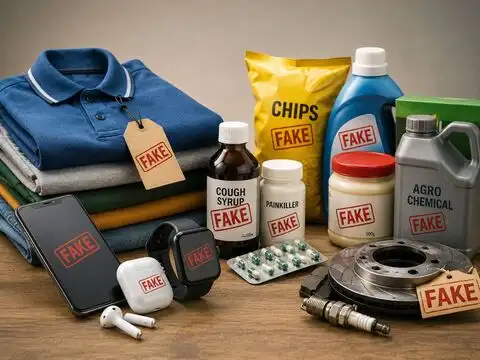
Counterfeiting doesn't stick to one category, it spans nearly everything people buy. Apparel tops the list, with 34% perceived prevalence, followed by consumer electronics at 31%. Healthcare products (28%), FMCG (25%), agrochemicals (23%) and automotive parts (22%) round out the list, showing fakes have infiltrated even sensitive categories like medicine and car parts.
5/10
74% of consumers say fakes are getting worse
It's not just perception of a static problem, people believe it's accelerating. A striking 74% of consumers said counterfeiting had increased in their region over the past year. That's a warning sign for regulators and brands alike, suggesting current enforcement and awareness efforts aren't keeping pace with how fast fake goods are spreading.
6/10
Most people still judge fakes by "gut feel"
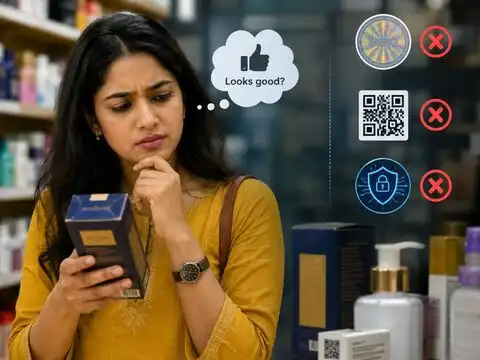
Here's the real problem: despite growing awareness, most consumers don't actually know how to verify a product properly. As many as 59% to 66% of consumers said they rely only on packaging quality and branding to judge whether something is genuine. Meanwhile, only 34% check holograms, 23% check QR codes and just 13% check digital identities, the tools actually designed to catch fakes.
7/10
Half of consumers now say "never again"
There's a silver lining. Half of all consumers surveyed said they would never knowingly buy a counterfeit product, a sharp increase compared to the report's 2022 baseline. It suggests rising consumer wariness, even if the tools to act on that wariness haven't fully caught up yet.
8/10
Why people still buy fakes, even when they don't mean
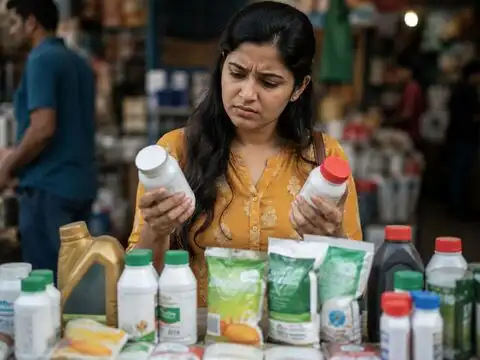
To Roughly 25% of consumers said simple unawareness at the point of purchase was the main reason they ended up buying a counterfeit product. Price sensitivity and product unavailability were cited as secondary drivers, especially in categories like agrochemicals, automotive parts and FMCG, where genuine products aren't always easy to find.
9/10
The fix, according to experts: Better tech, not just warnings
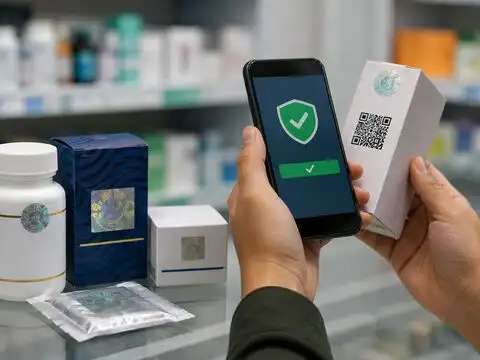
ASPA leaders say the answer isn't just telling people to "buy genuine," it's making verification actually accessible. That means wider adoption of secure packaging, serialization, QR-based verification and track-and-trace technology across supply chains. As ASPA Vice-President Nakul Pasricha put it, authentication needs to become intuitive for ordinary shoppers, not just a tool for brands and regulators.
10/10
This is being called a "National Consumer Movement"
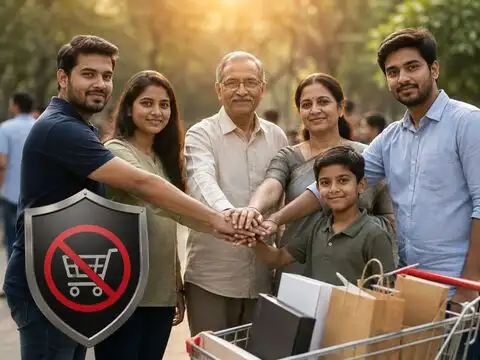
Experts behind the report argue counterfeiting isn't just a brand or intellectual-property issue, it's a consumer protection issue. According to consumer policy expert Prof. Bejon Kumar Misra, every counterfeit purchase creates three victims at once: the consumer, the legitimate seller and the country's economy. With 93% of consumers now saying more awareness campaigns are urgently needed, ASPA is calling for consumers, brands and regulators to tackle the problem together.