
Buying a flat in a large housing society? Don’t miss these 6 costly red flags

1/8
Mega housing societies look great, until the bills and problems arrive
Large residential projects are becoming increasingly common across India’s top cities. ANAROCK Research says 265 projects with more than 1,000 units were launched across the top seven cities between 2021 and H1 2026.
A clubhouse, swimming pool, security and landscaped gardens can make a large, gated community look like an ideal home. Before booking, buyers need to look beyond the brochure and understand how the entire community will function at full occupancy.
A clubhouse, swimming pool, security and landscaped gardens can make a large, gated community look like an ideal home. Before booking, buyers need to look beyond the brochure and understand how the entire community will function at full occupancy.

2/8
Water security: Don’t ask only whether your flat has water
A project may have water when only part of its homes are occupied, but that does not guarantee adequate supply later. Buyers should ask where water will come from once every unit is occupied and what is the backup. Municipal supply, borewells, tankers, storage capacity, sewage treatment and recycling all matter. One resident in Thane, for instance, says inconsistent municipal supply has forced the society to order tanker water.

3/8
Lift breakdowns can become a daily headache in tall towers
In a large high-rise, lifts are essential infrastructure—not just an amenity. Residents have reported frequent breakdowns and long waiting times. One Faridabad resident said his family had been stuck in a lift several times, a particular concern because his elderly father lives with them. Buyers should check units per lift, peak-hour waiting time, service or freight lifts and what happens if one elevator remains out of service.
Amazon Top Deals
POWERED BY

Crompton Ozone 75 Litres Desert Air Cooler for home | Large & Easy Clean Ice Chamber | 4-Way Air Deflection | High Density Honeycomb Pads | Everlast Pump | Auto Fill| 3 Year Brand Warranty
₹9,798Buy Now43%
OFF

LG 32 L Convection Microwave Oven (MC3286BRUM, Black, 360° Motorised Rotisserie for Bar-be-queing, 301 Auto Cook Menu, Stainless steel cavity, Indian Cuisine, Tandoor Se, Steam Clean & Diet Fry)
₹19,090Buy Now20%
OFF
4/8
The hidden cost of a ₹2-crore flat: Maintenance can keep rising
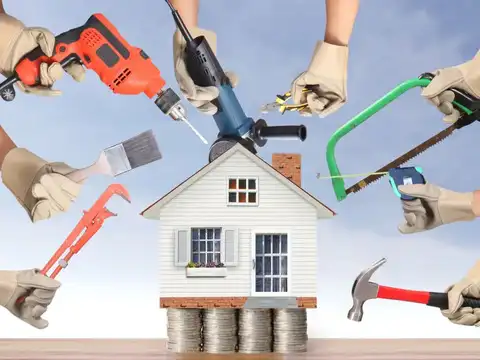
Buying the apartment is only part of the financial commitment. Large societies need multiple lifts, security, housekeeping, power backup, water treatment, sewage plants, landscaping and clubhouse operations. Maintenance cost can currently be around ₹5-6 per sq ft in large communities. A 2,000-sq-ft home could mean roughly ₹10,000 a month. More importantly, buyers should check escalation rules and whether a reserve or sinking fund exists for future repairs.
5/8
Swimming pool, gym, clubhouse: Are you paying for amenities you won’t use?
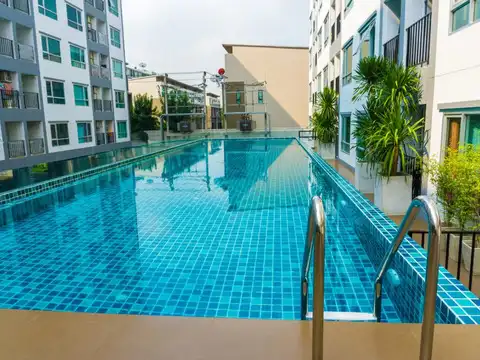
A long amenities list can justify a premium price, but facilities may become difficult to use when thousands of residents share them. A Greater Noida West resident says her society’s pool feels small relative to its density. In Faridabad, another resident says the pool, gym and clubhouse have been poorly maintained despite residents continuing to pay maintenance charges. Ask what you will actually use—and what it will cost to maintain it.
6/8
Fire safety: A fire NOC alone does not guarantee preparedness
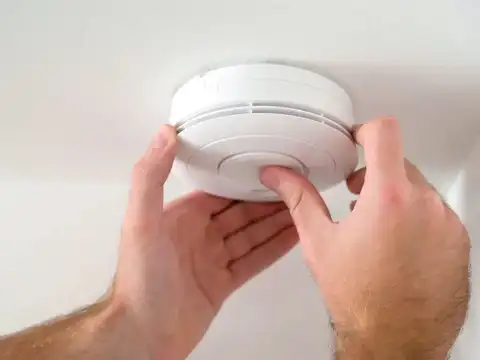
In a large tower, compliance and actual emergency preparedness are two different things. Buyers should check fire NOCs, sprinklers, hydrants, fire lifts, emergency exits and fire-tender access. Experts also stress the importance of regular inspections, drills, trained facility teams and resident awareness. A system that exists on paper but is poorly maintained—or residents who do not know how to respond—can become a serious weakness during an emergency.
7/8
The real test begins after the builder leaves
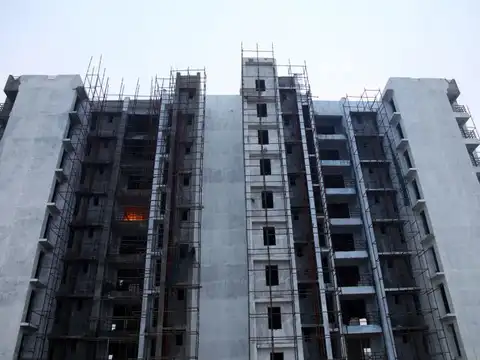
A project may look well maintained while the developer is still involved. Once management shifts to the residents’ association or RWA, residents inherit the financial and operational responsibility. Over time, lifts, pumps, waterproofing, STPs, generators and pools can reach replacement cycles. Buyers should therefore ask whether the society has a realistic long-term maintenance model and adequate reserve funds—not just whether everything works today.

8/8
Before booking, run this mega-society checklist
Check the project’s total units, future towers and density at full occupancy. Count units per lift and verify service-lift capacity. Ask about water sources, storage and recycling, and whether power backup can support homes or only common areas. Review maintenance charges, escalation and sinking funds. Finally, verify promised amenities, fire-safety systems and who will maintain them after the builder exits. The goal is simple: assess the home not just for year one, but year 15.