
8th Pay Commission: ₹69,000 minimum pay, ₹15,768 more HRA? Check 5 key NC-JCM demands
1/8
8th Pay Commission: 5 NC-JCM demands that could change your salary and pension
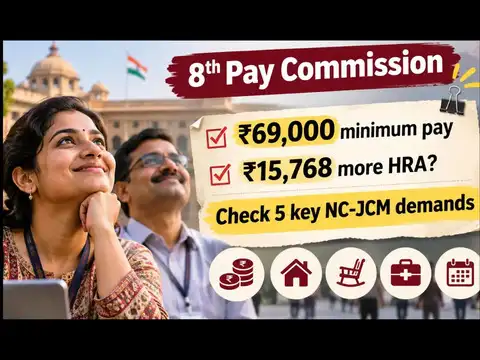
The National Council of the Joint Consultative Machinery (NC-JCM), the main central government employees’ body, has submitted its recommendations to the 8th Pay Commission. Its demands cover minimum pay, pension, annual increments, house rent allowance (HRA) and leave encashment. Here is what the proposals could mean for the salaries and retirement benefits of employees and pensioners.
2/8
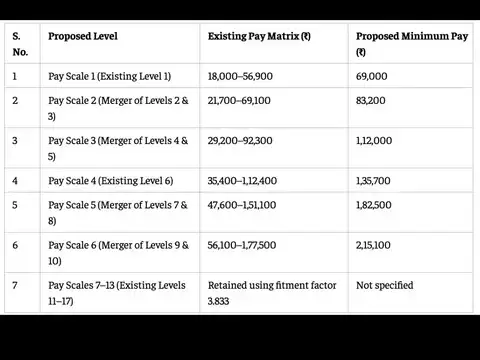
₹69,000 minimum pay: NC-JCM seeks 3.833 fitment factor
The NC-JCM has recommended increasing the minimum basic pay from ₹18,000 to ₹69,000, implying a fitment factor of 3.833. It has also proposed merging certain existing pay levels. For instance, Levels 2 and 3 could be merged into one pay scale with a proposed minimum pay of ₹83,200.
3/8
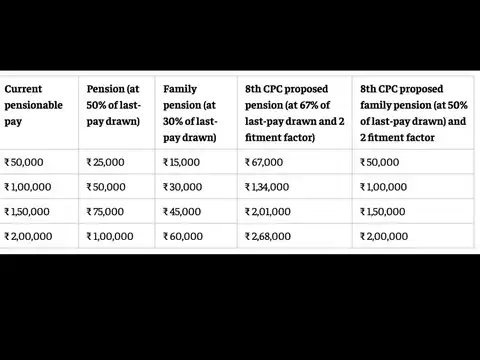
8th Pay Commission pension: NC-JCM wants 67% of last-drawn pay
The NC-JCM has proposed increasing pension from 50% to 67% of the last-drawn pay. It also wants family pension raised from 30% to 50%. For example, assuming a 2.0 fitment factor, an employee with current pensionable pay of ₹1 lakh could have an estimated pension of ₹1.34 lakh and family pension of ₹1 lakh under these recommendations.

4/8
Annual increment rate: Why NC-JCM wants it doubled from 3% to 6%
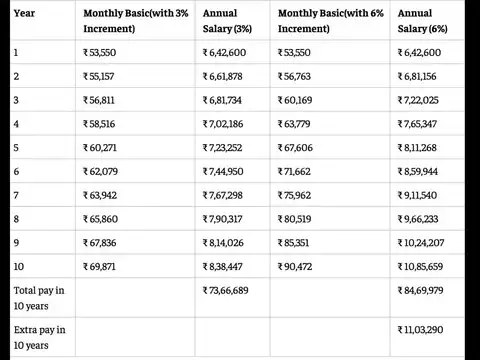
Central government employees currently receive an annual increment of 3% on basic pay. The NC-JCM wants this increased to 6%, arguing that the existing rate is inadequate to meet rising inflation. For a Level 4 employee, the illustration starts with revised basic pay of ₹53,550, assuming a 2.1 fitment factor.
5/8
6% annual increment: Could an employee earn ₹11 lakh more in 10 years?
The illustration shows how a higher annual increment could widen the difference in salary over time. Starting with a revised basic pay of ₹53,550, the employee's monthly basic pay could reach ₹90,472 after 10 years at a 6% increment, compared with ₹69,871 at 3%. The estimated cumulative salary difference over the 10 years is ₹11,03,290.
6/8
HRA at 30%, 35% and 40%: NC-JCM seeks higher allowances
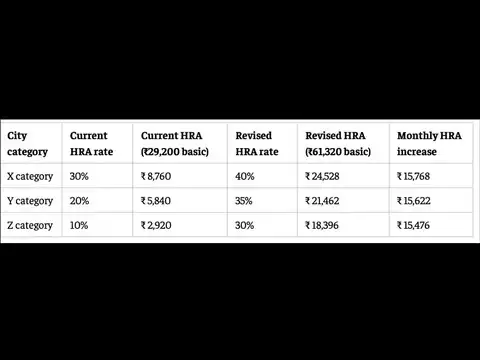
The NC-JCM has proposed increasing HRA rates to 40% for X-category cities, 35% for Y- category cities and 30% for Z-category cities. Currently, the rates are 30%, 20% and 10%, respectively. For a Level 5 employee, assuming revised basic pay of ₹61,320, the proposed rates could substantially increase monthly HRA.
7/8
Leave encashment: NC-JCM wants retirement limit doubled to 600 days
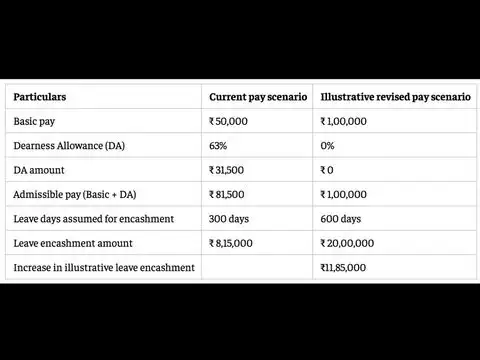
Central government employees can currently encash up to 300 days of accumulated leave at retirement. The NC-JCM has recommended increasing this limit to 600 days. The leave encashment calculation is based on admissible pay, including basic pay and DA. Here is an illustration of how the proposed change could affect the payout.
8/8
8th Pay Commission: Will these 5 NC-JCM demands be accepted?
The NC-JCM has also raised demands relating to revival of the Old Pension Scheme, more promotions, higher child education allowance and improved healthcare benefits. However, all these proposals are recommendations. The actual changes in salaries, pensions and allowances will depend on what the 8th Pay Commission recommends and what the government ultimately approves.