
50-20-30: The salary budgeting rule that works whether you earn ₹25,000 or ₹2.5 lakh a month

1/8
The 50-20-30 rule: The only budget framework most Indians will ever need
One simple rule. Three buckets. A completely different relationship with your money.
Most Indians earn a salary, spend it, and wonder where it went. The 50-20-30 rule fixes that with one straightforward idea; divide your take-home pay into three buckets: 50% for things you need, 30% for things you want, and 20% for savings and investments. No complicated spreadsheets. No financial degree required. Just a clear framework that gives every rupee a job to do from the moment it hits your account.
Most Indians earn a salary, spend it, and wonder where it went. The 50-20-30 rule fixes that with one straightforward idea; divide your take-home pay into three buckets: 50% for things you need, 30% for things you want, and 20% for savings and investments. No complicated spreadsheets. No financial degree required. Just a clear framework that gives every rupee a job to do from the moment it hits your account.

2/8
Your 50% bucket: The non-negotiables
Rent, groceries, school fees - if life stops without it, it goes here
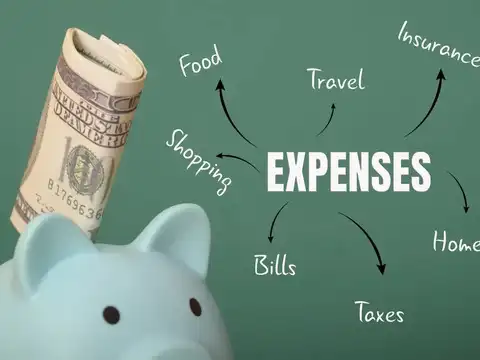
Half your take-home salary should cover everything that keeps your life running. In the Indian context, this means rent or your home loan EMI, monthly grocery bills, electricity and water bills, health insurance premiums, daily commute costs, and your children's school tuition fees. The key word here is non-negotiable. These are expenses that cannot be skipped or delayed without serious consequences. One important rule: always calculate these percentages on your actual in-hand salary, not your gross CTC figure, which can be significantly higher than what you actually receive.
Half your take-home salary should cover everything that keeps your life running. In the Indian context, this means rent or your home loan EMI, monthly grocery bills, electricity and water bills, health insurance premiums, daily commute costs, and your children's school tuition fees. The key word here is non-negotiable. These are expenses that cannot be skipped or delayed without serious consequences. One important rule: always calculate these percentages on your actual in-hand salary, not your gross CTC figure, which can be significantly higher than what you actually receive.
3/8
Your 30% bucket: The good stuff
You work hard. You deserve to enjoy life. Here is your permission slip.
This bucket is for the expenses that make life enjoyable rather than merely functional. Dining out with family, shopping for clothes, Netflix and Hotstar subscriptions, holiday travel, and festival gifting all belong here. In India, festival seasons like Diwali and Eid often create spending pressure that can quietly drain savings if left unplanned. By ring-fencing 30% for lifestyle spending, you give yourself a clear limit that lets you enjoy celebrations without guilt and without raiding your savings. One important distinction: if you are financing a luxury smartphone or a vacation through an EMI, that EMI falls into your wants bucket, not your needs bucket.
This bucket is for the expenses that make life enjoyable rather than merely functional. Dining out with family, shopping for clothes, Netflix and Hotstar subscriptions, holiday travel, and festival gifting all belong here. In India, festival seasons like Diwali and Eid often create spending pressure that can quietly drain savings if left unplanned. By ring-fencing 30% for lifestyle spending, you give yourself a clear limit that lets you enjoy celebrations without guilt and without raiding your savings. One important distinction: if you are financing a luxury smartphone or a vacation through an EMI, that EMI falls into your wants bucket, not your needs bucket.
Amazon Top Deals
POWERED BY

atomberg Studio Smart+ 1200mm BLDC Ceiling Fan with IoT & Remote | BEE 5 star Rated Energy Efficient Ceiling Fan | High Air Delivery with LED Indicators | 3 Year Warranty (Earth Brown)
₹5,882Buy Now36%
OFF

LG 32 L Convection Microwave Oven (MC3286BRUM, Black, 360° Motorised Rotisserie for Bar-be-queing, 301 Auto Cook Menu, Stainless steel cavity, Indian Cuisine, Tandoor Se, Steam Clean & Diet Fry)
₹19,340Buy Now19%
OFF

4/8
Your 20% bucket: Your future self will thank you
SIPs, PPF, emergency funds, this is where wealth actually gets built
The final 20% is the most powerful bucket of the three because it works even when you are asleep. This is where your mutual fund SIPs, Public Provident Fund contributions, National Pension System deposits, and emergency fund top-ups belong. It is also where you should be clearing high-interest credit card debt, because paying 36% annual interest on a credit card balance is the single fastest way to destroy wealth. Smart Indians also use this bucket to maximise tax deductions under Section 80C and 80D, effectively reducing their tax bill while simultaneously building a retirement corpus.
The final 20% is the most powerful bucket of the three because it works even when you are asleep. This is where your mutual fund SIPs, Public Provident Fund contributions, National Pension System deposits, and emergency fund top-ups belong. It is also where you should be clearing high-interest credit card debt, because paying 36% annual interest on a credit card balance is the single fastest way to destroy wealth. Smart Indians also use this bucket to maximise tax deductions under Section 80C and 80D, effectively reducing their tax bill while simultaneously building a retirement corpus.

5/8
Living in Mumbai or Bengaluru? Use the 60-20-20 rule instead
When rent alone eats half your salary, the standard rule needs an adjustment
The original 50-20-30 rule was designed for Western economies where housing costs are proportionally lower. In Indian metros like Mumbai, Bengaluru, and Delhi, rent and food inflation routinely consume well over half of a mid-level salary. If you find that your essential expenses genuinely cannot be squeezed into 50%, switch to the 60-20-20 variation, 60% for needs, 20% for wants, and 20% for savings. This version gives your essentials the breathing room they need without forcing you to cut savings or feel perpetually guilty about your grocery bill.
The original 50-20-30 rule was designed for Western economies where housing costs are proportionally lower. In Indian metros like Mumbai, Bengaluru, and Delhi, rent and food inflation routinely consume well over half of a mid-level salary. If you find that your essential expenses genuinely cannot be squeezed into 50%, switch to the 60-20-20 variation, 60% for needs, 20% for wants, and 20% for savings. This version gives your essentials the breathing room they need without forcing you to cut savings or feel perpetually guilty about your grocery bill.

6/8
Drowning in debt? Try the 50-30-10-10 split
Isolate your debt repayment and watch it disappear faster than you expect
Many Indian households are managing personal loans, credit card balances, and consumer finance EMIs simultaneously. If that sounds familiar, the 50-30-10-10 variation may suit you better. It works like this: 50% for needs, 30% for wants, 10% dedicated entirely to clearing high-interest debt, and 10% for wealth building through a disciplined SIP. The genius of this approach is that it isolates debt repayment as its own category, preventing it from silently eating into your savings while keeping your investing habit alive, even if smaller than ideal.
Many Indian households are managing personal loans, credit card balances, and consumer finance EMIs simultaneously. If that sounds familiar, the 50-30-10-10 variation may suit you better. It works like this: 50% for needs, 30% for wants, 10% dedicated entirely to clearing high-interest debt, and 10% for wealth building through a disciplined SIP. The genius of this approach is that it isolates debt repayment as its own category, preventing it from silently eating into your savings while keeping your investing habit alive, even if smaller than ideal.

7/8
Entry-level salary or joint family responsibilities? The 70-20-10 rule is for you
Not everyone starts from the same place. This version meets you where you are.
For first-time earners, single-income households, or anyone supporting a large joint family, fitting essential expenses into 50% of income is simply not realistic. The 70-20-10 rule acknowledges that reality. Allocate 70% to essential needs, 20% to lifestyle wants, and at least 10% to savings and investments. Ten percent may sound small, but the discipline of saving consistently, even a modest amount, builds a habit that compounds powerfully over time. Starting at 10% and increasing that figure by just 1% every year as your salary grows is a strategy that quietly builds serious wealth over a decade.
For first-time earners, single-income households, or anyone supporting a large joint family, fitting essential expenses into 50% of income is simply not realistic. The 70-20-10 rule acknowledges that reality. Allocate 70% to essential needs, 20% to lifestyle wants, and at least 10% to savings and investments. Ten percent may sound small, but the discipline of saving consistently, even a modest amount, builds a habit that compounds powerfully over time. Starting at 10% and increasing that figure by just 1% every year as your salary grows is a strategy that quietly builds serious wealth over a decade.

8/8
The real reason this rule works: It changes how you think about money
This is not a budgeting trick. It is a complete mindset shift.
The 50-20-30 rule has lasted because it solves the biggest problem most people have with money, not knowing where it goes. When every rupee is assigned a purpose before it gets spent, decision fatigue disappears. You stop feeling guilty about spending on yourself because your savings are already taken care of. You stop feeling anxious about the future because your investments are already running. And you stop wondering why your account is empty at the end of the month because you can see exactly where every rupee went. Budgeting does not have to be painful. This rule makes it almost automatic.
The 50-20-30 rule has lasted because it solves the biggest problem most people have with money, not knowing where it goes. When every rupee is assigned a purpose before it gets spent, decision fatigue disappears. You stop feeling guilty about spending on yourself because your savings are already taken care of. You stop feeling anxious about the future because your investments are already running. And you stop wondering why your account is empty at the end of the month because you can see exactly where every rupee went. Budgeting does not have to be painful. This rule makes it almost automatic.