
Redeveloping your housing society? 7 risks that could keep you out of your home for 8–10 years
1/8
Housing society redevelopment: Why delays can become a financial nightmare
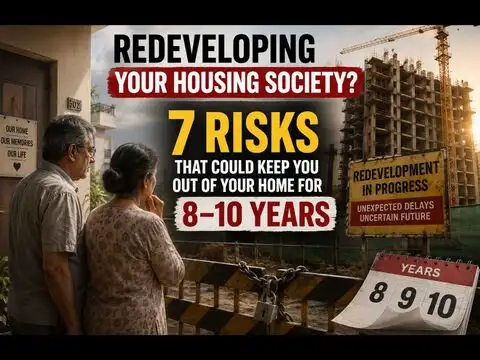
Redevelopment can promise safer buildings, larger homes and better amenities, but delays can leave residents paying rent for years while their original homes remain inaccessible. In Mumbai, a typical redevelopment project can take 8–10 years from initial consensus to final handover. Rising construction costs, funding problems, approvals, litigation and changing market conditions can all derail timelines.
2/8
Society redevelopment risks: How builder failure can leave residents stranded
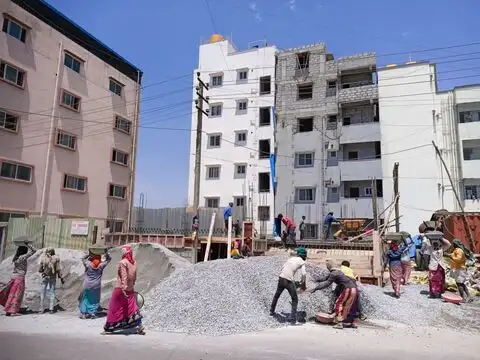
Two Mumbai societies illustrate the risks. Jeevan Nagar’s redevelopment stalled after approval delays and the builder’s loan default, leaving the site abandoned after about one-third of the work. Juhu Anamika’s project faced halted construction, unpaid rent, disputes and regulatory restrictions. In both cases, residents remained without their homes for years, highlighting the cost of choosing a developer without adequate safeguards.

3/8
Housing redevelopment checklist: Check the builder’s financial strength first
A builder’s offer should not be judged only by promised extra carpet area, rent or corpus fund. Societies should examine the developer’s financial strength, track record and execution capability and obtain an independent feasibility study. A financially weak developer may struggle when construction costs rise, approvals take longer or property prices fail to meet expectations. A generous offer is useful only if the builder can actually deliver.
Amazon Top Deals
POWERED BY

Crompton Ozone 75 Litres Desert Air Cooler for home | Large & Easy Clean Ice Chamber | 4-Way Air Deflection | High Density Honeycomb Pads | Everlast Pump | Auto Fill| 3 Year Brand Warranty
₹9,798Buy Now43%
OFF

LG 32 L Convection Microwave Oven (MC3286BRUM, Black, 360° Motorised Rotisserie for Bar-be-queing, 301 Auto Cook Menu, Stainless steel cavity, Indian Cuisine, Tandoor Se, Steam Clean & Diet Fry)
₹18,689Buy Now22%
OFF

4/8
Redevelopment agreement: 7 clauses housing societies should insist on
Before signing, the agreement should clearly specify the completion deadline, delay penalties, rent or alternative accommodation, corpus payment schedule, new-flat specifications and parking allocation. It should also provide the society with the right to terminate if the project stalls or remains incomplete. Legal experts stress that these protections must be negotiated before residents vacate their homes, when the society still has stronger bargaining power.

5/8
Society redevelopment: Why extra carpet area is not the only thing to check
Developers often compete by promising larger homes, higher rent and bigger corpus funds. But every offer depends on the project’s underlying economics. The builder must first provide members their promised homes, while additional saleable construction, enabled through FSI or TDR, helps fund the project and generate profit. If a builder overpromises based on unrealistic property-price assumptions, the project can become financially unviable.

6/8
Redevelopment delay: What legal protection should residents seek?
Housing societies can have legal remedies when developers delay projects, including enforcing contractual timelines, seeking compensation, terminating agreements in appropriate cases and approaching RERA, arbitration or civil courts. However, enforcement can take time. This makes the original redevelopment agreement especially important. Clear milestones, performance guarantees, delay compensation, rent provisions, termination rights and dispute-resolution mechanisms can reduce the risk of residents being left helpless after vacating.

7/8
Self-redevelopment vs builder redevelopment: What changes for society members?
Self-redevelopment removes the builder from the equation. The society appoints contractors and consultants, retains property rights and keeps profits from additional saleable inventory. Members may also get greater control over design and amenities. However, the society takes on responsibility for funding, approvals and execution. Strong governance and professional support are essential; otherwise, self-redevelopment can create the same delays and financial risks it aims to avoid.
8/8
Housing society redevelopment: The safest approach before you vacate
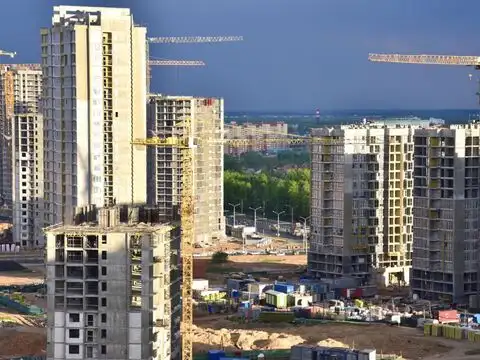
Redevelopment is a major financial and housing decision, so residents should complete due diligence before handing over possession. Conduct a feasibility study, verify the developer, take independent legal advice and negotiate strong contractual protections. Track construction and finances after work begins, and conduct a professional final inspection before accepting the new building. The goal is not simply a better home—but a redevelopment project that can actually be completed.
READ MORE:
housing society redevelopment |society redevelopment in Mumbai |Mumbai housing society redevelopment |redevelopment project risks |housing society redevelopment risks |redevelopment delay |builder failure in redevelopment |society redevelopment agreement |redevelopment agreement clauses |self redevelopment of housing society