
Portugal, Greece, UAE or Latvia? A look at 15 easiest residency routes in 2026

1/12
The easiest passports to a second home aren't where you think
Forget the assumption that residency abroad means years of red tape. According to Passportivity's 2026 breakdown, some countries offer investment routes starting at just €50,000, while others ask for nothing more than proof of remote income. Here's where the real opportunities are, and what it actually costs to get in.

2/12
There's no single "easiest" country; it depends on why you're moving
Passportivity's research makes one thing clear: the right country depends entirely on your goal. Investors chasing EU access look at Portugal, Greece or Hungary. Entrepreneurs lean toward France, Spain or the UAE. Digital nomads and financially independent movers have their own set of income-based visas entirely. Easy isn't universal — it's personal.
3/12
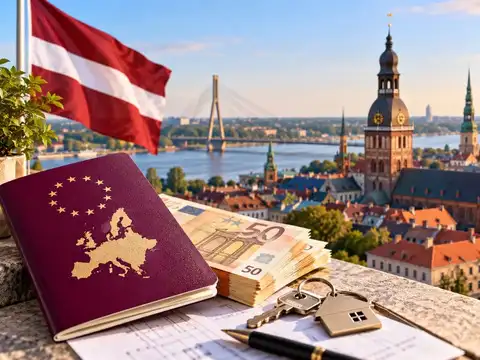
Latvia: The cheapest way into the EU costs just €50,000
Latvia has the lowest entry point of any European residence-by-investment programme. Investors can qualify by putting €50,000 into a Latvian company's share capital, or alternatively buy real estate worth €250,000. Residence permits run up to 5 years with annual renewals — but note, the passive government-securities route disappears from May 2026.
Amazon Top Deals
POWERED BY


4/12
Portugal: Live in the EU by visiting just 7 days a year
Portugal's Golden Visa asks for a €250,000 minimum investment — but the real draw is the stay requirement: just 7 days annually to maintain status. Real estate purchases no longer qualify, so investors now choose between funds, business investment, or job creation. Citizenship follows after 10 years.

5/12
Greece: Buy property, skip the country entirely
Greece remains one of Europe's most recognised Golden Visa routes, and uniquely, investors aren't required to live there at all to keep their status. Real estate thresholds vary by location — €400,000 to €800,000 in popular areas, or as low as €250,000 for renovation projects. Citizenship is possible after 7 years.

6/12
UAE: A 10-year visa for a $545,000 property, no residency required
The UAE skips the term "residence permit" altogether, offering residence visas instead. A property worth at least AED 2,000,000 (about $545,000) unlocks a 10-year Golden Visa, and investors aren't required to live there continuously — just visit periodically and keep the property.
7/12
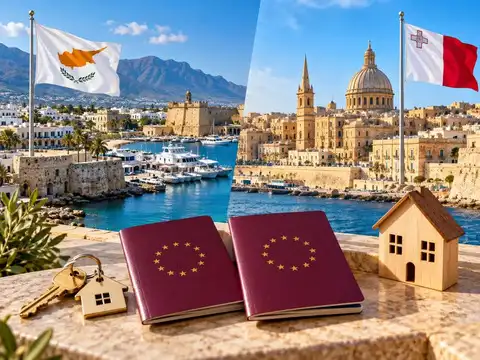
Cyprus & Malta: The 2 EU countries that hand you Permanent Residence immediately
Unlike most of Europe, Cyprus and Malta don't make investors wait years for permanent status. Cyprus grants it for life with a €300,000 real estate investment, visiting only once every two years to maintain it. Malta's route costs more, around €169,000 in fees plus asset requirements, but includes Schengen travel rights.

8/12
You don't need a fortune; just a remote job and a decent salary
Not every route needs an investment. Portugal's Digital Nomad Visa asks for €3,680 a month in remote income. Malta's Nomad Residence Permit needs €3,500 monthly. Croatia's threshold is €3,295. According to Passportivity, these routes suit remote professionals who want EU residency without buying property or funding a business.

9/12
For the financially independent: Retirees and passive-income earners have their own fast lane
Portugal's D7 Visa is one of Europe's most accessible non-investment routes, needing just €920 a month in passive income — pensions, dividends, or rental income all qualify. Spain's Non-Lucrative Visa asks for more, at €28,800 a year, while France requires €1,800 monthly plus €30,000 in savings.

10/12
For entrepreneurs: Hungary lets you start a business in the EU for €7,700
Hungary's company registration route has one of the lowest entrepreneurial thresholds in Europe, just €7,700 in minimum business investment. France's Tech Visa and Spain's Startup Visa target founders with innovative projects, requiring savings of roughly €23,900 and €34,200 respectively, alongside a solid business plan.

11/12
America's path costs more, but leads somewhere bigger
The EB-5 Investor Visa remains the most expensive and complex route Passportivity tracked, requiring $800,000 to $1,050,000 and the creation of 10 full-time jobs. It's slower too, taking 5+ years. But for investors focused on the American market or their children's education, it's still one of the few direct paths to a green card.

12/12
The Takeaway
The "easiest" country is the one that matches your actual goal
Passportivity's research shows the real question isn't which country is cheapest or fastest — it's what you're trying to achieve. Backup plan, tax residency, business base, or a path to citizenship each point to a different country entirely. Getting that match right is what makes a residence route feel "easy" in practice, not just on paper.
Passportivity's research shows the real question isn't which country is cheapest or fastest — it's what you're trying to achieve. Backup plan, tax residency, business base, or a path to citizenship each point to a different country entirely. Getting that match right is what makes a residence route feel "easy" in practice, not just on paper.
READ MORE:
easiest countries to get residency |easiest countries to get a second residency |second residency by investment |residency by investment 2026 |easiest residency by investment programs |best countries for second residency |cheapest residency by investment |countries offering golden visa |golden visa programs 2026