
9 types of Wills. Why picking the wrong one could cost your family everything

1/10
Without a Will, the law decides who gets your money, not you
If you die without a Will, or with one that's poorly written, the law steps in and divides everything you own using its own fixed formula. It doesn't matter what you actually wanted — the default rules apply regardless. That's the entire point of writing a Will: it's how you make sure everything you spent a lifetime building goes exactly where you intended. Indian law recognizes several different types of Wills, each built for a different life situation, and choosing the right one is where real estate planning begins.
2/10
The one almost everyone uses: The Unprivileged Will
This is the standard Will that covers virtually everyone who isn't in active military service. Governed by Section 63 of the Indian Succession Act, 1925, it has three non-negotiable requirements to be valid: it must be in writing, signed by you, and witnessed by two independent people. Every other type of Will on this list is really just a variation of this one, shaped by who's writing it or how it's written.

3/10
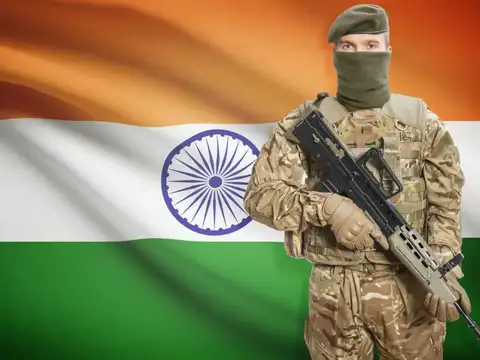
The special exception for soldiers and sailors: The Privileged Will
The law makes a rare exception for people serving in the armed forces during active duty, warfare, or at sea. Under Sections 65 and 66 of the Indian Succession Act, soldiers, airmen, and mariners on active service can create a valid Will with far fewer formalities, even an oral declaration made in front of two witnesses counts. The logic is simple: someone in the middle of a warzone may not have the time or means to draft a formal legal document.
Amazon Top Deals
POWERED BY

Crompton Ozone 75 Litres Desert Air Cooler for home | Large & Easy Clean Ice Chamber | 4-Way Air Deflection | High Density Honeycomb Pads | Everlast Pump | Auto Fill| 3 Year Brand Warranty
₹9,798Buy Now43%
OFF

LG 32 L Convection Microwave Oven (MC3286BRUM, Black, 360° Motorised Rotisserie for Bar-be-queing, 301 Auto Cook Menu, Stainless steel cavity, Indian Cuisine, Tandoor Se, Steam Clean & Diet Fry)
₹18,689Buy Now22%
OFF
4/10
The Will that waits: Conditional or Contingent Wills
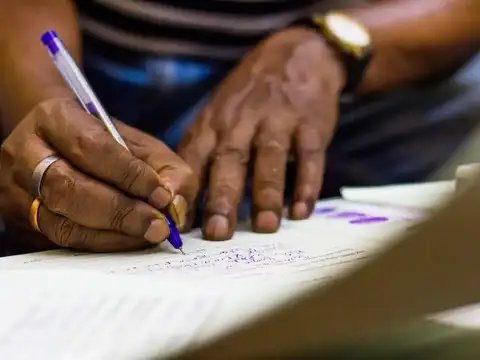
A conditional Will only kicks in if a specific event actually happens — until then, it just sits dormant. A classic example is a parent leaving property to a child on the condition that the child finishes their degree first. But there's a catch: the condition has to be legal and realistic. Courts will strike down any condition that's illegal, immoral, or simply impossible to fulfil.

5/10
Got assets in 2 countries? You might need a Concurrent Will
If your estate is scattered, say, property in India and assets abroad, a concurrent Will lets you write two or more separate Wills to handle different parts of your estate. Both documents remain valid and are administered at the same time, running together as one combined testamentary plan. This is a practical solution for anyone whose wealth doesn't sit neatly in one place.

6/10
Couples, take note: The Mutual Will locks you in
A mutual Will is made when two people, usually spouses, agree together on exactly how their property should be distributed after both of them are gone. Here's the twist: once one spouse dies and the survivor accepts the benefits under the Will, that survivor is generally locked into the agreement and can't change the final beneficiaries later. Couples typically choose this route to guarantee their assets eventually reach their children, rather than risk them being redirected elsewhere down the line.

7/10
One document, 2 people: Understanding the Joint Will
A joint Will is a single physical document signed by two or more people, most often a married couple, laying out both of their wishes in one place. But don't confuse this with a mutual Will: even though it's one document, it legally functions as two separate Wills, one for each person, taking effect individually as each person passes away. Unless it also includes a binding mutual agreement, the surviving person is usually still free to change their own arrangements later.

8/10
Handwritten and Personal: What makes a Holograph Will different
A holograph Will has to be written entirely in the testator's own handwriting, no typed sections, no pre-printed forms, and nothing filled in by anyone else. If even part of it isn't handwritten, it loses its status as a true holograph Will. The upside is that a fully handwritten document can offer stronger proof of authenticity and genuine intent. But it's still legally an unprivileged Will underneath, meaning it must be signed by the testator and witnessed by two people to actually hold up.

9/10
Why some people keep 2 copies: The Duplicate Will
A duplicate Will is an exact copy of the original, same signatures, same witness attestations, fully valid on its own. People usually store the two copies in separate places, so if one is lost, damaged, or becomes inaccessible, the other survives. Some estate planners recommend keeping one copy in a secure safe deposit locker for extra protection. One important warning: because both copies count as originals, any attempt to revoke one copy can end up legally affecting the entire Will.

10/10
One more document you need; but it's not a Will at all
A Living Will is different from everything above because it deals with life, not death. It's an advance medical directive, a written record of what medical treatment you would want or refuse if illness ever left you unable to make that decision yourself. Unlike a regular Will, it takes effect while you're still alive. Maharashtra residents can now register a Digital Living Will online through the MahaULB portal — a document that belongs right alongside your estate plan, even though it isn't technically part of it.