What is emergency fund ratio?
Actual number applicable to any household will depend upon the number of earning members, the stability of income and ability to raise easy credit.
By ET CONTRIBUTORS | Updated:

Getty Images
1. Emergency fund ratio or liquidity ratio is a personal finance ratio that measures the ability of a household to meet expenses out of the assets that can be easily converted into cash.
2. It is computed by dividing the total liquid assets of the household by the total monthly expenses of the household.
3. The ratio measures the preparedness of the household to manage a situation of loss in income.

4. Around six months’ worth of routine expenses and a year’s worth of fixed expenses should be kept in an emergency fund.
5. Actual number applicable to any household will depend upon the number of earning members, stability of income and ability to raise easy credit.
(Content on this page is courtesy Centre for Investment Education and Learning (CIEL). Contributions by Girija Gadre, Arti Bhargava and Labdhi Mehta.)
2. It is computed by dividing the total liquid assets of the household by the total monthly expenses of the household.
3. The ratio measures the preparedness of the household to manage a situation of loss in income.
Financial liquidity refers to the degree of ease with which any asset or investment can be readily converted into cash, either to spend or to invest. It also determines how easily you can sell an asset and at what price, should the need to do so arise. All asset classes have varying degrees of liquidity.
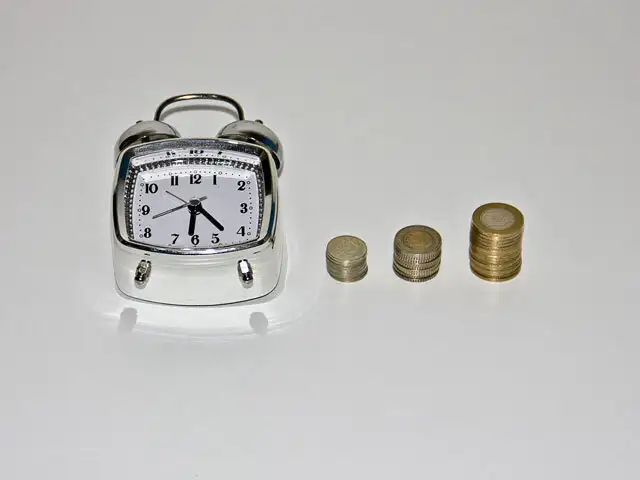





4. Around six months’ worth of routine expenses and a year’s worth of fixed expenses should be kept in an emergency fund.
5. Actual number applicable to any household will depend upon the number of earning members, stability of income and ability to raise easy credit.
(Content on this page is courtesy Centre for Investment Education and Learning (CIEL). Contributions by Girija Gadre, Arti Bhargava and Labdhi Mehta.)
(Disclaimer: The opinions expressed in this column are that of the writer. The facts and opinions expressed here do not reflect the views of www.economictimes.com.)
Download
The Economic Times Business News App for the Latest News in Business, Sensex, Stock Market Updates & More.
The Economic Times Business News App for the Latest News in Business, Sensex, Stock Market Updates & More.
Download
The Economic Times News App for Quarterly Results, Latest News in ITR, Business, Share Market, Live Sensex News & More.
The Economic Times News App for Quarterly Results, Latest News in ITR, Business, Share Market, Live Sensex News & More.
Related Articles
 Is ₹3 lakh enough for your emergency fund if you have a home loan, children and ageing parents?2026-10-20T05:00:20Z
- With Rs 50,000 salary, does a 6-month emergency fund mean having Rs 3 lakh? Practical tips to achieve the right amount2026-10-16T02:35:00Z
- 6 months of salary for emergency fund: Bengaluru CA lists 6 investments every woman should make for a secure financial future2026-09-06T01:40:57Z
ADVERTISEMENT