
PROI, NRI or OCI? How your residential status can change your tax liability, property rights and investment options in India

1/8
PROI explained: What living abroad means for your money in India
If you live abroad, you're likely classified as a Person Resident Outside India (PROI). But did you know your status is defined differently under two separate laws? FEMA governs your foreign exchange transactions, while the Income Tax Act determines what you owe in taxes. Understanding both can save you money and legal trouble.

2/8
Who exactly is classified as a PROI under FEMA?
Under FEMA's Section 2(w), you're a PROI if you've stayed in India for less than 182 days in the previous financial year, or if you've left India for work, business, or any reason suggesting you plan to stay abroad indefinitely.
3/8
NRI, OCI, FOCC: are they all PROIs?
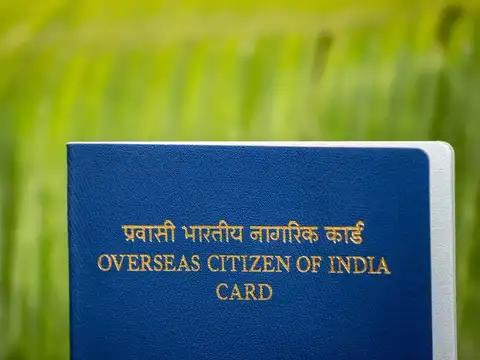
PROI is an umbrella term that covers Non-Resident Indians (NRIs), Overseas Citizens of India (OCIs), foreign nationals, and Foreign Owned and Controlled Companies (FOCCs). Every NRI is a PROI, but not every PROI is an NRI.
Amazon Top Deals
POWERED BY

Crompton Ozone 75 Litres Desert Air Cooler for home | Large & Easy Clean Ice Chamber | 4-Way Air Deflection | High Density Honeycomb Pads | Everlast Pump | Auto Fill| 3 Year Brand Warranty
₹9,798Buy Now43%
OFF

LG 32 L Convection Microwave Oven (MC3286BRUM, Black, 360° Motorised Rotisserie for Bar-be-queing, 301 Auto Cook Menu, Stainless steel cavity, Indian Cuisine, Tandoor Se, Steam Clean & Diet Fry)
₹18,790Buy Now22%
OFF

4/8
How does the Income Tax Act decide your residential status?
Unlike FEMA, your tax status depends on how many days you physically spent in India, and it's decided at the end of the financial year, not when you move. You're treated as a tax resident if you stayed 182 days or more in the previous year, or 60+ days in the previous year and 365+ days across the last four years.

5/8
The 120-day rule: Taxation for high-income PROIs
If you're an Indian citizen or person of Indian origin visiting India, the usual 60-day threshold rises to 182 days. But if your income in India (excluding foreign earnings) exceeds Rs 15 lakh in a year, that threshold drops to just 120 days. Crossing it makes you a tax resident, meaning your global income could become taxable in India.

6/8
Can PROIs invest in Indian stocks and property?
Yes, and Budget 2026 made it even better. PROIs can now invest in listed Indian companies through the Portfolio Investment Scheme (PIS), with individual limits doubled from 5% to 10%, and aggregate PROI limits raised to 24%.
For property, NRI/OCI PROIs can own or transfer immovable property in India except agricultural land, farmhouses, or plantation property.
For property, NRI/OCI PROIs can own or transfer immovable property in India except agricultural land, farmhouses, or plantation property.

7/8
Banking options available to PROIs in India
PROIs can hold multiple account types in India depending on their needs:
NRE accounts – for repatriable foreign income
NRO accounts – for Indian income like rent or dividends
FCNR accounts – held in foreign currency
SNRR accounts – for PROIs with active business interests in India, opened through an authorised dealer branch abroad
NRE accounts – for repatriable foreign income
NRO accounts – for Indian income like rent or dividends
FCNR accounts – held in foreign currency
SNRR accounts – for PROIs with active business interests in India, opened through an authorised dealer branch abroad

8/8
FEMA vs Income Tax: Key differences
Here's the simplest way to differentiate: FEMA cares about why and where you live; Income Tax cares about how long you stayed.
Your FEMA status can shift overnight; your tax status is fixed at year-end. You could be a PROI under FEMA but still be taxed as a resident in India.
Knowing both rules helps you manage money, investments, and property across borders smartly.
Your FEMA status can shift overnight; your tax status is fixed at year-end. You could be a PROI under FEMA but still be taxed as a resident in India.
Knowing both rules helps you manage money, investments, and property across borders smartly.